
Kinetic Architecture: The Complete Guide to Lenticular Building Facades in 2026
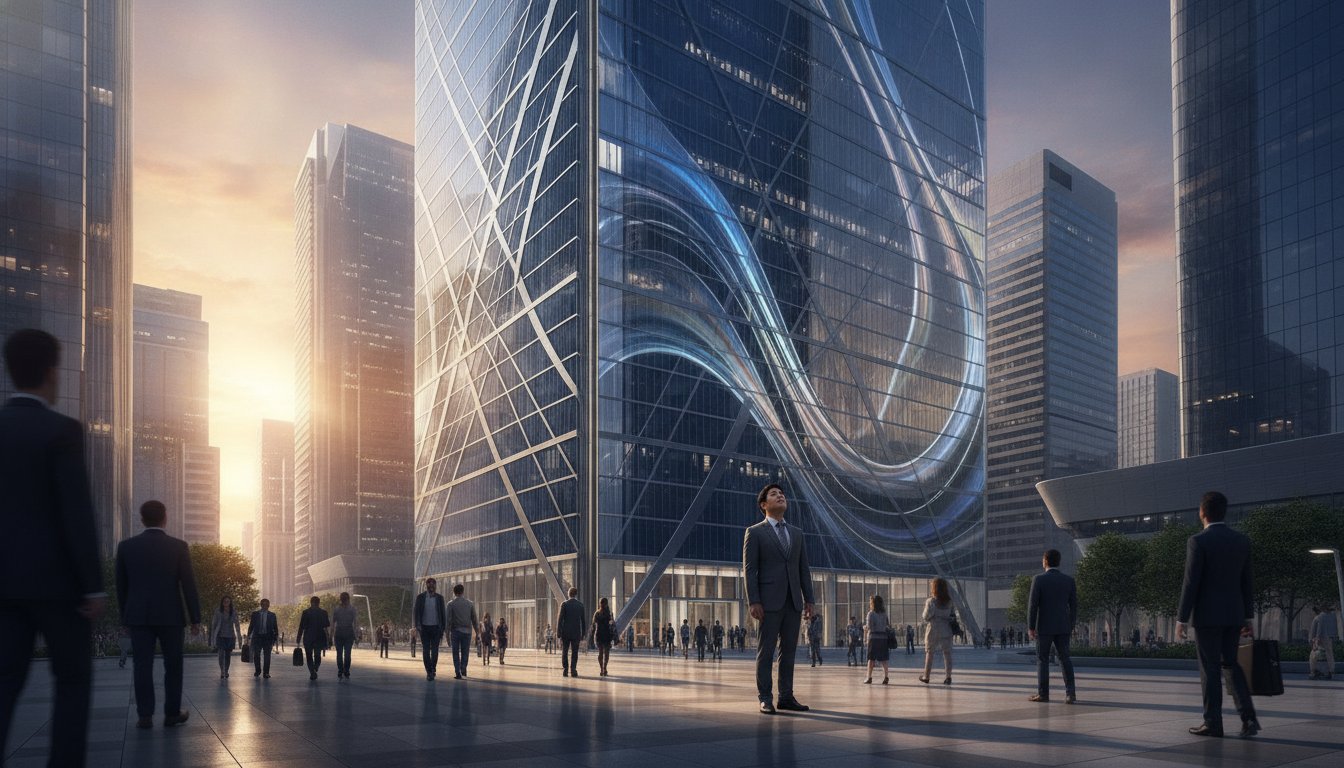
What if your building could breathe, shift, and tell a story that changes with every step a pedestrian takes, all without a single LED or a watt of electricity? In an era where urban centers are tightening light pollution regulations and digital signage maintenance costs are reaching unsustainable peaks, the traditional static exterior feels increasingly like a missed opportunity. You’ve likely felt the pressure to create something iconic that doesn’t become a technical burden. We understand that the most powerful landmarks don’t just stand; they interact. By integrating lenticular building facades, you can transform a silent structure into a rhythmic, motion-driven experience that captivates modern audiences through pure optical physics.
It’s a sophisticated “analog-digital” bridge that offers the vibrancy of motion with the permanence of traditional materials. This guide provides a comprehensive roadmap for mastering kinetic architecture in 2026. You’ll discover how to navigate the current 7% to 15% rise in sheet material costs while maintaining a high-end aesthetic. We’ll walk through the transition from initial concepts to multi-dimensional realities, ensuring your next project is a seamless, risk-free collaboration that results in a durable brand landmark.
Key Takeaways
- Discover how to create immersive, kinetic experiences that bypass the maintenance burdens and regulatory hurdles of traditional digital signage.
- Gain clarity on the technical precision of LPI at scale, ensuring your visual storytelling remains sharp and impactful across vast architectural distances.
- Learn to strategically select between ‘flip’ and ‘motion’ effects to transform lenticular building facades into dynamic brand landmarks that respond to human movement.
- Master the collaborative journey from initial physical sampling to final structural installation, ensuring a seamless integration with your existing architectural team.
- Identify the ‘analog-digital’ advantages of using light-reflective technology to achieve high-impact motion with zero electrical consumption or light pollution.
Defining the Lenticular Building Facade: Architecture in Motion
A lenticular building facade is a non-digital, kinetic surface that breathes life into static architecture. Unlike a digital screen, it requires no power source to create the illusion of movement. Instead, it relies on the physical position of the viewer. As pedestrians or commuters move past the structure, the facade shifts, revealing new colors, hidden textures, or short animations. It is a transformation of light and perspective. This “analog-digital” bridge allows architects to achieve dynamic storytelling without the flicker of pixels or the glare of artificial light. It converts a silent wall into a rhythmic, sensory experience.
In 2026, we see a distinct pivot toward these passive systems. Urban centers are increasingly saturated with digital noise, leading to stricter light pollution regulations and a growing desire for biophilic, earth-toned aesthetics. By utilizing lenticular lens technology, designers can bypass these restrictions while still engaging the peripheral attention of the public. Humans are biologically programmed to detect movement in their side vision. A building that shifts subtly as you walk past creates a deep psychological connection that a static billboard cannot match. It feels organic, responsive, and alive.
The Shift from Static to Dynamic Cladding
Traditional cladding often leaves urban environments feeling cold and repetitive. Dynamic surfaces break this monotony by introducing a sense of wonder into everyday commutes. By transitioning from two-dimensional graphics to multi-dimensional lenticular building facades, a structure becomes an active participant in the city skyline. It is no longer just a wall; it is a landmark. This shift allows for narrative storytelling where a building might display a brand’s heritage from one angle and its future vision from another. We help you see the hidden potential in ordinary surfaces, turning industrial monotony into a canvas for spatial transformation.
Sustainability and Regulatory Benefits
Sustainability is no longer an optional feature in modern design. With the global facade market projected to reach up to $383 billion by 2026, the demand for green alternatives is at an all-time high. Lenticular installations offer several distinct advantages over digital hardware:
- Zero-energy consumption: Motion is powered by the viewer’s movement, not the power grid. It is the ultimate passive technology.
- Mitigating light pollution: These facades respect the night sky and local ordinances, such as the evolving NYC Facade Inspection and Safety Program reforms.
- Long-term ROI: Digital hardware requires cooling systems and frequent component replacement. In contrast, these architectural materials are built for durability and weather resistance.
Choosing this path is a pragmatic decision for the visionary architect. It offers a risk-free way to create impact without the long-term technical burden of electronic displays. You are not just building a wall; you are crafting an enduring, low-maintenance legacy.
The Science of Scale: How Large-Format Lenticular Technology Works
Scaling a visual illusion from the palm of your hand to the side of a skyscraper requires more than just a larger printer. It demands a fundamental shift in optical engineering. While a handheld postcard relies on microscopic precision for an intimate viewing distance, lenticular building facades must command attention from across a four-lane highway or a crowded plaza. At this scale, the physics of light refraction must be recalibrated to account for atmospheric haze, varying light conditions, and the sheer velocity of the audience. We guide you through this transition from the miniature to the monumental, ensuring that your vision remains sharp regardless of the viewing distance.
The core of this technology is the lenticular lens, a specialized sheet of transparent polymer consisting of parallel rows of magnifying lenses. These lenses act as gatekeepers of light. They isolate and magnify specific strips of an underlying interlaced image, revealing different visual data depending on the angle from which they are observed. By controlling the geometry of these lenses, we can dictate exactly when a viewer sees a specific color, a brand message, or a sense of depth. It is a meticulous process of spatial transformation that turns a flat surface into a multi-dimensional narrative.
LPI and Viewing Distances for Buildings
In the context of building-scale fabrication, LPI (Lines Per Inch) represents the frequency of the lenticular lenses, where a lower count ensures that visual shifts remain legible and sharp from hundreds of feet away. While a magazine might use 75 to 100 LPI, architectural installations often drop to 10 or 20 LPI. This lower frequency creates larger “optical steps,” which are necessary for the human eye to resolve the image at a distance. Architects seeking a deeper technical understanding of how these specifications translate to real-world installations will benefit from reviewing the architect’s guide to large format lenticular printing, which covers how to design for motion at an architectural scale and navigate end-to-end fabrication logistics. To ensure your design translates perfectly to the street level, it’s often best to review physical lenticular samples that demonstrate these scale-specific optics in real-world lighting.
Calculating the “sweet spot” is equally critical. For a facade facing a high-speed motorway, the viewing angle must be wider to allow the motion effect to unfold over several seconds. Conversely, a pedestrian walkway requires a tighter angle to create a more responsive, interactive “flip” as people walk past. We handle these complex calculations, balancing transition speeds with image clarity to suit the specific flow of traffic around your site.
Weatherproofing and Environmental Resilience
Architectural environments are unforgiving. To maintain visual clarity for decades, we utilize high-grade, UV-stabilized polymers that resist yellowing and degradation from sun exposure. These lenses are often paired with high-precision aluminum backings, providing the structural rigidity required to withstand wind loads and external impacts. Much like the precision-engineered components from Suspension Store that handle intense physical stress, our mounting systems are designed to allow the material to breathe in extreme heat or cold without warping the optical alignment.
Maintenance for these surfaces is surprisingly minimal. Unlike digital screens that require cooling fans and technical resets, a lenticular facade simply needs periodic cleaning with standard architectural glass solutions. This durability ensures that your landmark remains as vibrant on its tenth anniversary as it was on the day of installation, providing a reliable and sophisticated alternative to high-maintenance digital hardware.
Strategic Design: Transforming Brand Identity through Visual Shifts
Design is the dialogue between a structure and its surroundings. For a corporate headquarters or a flagship retail space, the facade serves as the primary voice of the brand. While traditional signage offers a static declaration of presence, lenticular building facades provide a narrative that unfolds in real time. We approach design not as a flat graphic exercise, but as a choreography of light and movement. By aligning visual shifts with the natural flow of traffic, we transform a passive building envelope into an active storyteller. It’s about moving beyond “what the building is” to “what the building does” as you move past it.
The choice between a “Flip” and a “Motion” effect is the first strategic decision in this creative journey. A flip effect provides a sharp, decisive transition between two or three distinct images. It is ideal for contrasting messages, such as a brand’s historical roots appearing from one direction and its future-facing innovation from the other. In contrast, the motion effect offers a fluid, shimmering transition that creates a sense of organic life. When paired with AluGlow finishes or metallic gradients, these effects catch the shifting sun, ensuring the building’s identity remains vibrant from dawn until dusk. We help you select the rhythm that best reflects your brand’s unique energy. Brands seeking to extend this motion-driven storytelling beyond the building envelope will find that kinetic advertising displays offer the same high-impact lenticular motion in formats purpose-built for campaigns and retail environments.
Agamograph vs. Lenticular Effects
Building geometry often dictates the optical strategy. An Agamograph utilizes a series of folded or angled panels to create distinct 90-degree visual shifts. This is particularly effective for corner buildings where pedestrians approach from perpendicular streets; the image changes completely as they turn the corner. Standard lenticular building facades, however, use curved lenses to provide a smoother, more continuous transition. This approach can also add perceived 3D depth, giving flat surfaces a sense of volume and architectural texture that doesn’t actually exist in the physical structure. It is an intellectual and creative way to solve spatial challenges.
Visual Storytelling in Public Spaces
Modern architecture must compete for attention in a world dominated by digital screens. Kinetic facades create “Instagrammable” moments that drive organic social media coverage without the need for a marketing budget. By collaborating with fine artists, we can turn a corporate facade into a motion mural that reflects the cultural or historical context of its location. This “human-first” approach softens the technical nature of the installation, making the building feel like a gift to the city rather than just another commercial entity. It is a bold way to integrate corporate identity while enhancing the public’s sensory experience of the urban landscape. The same principles that govern exterior facades also apply to interior environments; lenticular wall installations bring this kinetic storytelling inside, transforming lobbies, retail spaces, and public halls into immersive, motion-driven experiences. Designers looking to extend this perspective-driven motion into their interior projects will find that kinetic wall art installations offer a sophisticated, maintenance-free approach to transforming lobbies, corridors, and retail environments into living, responsive surfaces.

From Blueprint to Installation: Managing Large-Scale Fabrication
A vision is only as good as its realization. For lenticular building facades, the transition from a digital render to a structural landmark is a journey of extreme precision. It requires a meticulous orchestration of material science, logistics, and on-site engineering. We don’t just provide panels; we manage the technical complexity of the entire lifecycle. This ensures that the final installation mirrors the artistic intent while meeting the rigorous safety and structural requirements of modern construction. It is a process where the visionary meets the pragmatic.
Coordinating with general contractors and architectural teams is the cornerstone of a successful project. We dive deep into the specifics of structural loads and wind resistance long before the first panel is printed. This collaborative approach removes the friction from the construction process. By acting as your visionary guide, we ensure that the kinetic cladding integrates perfectly with the building’s primary skin, maintaining both aesthetic brilliance and structural integrity. Every detail is calculated to provide a sense of security and ease for the entire design team.
The Sampling and Prototyping Journey
Renders can be deceptive. A digital screen cannot fully replicate how a lenticular building facade interacts with shifting clouds or the harsh glare of high-altitude sun. Because of this, physical prototyping is non-negotiable. We produce 1:1 scale physical samples to test in the exact light conditions of the project site. This allows stakeholders to observe the “flip” at noon versus sunset and refine viewing angles based on real-world traffic patterns. It’s a risk-free collaborative process that builds confidence long before the full-scale fabrication begins.
Logistics and Installation Management
Managing the fabrication of hundreds of specialized panels requires a disciplined “image logic.” Each panel is a piece of a larger kinetic puzzle. High-precision printing ensures that the interlaced images align perfectly across the entire building envelope, maintaining a seamless visual effect. Logistics are equally critical. Shipping and handling high-precision sheets requires specialized packaging to prevent even the slightest surface damage during transit. We manage these complexities so you don’t have to.
The final stage involves the careful calibration of panels at height. Sequential installation is key; if one panel is misaligned by even a fraction of a degree, the kinetic illusion can break. Our project management expertise ensures that every component is handled with the care a fine art installation deserves. If you’re ready to move from concept to construction, you can order architectural lenticular samples to see the precision and durability of our materials firsthand.
Elevating Your Project with Softmotion’s Custom Lenticular Expertise
Realizing the full potential of lenticular building facades requires more than just technical skill. It demands a partner who understands the intersection of fine art and structural engineering. Since 1997, Softmotion has been at the forefront of this specialized field, delivering over 1,000 immersive visual installations across the globe. We serve as your visionary guide, bridging the gap between an ambitious architectural concept and a flawlessly executed reality. Our expertise allows you to push the boundaries of what a building can be, transforming static surfaces into dynamic landmarks that resonate with their audience.
Our approach is rooted in a deep respect for craftsmanship and a commitment to technical precision. We don’t just sell products; we offer a collaborative journey that prioritizes clarity and security at every stage. Whether you’re designing for a corporate headquarters, a retail flagship, or a public art space, our custom fabrication capabilities ensure that every panel meets the highest standards of durability and optical performance. We handle the intricacies of light refraction and material science so your team can remain focused on the broader design vision. It’s a partnership built on trust and a shared passion for spatial transformation.
Why Softmotion is the Architect’s Preferred Partner
Architects choose to partner with us because we offer a level of specialized knowledge that is rare in the industry. Our portfolio includes high-precision work for Fortune-500 clients, where the stakes for brand integrity and visual impact are incredibly high. We provide a global reach, managing the logistics and installation of lenticular building facades worldwide with a methodical, purposeful rhythm. This seasoned leadership ensures that your project isn’t just a creative success, but a logistical one as well. We bring a sense of ease to the most complex challenges, ensuring that every installation is as resilient as it is beautiful.
Start Your Collaborative Journey
The path to a successful kinetic installation begins with a single step of exploration. We invite you to move from the two-dimensional to the multi-dimensional by engaging with our sampling and prototyping process. Our end-to-end service encompasses everything from the initial design consultation to the final physical implementation on-site. This risk-free approach allows you to see the hidden potential in your environment before committing to full-scale fabrication. It’s about providing the technical discipline needed to realize your most bold innovations without the uncertainty of unproven methods.
Ready to redefine your structural landscape? Transform your building with Softmotion’s architectural installations and discover the impact of motion-driven design.
Designing the Future of the Urban Landmark
The transition from static surfaces to living, breathing architecture is no longer a futuristic concept; it’s a pragmatic response to the evolving needs of our cities. You’ve seen how lenticular building facades bridge the gap between high-impact visual storytelling and sustainable, zero-energy implementation. By mastering the science of scale and the nuances of viewing angles, you can bypass the technical fatigue of digital hardware while creating a lasting brand landmark that respects the urban environment.
Realizing this potential requires a partner who balances artistic vision with the discipline of industrial fabrication. With over 1,000 projects delivered since 1997, Softmotion provides the global installation expertise and end-to-end custom fabrication needed to bring your blueprints to life. We handle the technical complexity so you can lead the creative transformation. It is time to reimagine what a structure can achieve when it begins to move with its audience. We look forward to seeing the hidden potential you’ll unlock in your next environment.
Partner with Softmotion for your next architectural lenticular project and let us guide your vision from initial sample to final assembly.
Frequently Asked Questions
What is the maximum size for a lenticular building facade?
There’s no fixed limit to the scale of an installation because it’s constructed from precision-aligned modular panels. While individual sheets are typically constrained by fabrication and transport limits, they’re designed to interlock across vast surface areas. This modular approach allows for the transformation of entire city blocks into a single cohesive visual narrative. We coordinate the alignment of these large-format sheets to maintain a seamless kinetic effect regardless of the total building height or width.
How long do architectural lenticular panels last outdoors?
Architectural-grade panels are engineered to last between 10 and 20 years in outdoor environments. By utilizing UV-stabilized polymers and high-grade aluminum backers, we ensure the visual clarity remains sharp despite constant sun exposure. These materials are selected specifically for their resistance to yellowing and structural degradation. This durability makes them a more stable long-term investment than digital hardware, which often requires significant component replacement within a much shorter timeframe.
Can lenticular facades be installed on existing buildings as a retrofit?
Yes, lenticular panels can be integrated into existing structures as a high-impact retrofit. We work with your architectural team to assess the structural load of the current facade and design a custom mounting system that fits the building’s geometry. This allows you to reimagine a dated industrial exterior without the need for a full demolition. It’s a pragmatic way to breathe new life into an older landmark while significantly increasing its modern engagement and brand value.
How do you clean and maintain a large-scale lenticular installation?
Maintenance is remarkably simple and involves standard architectural cleaning protocols. You don’t need specialized technical crews; instead, a regular wash with mild soap and water is sufficient to remove urban dust and grime. Because there are no electronic components or cooling fans, the risk of mechanical failure is eliminated. This “set and forget” reliability is one of the primary reasons visionary architects choose this technology over high-maintenance LED screens or digital signage hardware.
What is the difference between a lenticular facade and an agamograph?
The primary difference lies in the physical geometry used to create the visual shift. An agamograph relies on a series of physical folds or triangular prisms to show different images from 90-degree angles. In contrast, lenticular building facades use microscopic curved lenses to provide a smoother, more fluid transition that can also simulate 3D depth. While agamographs are excellent for sharp corner shifts, lenticular technology offers a more sophisticated, multi-dimensional experience for pedestrians moving along a straight path.
Are lenticular facades more expensive than traditional architectural cladding?
These installations generally require a higher initial investment than basic metal cladding but offer a significantly lower total cost of ownership than digital alternatives. You’re investing in a custom-engineered optical surface that functions as both a structural skin and a dynamic marketing tool. When you factor in the zero-energy consumption and the lack of ongoing technical maintenance, the long-term ROI becomes clear. It represents a sophisticated middle ground between static architecture and high-cost digital media.
Do lenticular building facades require any electrical power?
No, these facades are entirely passive and require zero electrical power to function. The kinetic effect is powered solely by the physical movement of the viewer. As pedestrians walk or vehicles drive past the building, the shifting perspective reveals the hidden images. This makes it an ideal green alternative for projects aiming for high sustainability ratings or those located in urban centers with strict light pollution regulations. It is motion-driven storytelling that respects the night sky. In residential contexts where some illumination is still required, Paradise Landscape Lighting provides low-voltage LED options that complement these eco-conscious architectural goals.
How do viewing angles affect the design of a kinetic facade?
Viewing angles dictate the rhythm and speed at which the visual story unfolds for the audience. A wider angle is often used for high-speed traffic to ensure the motion effect is legible to drivers, whereas a tighter angle creates a more interactive experience for pedestrians. We calculate these “sweet spots” during the prototyping phase to ensure the kinetic shift aligns with the specific traffic patterns of your site. It’s a meticulous process that ensures the building’s narrative feels intentional and well-paced.