
Kinetic Advertising Displays: A Guide to High-Impact Lenticular Motion
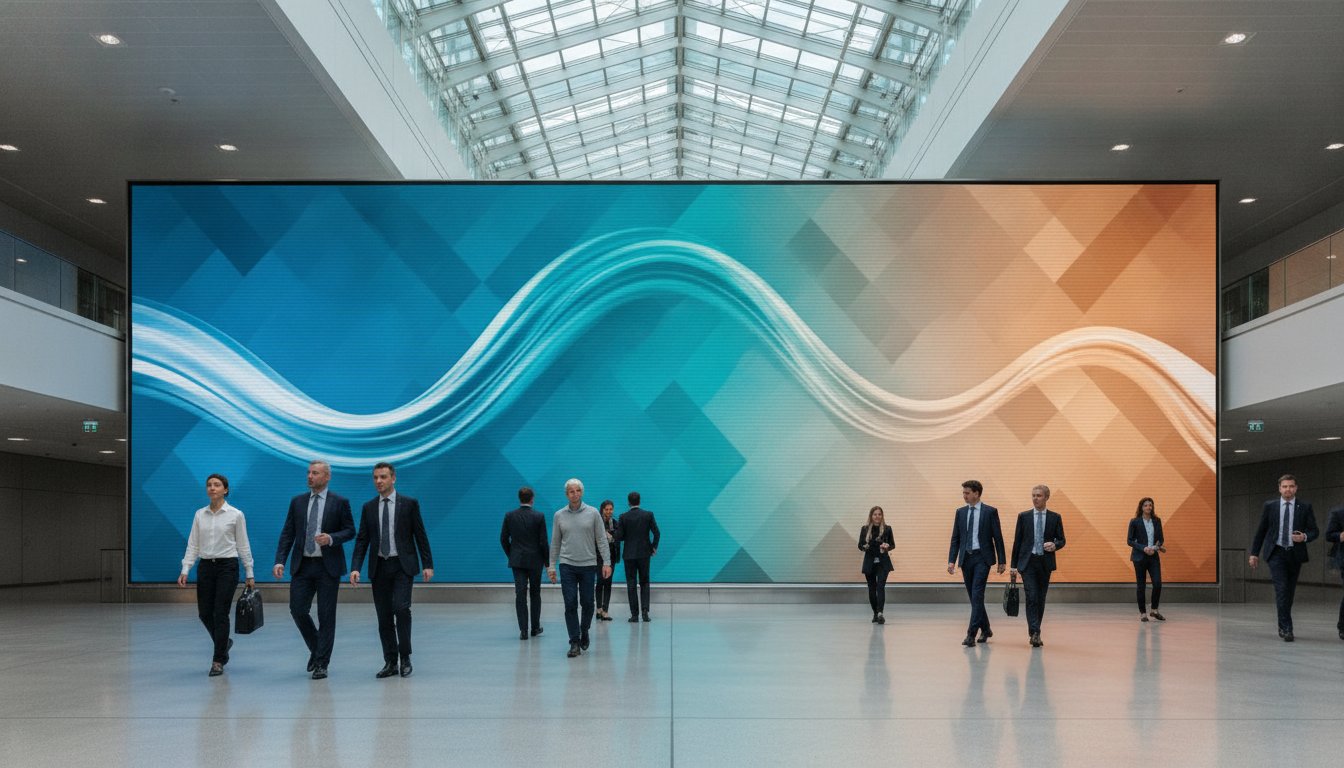
What if the most arresting movement in your next campaign didn’t require a single pixel, a power outlet, or a maintenance crew? We live in an era of digital saturation where consumers have learned to look past glowing screens. Yet, the demand for high-impact brand storytelling has never been greater. You likely feel the pressure to innovate while facing the rising costs and technical fragility of traditional digital hardware. Kinetic advertising displays offer a sophisticated departure from the flickering noise of LED boards, providing a visual effect that feels more like fine art than a standard advertisement.
This guide explores how to transform static surfaces into immersive, motion-driven experiences through the precision of lenticular technology. You’ll discover how to achieve deep engagement without the complexity of mechanical robotics or the energy drain of digital signage. We’ll walk through the mechanics of high-impact motion, the durability of physical installations, and how this medium elevates a brand’s image into something multi-dimensional and memorable. It’s time to move beyond the screen and rediscover the power of physical space through a lens of craftsmanship and clarity.
Key Takeaways
- Understand how kinetic advertising displays harness optical motion to command attention without the energy demands or maintenance of digital hardware.
- Learn to distinguish between active mechanical systems and passive lenticular effects to choose the most durable solution for high-traffic public spaces.
- Explore how luxury retail and transit hubs use perspective-shifting murals to turn routine commutes into memorable, multi-dimensional brand encounters.
- Discover the critical role of precision fabrication and custom sampling in ensuring your large-scale installation remains a flawless work of art.
- Master the transition from two-dimensional concepts to immersive realities through a collaborative and visionary design process.
What are Kinetic Advertising Displays? Defining the New Motion
Kinetic advertising displays represent a fundamental shift in how we perceive and interact with commercial space. For decades, advertising was a static conversation, a fixed image competing for a fleeting glance. Today, that dialogue has evolved. Kinetic displays use physical or optical motion to break the visual monotony of our modern environment, transforming flat surfaces into multi-dimensional experiences. While many industry voices define this category purely through robotics and motors, we view it as a broader movement from the two-dimensional to the multi-dimensional. It is about capturing the eye through change and transformation.
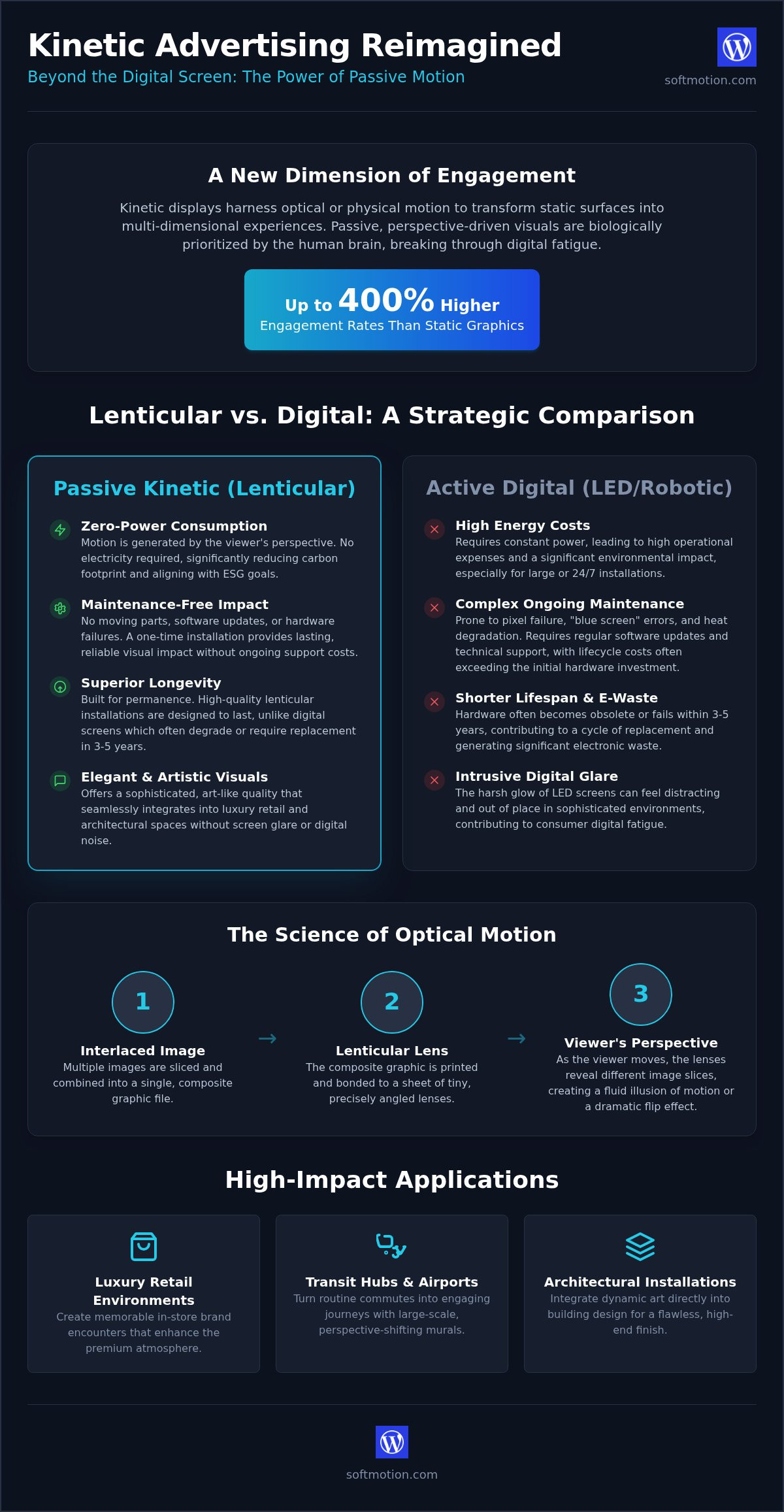
There is a critical distinction between Active and Passive systems. Active kinetic displays rely on mechanical transmissions, robotics, or digital screens to generate movement. They are powerful, but they often come with high energy costs and complex maintenance needs. Passive kinetic displays, which utilize Lenticular printing technology, create the illusion of motion through the viewer’s own perspective. This shift from machine-driven to human-driven motion creates a deeper psychological connection. Some industry professionals report that these motion-driven visuals can achieve engagement rates up to 400% higher than static graphics, as the human brain is biologically wired to prioritize and track movement over still life.
The Science of Optical Kinetic Motion
Lenticular lenses act as a sophisticated bridge between the brand’s message and the observer’s eye. As a person walks past the display, the lens reveals different segments of an interlaced image, creating a fluid illusion of movement or a dramatic “flip” between two distinct scenes. This is the foundation of the Agamograph effect, where a single installation transforms entirely based on where the viewer stands. It turns a simple walk down a retail corridor or an airport terminal into a curated, interactive event. The motion is not forced; it is discovered by the viewer, making the experience feel personal and intentional.
Lenticular vs. Digital: A New Category of Engagement
Digital fatigue has become a significant hurdle for modern brands. In luxury environments or sophisticated architectural spaces, the harsh glow of an LED screen can feel intrusive or even distracting. Passive kinetic displays offer a refined alternative that blends seamlessly with the surrounding design. They eliminate common pain points like screen glare, “blue screen” errors, and the constant need for software updates. By removing the digital hardware, you remove the barrier between the audience and the art. Passive Kinetic displays are zero-energy, perspective-driven installations that transform static surfaces into dynamic narratives through the viewer’s own movement. They provide the “stop-and-stare” impact of a high-tech screen with the permanence and elegance of a physical installation. For a deeper examination of how these two mediums compare in real-world architectural environments, our analysis of lenticular art vs digital signage reveals why the analog approach is gaining ground in 2026.
Lenticular vs. Digital Kinetic Screens: A Strategic Comparison
Digital screens are often the default choice for movement. They offer bright, changing visuals that grab attention instantly. However, the initial allure of an LED wall frequently masks a complex web of long-term liabilities. Kinetic advertising displays that utilize lenticular technology provide a sophisticated alternative, trading the high-energy flicker of pixels for a more permanent, artistic motion. While a digital screen typically accounts for only 20-30% of its total lifecycle cost, with the rest consumed by software and support, lenticular installations represent a one-time investment in lasting impact.
Sustainability and ESG in Advertising
Large-format lenticular prints offer a “Zero-Power” solution that aligns perfectly with modern ESG goals. Unlike LED modules, which often require replacement every 3 to 5 years due to pixel failure or heat degradation, high-quality lenticular sheets are built for longevity. This approach draws inspiration from the history of Kinetic art, where the focus has always been on the interplay of physical space and the viewer’s eye. By choosing optical motion, brands significantly reduce their carbon footprint in retail environments while maintaining the high-impact visual appeal of kinetic advertising displays. There’s no heat to dissipate, no electricity to pull from the grid, and no electronic waste at the end of the campaign.
Maintenance-Free Impact
The true brilliance of passive kinetic motion lies in its reliability. In high-traffic transit hubs, where dust and vibration can wreak havoc on delicate electronics, analog kinetic wins through pure resilience. You don’t need technicians for software updates or power supply repairs. Polycarbonate housings and precision-printed graphics are essentially “always-on,” delivering a consistent brand experience without the risk of a “blue screen” error. We’ve delivered over 1,000 projects since 1997, refining a process that creates “permanent motion” without a single moving part. This stability allows you to focus on the creative vision rather than the hardware logistics. If you’re ready to see the difference, exploring our lenticular samples can provide a tactile understanding of this premium quality.
Beyond the logistics, there is a distinct difference in sensory perception. Digital screens, no matter how high the resolution, remain a grid of glowing pixels. Lenticular displays offer a tactile, premium texture that feels grounded in craftsmanship. It is the difference between a broadcast and a curated installation. This physical presence resonates more deeply in luxury environments, where the goal is to create a sophisticated brand image that blends art and advertising seamlessly. Brands navigating this choice will find that the high-end lenticular art vs digital signage debate increasingly favors the sustainable, zero-power approach for permanent architectural installations.
5 High-Impact Applications for Lenticular Advertising Displays
The versatility of kinetic advertising displays allows them to transcend the limitations of traditional media. They aren’t just tools for promotion; they are architectural elements that redefine how an audience moves through a space. By integrating motion into the physical fabric of an environment, brands can create a narrative that unfolds in real-time. Whether it’s a subtle shift in color or a complete transformation of a product image, these applications prove that engagement is most powerful when it feels like a discovery.
Luxury Retail and Window Displays
In the competitive world of high-end retail, the storefront is a brand’s first and most critical handshake. Lenticular effects allow designers to showcase product transformations, such as a timepiece shifting from its internal mechanics to its finished exterior, or a fashion line transitioning through a “Day to Night” sequence. These dynamic visuals do more than just attract eyes; they influence purchase decisions by increasing the time a consumer spends interacting with the display. By using integrated retail motion displays, luxury brands can stop foot traffic coming from both directions without the visual clutter of bulky digital hardware. The result is a clean, sophisticated aesthetic that respects the boutique’s architecture while maximizing brand recall. For luxury brands weighing their options, a detailed look at lenticular vs digital signage for retail reveals why kinetic art is becoming the defining choice for prestige storefronts in 2026.
Transit Hubs and Public Spaces
Transit hubs are environments defined by constant, linear movement. This makes them the ideal canvas for perspective-shifting murals. Airports and subway corridors are high-traffic zones where commuters are already in motion, providing the “engine” that drives the lenticular effect. We’ve partnered with Fortune-500 brands to create immersive installations that turn a routine walk to a gate into a visionary storytelling experience. These projects must meet rigorous safety and durability standards, often requiring polycarbonate surfaces that resist the wear and tear of public interaction. Unlike digital screens that can be damaged by vibration or dust, these physical installations offer a permanent, low-maintenance solution for massive scale storytelling.
The application of this technology extends into corporate lobbies and exhibition halls. In a corporate setting, a lenticular wall can communicate a company’s history and future vision simultaneously as guests walk toward the reception desk. At tradeshows, these graphics allow exhibitors to stand out with large-scale motion that doesn’t require a complex power drop or technical setup — a capability explored in depth in our guide to interactive lenticular tradeshow displays for 2026. Even in fine art and museums, multi-dimensional prints are used to elevate high-end productions, offering a depth and sensory resonance that traditional printing simply cannot match. Curators seeking to understand the full potential of lenticular art for museum exhibitions will find that this medium meets strict archival standards while transforming gallery walls into fluid, motion-driven narratives. It’s a craft that blends the precision of technical production with the soul of fine art.
The Precision Craft: Designing and Fabricating Kinetic Art
The transition from a creative concept to a physical installation is a journey of technical discipline. High-impact kinetic advertising displays require a level of precision that standard commercial printing cannot provide. This process involves custom design fees that cover the complex interlacing of multiple images. It’s not just about layering. It’s about aligning every pixel with the curvature of the lens to ensure a fluid, high-resolution motion that doesn’t stutter or blur. We view this as a partnership between artistic vision and manufacturing excellence, where the final result is a seamless blend of form and function.
The Design and Prototyping Phase
Prototyping is the bridge between imagination and reality. For large-scale architectural projects, custom prototypes allow designers to test motion effects in situ, observing how ambient light and foot traffic patterns interact with the surface. This phase is critical because the physics of light doesn’t scale linearly. To ensure visual clarity, the lens pitch must be meticulously calibrated to the specific viewer distance of a lobby or street, preventing the moiré patterns that plague lesser productions. This technical rigor ensures the final piece feels like a deliberate part of the environment rather than an after-thought. It’s a process of refinement that guarantees the “stop-and-stare” effect you expect.
Logistics and Professional Installation
Managing the implementation of a multi-panel motion mural is a feat of engineering. Each panel must be aligned with sub-millimeter accuracy to maintain the continuity of the motion effect across the entire surface. Dedicated fees for lenticular installation project management ensure a risk-free outcome for complex facades and interior walls. Since 1997, we’ve delivered over 1,000 projects, refining a collaborative, human-first approach that guides you from the first sketch to the final reveal. We act as your visionary guide, navigating the technical hurdles so you can focus on the artistic resonance of the work. This end-to-end oversight eliminates the stress of coordinating multiple vendors and ensures the structural integrity of the installation.
The result is an installation that carries the weight of corporate dependability and the grace of fine art. Every project we undertake is a testament to the fact that true innovation doesn’t need to be complex for the end-user. If you’re ready to transform your space with a display that commands attention, you can request a custom consultation to begin the collaborative journey. We’re here to help you see the hidden potential in your environment and realize it with absolute clarity.
Partnering with Softmotion: Visionary Kinetic Solutions
Choosing a partner for large-scale kinetic advertising displays is about more than sourcing a vendor. It’s about finding a guide who can navigate the delicate space between architectural permanence and ephemeral brand storytelling. Since 1997, Softmotion has functioned as that bridge. We don’t just print; we fabricate immersive environments that challenge the boundaries of static surfaces. With over 1,000 projects delivered globally, our portfolio serves as a testament to a process that is as methodical as it is imaginative. We turn the ordinary into the extraordinary through a blend of technical discipline and artistic soul.
The Softmotion promise is rooted in a composed, professional execution that removes the stress of technical uncertainty. We believe that the creative process should feel like a partnership, not a transaction. By leading with clarity and purpose, we ensure that every stakeholder feels confident in the final outcome. Our journey together begins with a broad, imaginative vision and moves methodically toward a concrete, logical conclusion. This measured pace reinforces our commitment to craftsmanship and client care, ensuring that your kinetic advertising displays are realized with absolute precision.
Beyond the Static: Why Experience Matters
Expertise in this specialized field is measured by the ability to see hidden potential where others see a blank wall. As a “Visionary Guide,” we bring 25 years of technical discipline to every project, ensuring that the transition from a two-dimensional concept to a multi-dimensional reality is seamless. This experience is vital when managing the complexities of global architectural installations. We understand that a luxury retail window requires a different sensory resonance than a transit hub mural. Our end-to-end production capabilities encompass everything from initial sampling to final project management, providing a risk-free path for Fortune-500 clients and visionary architects alike. We handle the intricacies of the lens and the light so you can focus on the impact of the message.
Requesting Your Custom Kinetic Sample
The true impact of lenticular motion cannot be fully captured on a digital screen. It must be experienced physically. This is why the first step in our collaborative journey is often the creation of a custom kinetic sample. This allows you to hold the technology in your hands and witness the transformation of light and perspective firsthand. Whether you’re exploring the dramatic “flip” of a standard lenticular effect or the sophisticated depth of a custom agamograph, our team is here to consult on the best approach for your specific environment. We invite you to begin this partnership by requesting a sample that reflects your brand’s unique narrative. Let’s collaborate to transform your static environment into a motion-driven experience that resonates with every passerby.
Elevating Your Brand Through the Art of Motion
True innovation in advertising doesn’t require more pixels; it requires a more thoughtful engagement with the physical world. By choosing kinetic advertising displays, you move beyond the limitations of digital hardware and embrace a medium that blends artistic soul with technical precision. These installations offer a sustainable, zero-power alternative that thrives in high-traffic environments like transit hubs and luxury storefronts. You gain the “stop-and-stare” effect while eliminating the maintenance burdens of traditional screens. It is a transition from the flickering noise of a broadcast to the enduring resonance of a curated installation.
Since 1997, we’ve focused on the mastery of large-format motion, delivering over 1,000 successful projects worldwide. We act as your visionary guide, providing end-to-end project management from the first custom prototype to the final installation. Our collaborative approach ensures your brand’s narrative is realized with absolute clarity and corporate dependability. We invite you to transform your space with a custom Softmotion kinetic display and rediscover the potential of your environment. Let’s create something multi-dimensional together.
Frequently Asked Questions
What is the difference between a kinetic LED screen and a lenticular display?
Kinetic LED screens use mechanical motors or digital pixels to move hardware, while lenticular displays use optical lenses to create motion through the viewer’s perspective. LED screens require power, software, and regular maintenance. Lenticular displays are passive, zero-energy installations that rely on human movement. This makes them a more durable and sustainable choice for brands seeking a sophisticated, art-driven presence in public or retail spaces where reliability and elegance are paramount.
Do lenticular advertising displays require electricity or a power source?
No, lenticular kinetic advertising displays are entirely passive and require no electricity or external power source to function. The illusion of motion is generated by the viewer’s physical movement relative to the installation. As a person walks past the display, the light refracts through the lenticular lens to reveal different image segments. This “always-on” nature ensures the display remains impactful regardless of power outages, energy constraints, or the technical failures common with digital systems.
How long do large-format lenticular installations last in outdoor environments?
The lifespan of an outdoor lenticular installation depends on the materials used, but high-quality polycarbonate or acrylic lenses are designed to last for several years. These materials are UV-resistant and built to withstand temperature fluctuations and moisture. While digital modules often fail within 3 to 5 years, a well-maintained physical installation remains vibrant and functional. We select specific industrial-grade sheets to ensure the optical clarity and motion effects remain sharp through various weather conditions.
Can I use custom brand videos for a lenticular kinetic display?
While you cannot play a video file directly, we can translate your high-resolution video content into a multi-frame lenticular sequence. This process involves extracting key frames from your footage and interlacing them to recreate the motion effect. The result is a physical display that captures the essence of your digital content. It provides a tactile, multi-dimensional experience that feels more integrated into the architecture than a standard broadcast loop, offering a sophisticated blend of art and technology.
What is the maximum size for a lenticular wall installation?
There is virtually no limit to the size of a lenticular wall installation because we use a multi-panel approach for large-scale projects. Individual panels are printed with extreme precision and then seamlessly joined during installation to create massive murals. This modular technique allows us to cover entire building facades or long transit corridors. Every panel is meticulously aligned to ensure the motion effect remains consistent and fluid across the entire surface of the display, regardless of the scale.
How do I maintain a lenticular advertising display in a high-traffic area?
Maintenance is remarkably simple and involves basic cleaning with non-abrasive materials and mild soap. Because there are no moving parts, software, or delicate electronics, you don’t need a technical team for ongoing support. The durable polycarbonate surfaces are designed to resist dust and minor impacts common in transit hubs or retail centers. This low-maintenance profile is a primary reason why kinetic advertising displays are preferred for permanent public art projects and high-end commercial installations.
What is the typical lead time for a custom fabricated kinetic project?
Lead times vary based on the scale and complexity of the project, typically ranging from a few weeks for samples to several months for large-format installations. The process begins with a collaborative design phase, followed by prototyping and custom fabrication. We manage every step of the journey to ensure a risk-free outcome. This methodical pace allows for the technical precision required to calibrate lens pitch and viewing distances, ensuring that the final result meets our high standards of craftsmanship.
Are lenticular displays more cost-effective than digital signage over time?
Yes, lenticular displays are significantly more cost-effective over their lifecycle because they eliminate ongoing expenses related to electricity, software licenses, and hardware repairs. While a digital screen requires a constant power draw and technical updates, a passive installation is a one-time investment. The durability of the physical materials also means you won’t face the frequent replacement costs associated with LED module failure or screen degradation. Over time, the total cost of ownership is much lower than digital alternatives.