
Architectural Visual Storytelling: Transforming Static Spaces into Kinetic Narratives
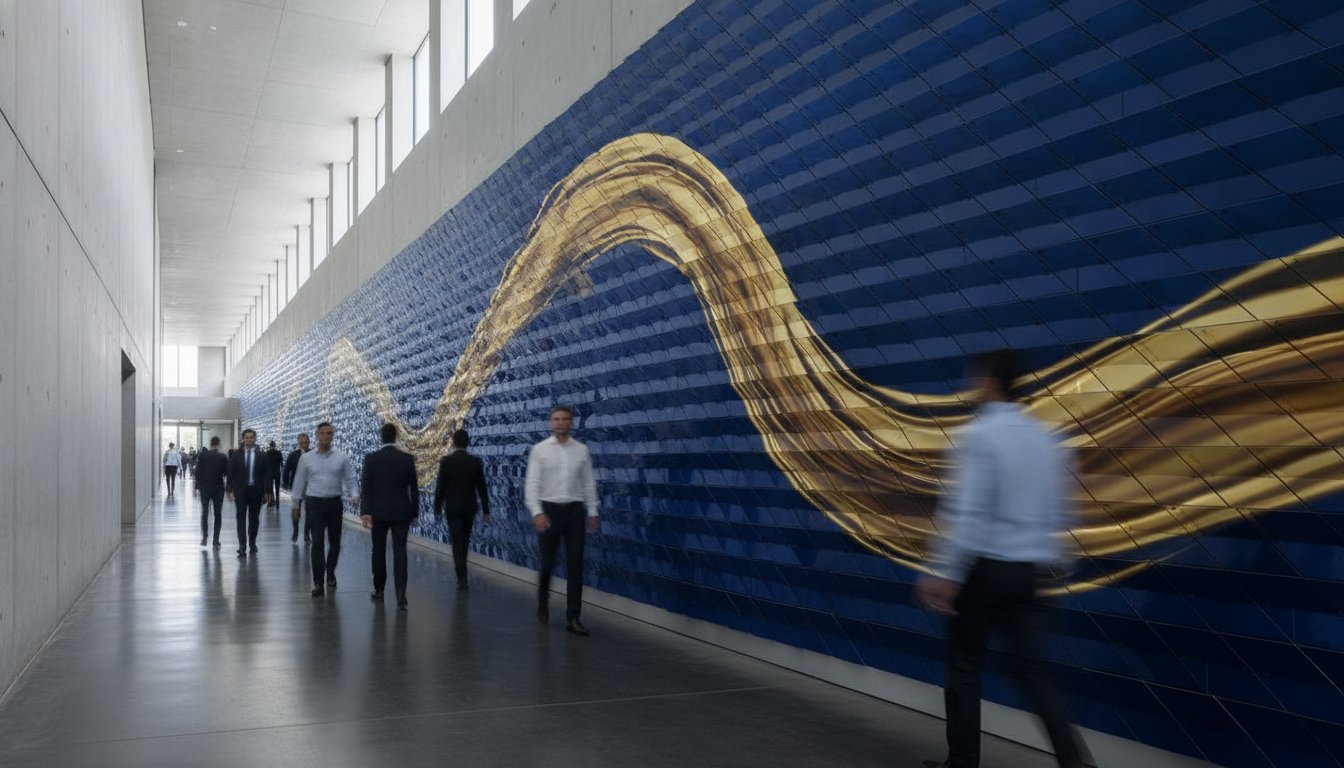
What if your walls could breathe without a single spark of electricity? While digital screens are ubiquitous, the most profound experiences often come from the physical environment rather than a glowing overlay. True architectural visual storytelling isn’t just about placing a logo on a surface; it’s about transforming a static corridor into a kinetic narrative that shifts and evolves as people walk by. You’ve likely felt the limitations of traditional design where a wall, no matter how beautifully textured, remains fundamentally silent and unmoving.
We recognize that modern spaces need to do more than just exist; they must communicate brand values and spark curiosity without the high maintenance costs of digital hardware. This article reveals how to use kinetic lenticular technology to create immersive, motion-driven stories within the built environment. You’ll learn how to replace stagnant surfaces with dynamic installations that increase dwell time and engagement. We’ll explore the transition from the two-dimensional to the multi-dimensional, providing a roadmap for creating a unique architectural signature that truly moves your audience.
Key Takeaways
- Understand how architectural visual storytelling shifts the focus from static surfaces to dynamic, narrative-driven environments that react to human movement.
- Discover why kinetic motion offers a sustainable, electricity-free alternative to digital signage, reducing viewer fatigue while maintaining high engagement.
- Learn how lenticular technology translates physical movement into a “Walk-By” effect, allowing a narrative arc to unfold naturally as visitors move through a space.
- Identify strategic “High-Narrative” zones like lobbies and building facades where motion murals can transform an ordinary commute into an immersive experience.
- Gain insight into a proven, collaborative process that moves from initial samples to full-scale installation, ensuring your creative vision is realized with technical precision.
The Essence of Architectural Visual Storytelling: Beyond Static Design
Architectural visual storytelling is the strategic orchestration of space, material, and motion to communicate a coherent narrative. Traditionally, we’ve viewed buildings as static monoliths. They stand; they shelter; they remain fixed. Narrative architecture, however, reimagines the built environment as a living entity that engages the senses. In an era where corporate identity is often diluted by digital noise, the physical environment remains a potent tool for authentic connection. By introducing kinetic surfaces, architects can turn a mute wall into a dynamic canvas that speaks directly to the viewer. This approach transforms a project from a mere structure into a signature experience that resonates long after a visitor leaves.
Storytelling is no longer an optional layer for modern corporate headquarters or public transit hubs; it’s a functional requirement. It differentiates a brand in a crowded market. It provides a sense of place in an increasingly homogenized world. When a building tells a story, it creates a “human-first” environment that prioritizes the visitor’s journey. Kinetic surfaces serve as the ultimate medium for this mission, offering a way to weave complex brand values into the very fabric of the infrastructure. To ensure these narratives align with a broader marketing strategy, you can visit Alpha Agency for professional media and advertising support.
The Human-Centric Narrative in Built Environments
Spatial design isn’t just about aesthetics; it directly influences memory retention and emotional state. For those looking to integrate sophisticated visual identities into their projects, you can visit Studio Murschetz to see how professional design elevates the built environment. We’re witnessing a transition from simply viewing a space to interacting with a story. Modern architects are moving away from passive decor. They’re embracing active communication. When a wall changes as you walk past it, the space becomes memorable. It stops being a background and starts being a participant. This interaction grounds the visitor in the present moment, fostering a deeper connection between the individual and the architecture.
Many projects rely on digital renderings to sell a vision. While Architectural illustration provides a vital foundation for visualizing these designs, the physical reality often falls short when designers default to glowing LED screens. Digital signage brings glare, high maintenance, and “blue light” fatigue. It often feels like an afterthought rather than an integrated element. Integrated, material-based motion offers a more sophisticated path. It creates movement without a power source, using only ambient light and the viewer’s own perspective. Architectural storytelling is the bridge between a building’s physical form and its intended emotional message.
Static vs. Kinetic: Why Motion is the New Frontier of Spatial Branding
A blank wall is a silent surface. It occupies physical space but often fails to engage the human mind. In the specialized field of architectural visual storytelling, the transition from static to kinetic represents a fundamental shift in how we inhabit the built environment. While a traditional mural remains fixed and predictable, a kinetic surface transforms in response to the viewer’s movement. This creates a rhythmic dialogue between the individual and the architecture. It’s a reimagining of the wall as a dynamic canvas; it’s an invitation to look closer and move with purpose.
Movement serves as a sophisticated tool for navigation and wayfinding. In complex environments like transit hubs or expansive corporate campuses, the human eye naturally follows motion. By strategically placing kinetic elements, architects can guide visitors through a space without relying on cluttered, intrusive signage. This subtle psychological nudge captures attention while maintaining the serenity of the design. Because lenticular technology operates entirely through ambient light, it provides a sustainable, high-impact solution that avoids the maintenance burdens of digital alternatives.
Breaking the “Static Barrier” in Corporate Lobbies
A corporate lobby serves as the threshold of a company’s identity. Too often, this critical first impression is limited to a static logo mounted on stone or glass. By incorporating lenticular art for corporate spaces, you transform that greeting into a shifting brand journey. The element of discovery becomes the primary narrative engine. As a visitor walks from the entrance to the reception desk, the wall evolves. It reveals layers of history, core values, or future visions. This interaction creates a lasting memory; it turns a routine walk into an emotional experience that differentiates the project from a standard office environment.
The Agamograph Effect: Dual Narratives in One Space
The agamograph principle offers a unique way to tell dual stories within a single footprint. By displaying two distinct images that reveal themselves from different angles, you can communicate “Before and After” narratives or showcase a complex “Problem and Solution” scenario. This technique is particularly effective in narrow corridors or transit walkways where viewers are naturally in motion. It maximizes the utility of every square inch. The architecture works harder to convey the brand’s message, rewarding the viewer’s physical movement with a complete narrative arc. Exploring the possibilities of a kinetic architectural installation is the first step toward creating a space that truly resonates with its audience.
The Mechanics of Perspective: How Lenticular Technology Tells Stories
Lenticular technology relies on the precise physical properties of light and perspective. At its core, a series of microscopic, semi-cylindrical lenses are aligned over a specially interlaced image. As the viewer moves, their line of sight shifts through these lenses, revealing different slices of the underlying graphic. This creates the illusion of motion, depth, or transformation without a single moving part. It’s pure physics; it’s an elegant solution to the problem of the static wall. Unlike digital screens that often fight against ambient light, lenticular installations thrive in it. They offer 3D depth and flip-motion effects that don’t require specialized eyewear or a power source. For architects, this means the story is embedded in the material itself, ensuring durability and a permanent brand presence.
Architectural visual storytelling relies heavily on the “Walk-By” effect. This isn’t a static billboard meant to be seen from a single point. It’s a narrative arc that unfolds at the pace of the pedestrian. As someone traverses a room, the installation reveals its story sequentially. One angle might show a company’s humble beginnings, while another reveals its vision for the next century. This transition happens fluidly, rewarding the viewer’s physical movement with a complete, multi-dimensional experience. The building stops being a backdrop and becomes a storyteller that reacts to every step.
Designing for the Moving Viewer
Successful installations require a deep understanding of the “sweet spot” of viewing distance. If the viewer is too close or too far, the motion can feel blurred or disjointed. Designers must calculate the rhythm of motion based on average walking speeds in specific environments. A fast-paced transit corridor requires a different lens pitch than a contemplative corporate gallery. To achieve this level of precision, architects often consult technical specifications for large format lenticular printing to ensure the lenses match the spatial constraints of the project.
From Concept to Prototype: The Architect’s Journey
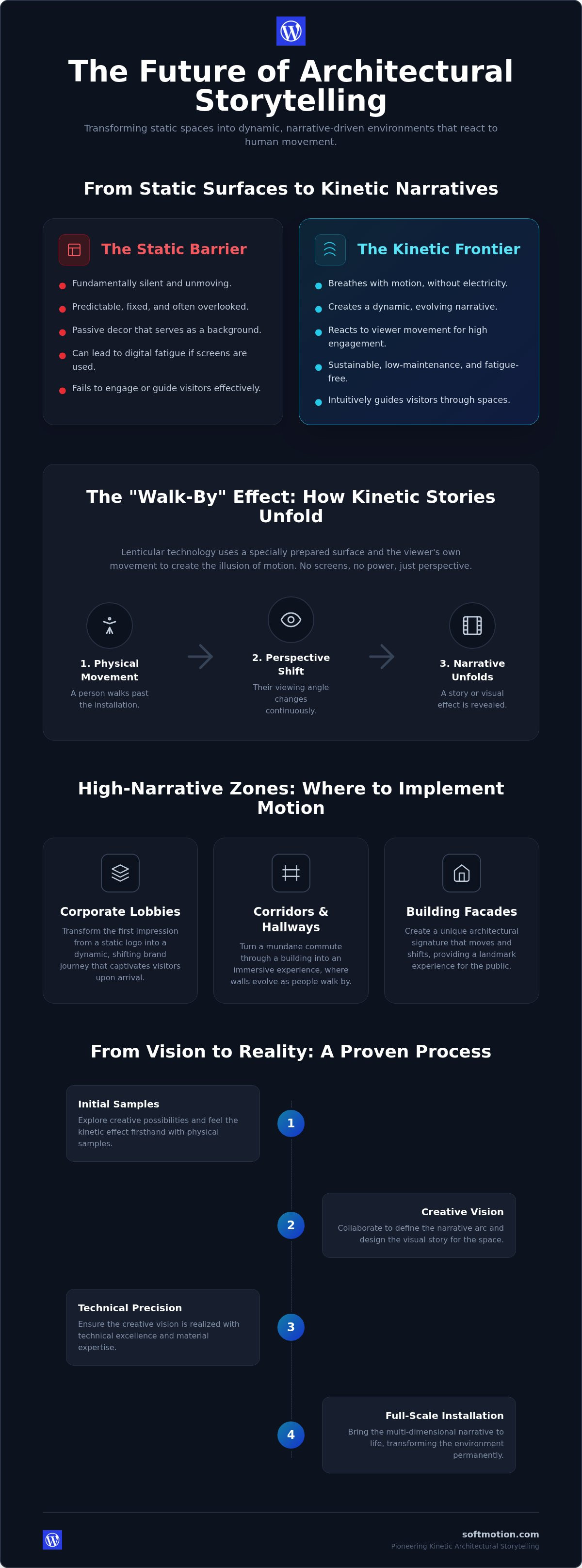
Moving from a digital concept to a physical installation requires a methodical, collaborative approach. Validating the visual story early is essential to avoid costly errors at scale. Using custom lenticular prototypes allows designers to iterate on motion effects and verify color accuracy before full-scale fabrication begins. This phase ensures that the final motion is fluid and the emotional resonance is preserved. It’s a risk-free path from a visionary sketch to a concrete, high-performance architectural signature. For a deeper understanding of how spatial transformation works in practice, our guide to perspective shifting wall art explores the mechanics and nuances of bringing these kinetic narratives to life at scale.
Strategic Implementation: Where Storytelling Meets Infrastructure
Identifying the right location is the first step in successful architectural visual storytelling. Not every wall requires motion; instead, designers should focus on “High-Narrative” zones where human traffic is densest and engagement potential is highest. Lobbies, transit hubs, and building facades serve as the primary stages for these kinetic narratives. In these spaces, the architecture must do more than provide structure. It must communicate. By placing a kinetic installation at a decision point or a transition zone, you anchor the brand’s message in the physical path of the visitor. This strategic placement ensures that the story isn’t just seen; it’s experienced as a natural part of the journey.
Physical kinetic art offers a level of sophistication that digital hardware often lacks. While an LED screen can feel like an intrusive “ad” competing for attention, a lenticular installation feels like an integrated piece of fine art. It commands respect through its materiality and craftsmanship. Longevity is another critical factor. Digital components eventually flicker, fade, or require software updates. In contrast, high-precision physical lenses are built for the life of the building. They provide a permanent, low-maintenance signature that outlasts multiple generations of digital hardware, making them a pragmatic choice for long-term infrastructure projects.
Transit Hubs and Public Infrastructure
Commuters in transit hubs are often in a state of “waiting,” which makes them a captive audience for narrative experiences. Perspective-shifting graphics can significantly reduce perceived wait times by providing a moment of visual delight and discovery. Integrating motion murals for public spaces allows cities to tell local history or cultural stories directly on the walls of subway stations or public squares. These installations are engineered for high-traffic durability, resisting the wear and tear of thousands of daily interactions while maintaining their visual clarity and emotional impact.
Retail and Hospitality: Immersive Brand Worlds
In retail and hospitality, the goal is often to create “Instagrammable” moments that drive organic social media coverage. A wall that transforms as a guest walks by is inherently shareable. It captures a sense of wonder that static decor cannot replicate. These kinetic surfaces can even change the mood of a space; a subtle shift in color or pattern can make an environment feel energetic in the morning and contemplative by evening. For those looking to extend this narrative to the exterior, lenticular building facades offer a way to turn an entire structure into a landmark that communicates with the city itself. To begin your journey toward a more dynamic environment, we invite you to explore our Architectural Lenticular Installations.
The Softmotion Approach: Crafting Multi-Dimensional Narratives
Softmotion acts as the Visionary Guide for professionals who refuse to accept the limitations of the static wall. Since 1997, we’ve delivered over 1,000 projects globally, positioning our business as a seasoned leader in the specialized field of architectural visual storytelling. We don’t merely provide materials; we facilitate a profound spatial transformation. A wall is traditionally seen as a boundary or a mute surface. We reimagine it as a narrative threshold that breathes and moves in response to the viewer. Our work bridges the gap between visionary inspiration and grounded professional reliability, ensuring that every installation meets the exacting standards of Fortune 500 companies and world-class architects.
A Legacy of Motion
We’ve mastered the transition from two-dimensional surfaces to multi-dimensional experiences. Our collaborative philosophy is rooted in a human-first approach, where we function as a dedicated partner rather than a distant vendor. We’ve spent decades perfecting the technical production required to bring fine art sensibilities to large-scale infrastructure. Softmotion possesses the specialized technical discipline to convert any static surface into a dynamic artwork that resonates with its audience. This legacy is built on a foundation of craftsmanship, clarity, and an unwavering commitment to the architect’s original intent. By prioritizing sensory experience, we ensure that the final result has a lasting emotional resonance on the public.
Ready to Tell Your Story?
Bringing a kinetic narrative to life requires a methodical and purposeful flow. We provide an end-to-end process that guides you from the initial concept through project management to final assembly. It’s a risk-free journey designed to ensure your creative vision is realized with absolute precision. We invite you to explore the hidden potential of your next environment through our high-precision, large-format lenticular printing. This technology allows for a sophisticated interplay of light and perspective that digital screens simply can’t replicate. The process begins with a conversation and moves quickly into the tangible world of samples and custom prototypes. This collaborative phase allows us to iterate on motion effects and color accuracy before the final fabrication begins. You’ll feel secure in the knowledge that the technical details are handled by experts while you focus on the creative impact. Partner with Softmotion to bring your architectural vision to life.
Redefining the Narrative Environment
A building’s legacy is defined by the stories it tells and the emotions it evokes. We’ve explored how kinetic surfaces move beyond the limitations of digital screens, offering a sustainable way to engage the moving viewer through the “walk-by” effect. By grounding your creative vision in the physical laws of perspective, you can transform silent walls into dynamic brand narratives. This shift from static to kinetic isn’t just an aesthetic choice; it’s a fundamental evolution in architectural visual storytelling that prioritizes human interaction and lasting impact.
Softmotion brings over 25 years of specialized expertise to your project, having delivered over 1,000 successful installations for Fortune 500 corporations and global architectural firms since 1997. We provide end-to-end project management, from initial sampling to final installation, ensuring a risk-free path to technical excellence. You don’t have to navigate the transition to multi-dimensional design alone. Our team is ready to act as your visionary guide, helping you uncover the hidden potential in every environment. Begin your journey from static to kinetic with Softmotion and watch your architectural vision come to life in motion.
Frequently Asked Questions
What is architectural visual storytelling?
Architectural visual storytelling is the strategic orchestration of physical space and materials to communicate a specific brand or cultural narrative. It involves transforming static environments into dynamic experiences that respond to human movement. Unlike traditional decor, this approach uses the building’s own structure to guide visitors through a sequence of imagery. It turns a silent wall into a rhythmic dialogue, ensuring the architectural intent is felt rather than just seen by the audience.
How does lenticular technology differ from digital screens for storytelling?
Lenticular technology provides a sustainable, material-based alternative to digital signage hardware. While screens require electricity and regular maintenance, lenticular installations use ambient light and the viewer’s perspective to create perceived motion. This eliminates “blue light” fatigue and glare, making the art feel like an integrated part of the wall. It offers a permanent, low-maintenance signature that outlasts multiple generations of digital hardware while maintaining a high-end, artistic sensibility in corporate environments.
Can lenticular installations be used on building exteriors?
Yes, lenticular technology is highly effective for building facades and exterior storytelling. These installations are engineered using architectural-grade materials that withstand environmental exposure while maintaining visual clarity. By turning an entire facade into a kinetic surface, architects can create landmarks that communicate with the city. The motion is triggered by the natural movement of pedestrians or vehicles, allowing the building to shift its appearance throughout the day without any power consumption or digital failure risks.
How long do physical kinetic wall installations last?
Physical kinetic wall installations are designed for long-term durability and often last for the life of the building’s interior finish. High-precision lenticular sheets are made from robust materials that don’t flicker, fade, or require software updates like digital components. Because they rely on physics rather than electronics, they offer a permanent brand presence. This longevity makes them a pragmatic investment for infrastructure projects where low maintenance and consistent visual performance are critical requirements for the client.
Is lenticular technology suitable for large-scale public art?
Lenticular technology is exceptionally well-suited for large-scale public art due to its ability to engage crowds through the “walk-by” effect. Softmotion has delivered over 1,000 projects globally, many of which are immersive installations in transit hubs and public squares. These motion murals transform ordinary commutes into discovery-filled journeys. They reduce perceived wait times and increase engagement by providing a multi-dimensional narrative that encourages visitors to explore the space from multiple angles and perspectives.
Do I need special lighting for a lenticular visual installation?
You don’t need specialized theatrical lighting, but consistent ambient or directional light is essential for optimal performance. Lenticular lenses function by reflecting the light available in the environment to the viewer’s eye. Well-placed overhead or track lighting can enhance the depth and clarity of the flip-motion effects. During the design process, we evaluate the existing light sources in your space to ensure the visual narrative remains vibrant and clear from every intended viewing angle.
What is the design process for a custom motion mural?
The process follows a methodical path from visionary concept to physical reality. It begins with a collaborative design phase where we translate your brand values into interlaced imagery. We then move into producing custom lenticular prototypes to validate motion fluidity and color accuracy at a smaller scale. Once the prototype is approved, we handle the high-precision large-format printing and end-to-end project management, including final on-site assembly, to ensure a risk-free and professional installation experience.
How does viewer perspective change the narrative in a kinetic wall?
Viewer perspective is the engine that drives the narrative in a kinetic wall. As a person moves through a space, their changing line of sight reveals different slices of the interlaced image through the semi-cylindrical lenses. This allows for dual narratives, such as “before and after” stories, or a sequential unfolding of a complex brand history. The architecture literally reacts to the person’s step, rewarding their physical movement with a complete, multi-dimensional story that feels personal and interactive. To learn more about how this spatial transformation works in practice, explore our comprehensive guide to perspective shifting wall art and the mechanics behind creating kinetic dialogues between art and viewer.