
Beyond the Vanishing Point: A Guide to Perspective Shifting Wall Art in 2026
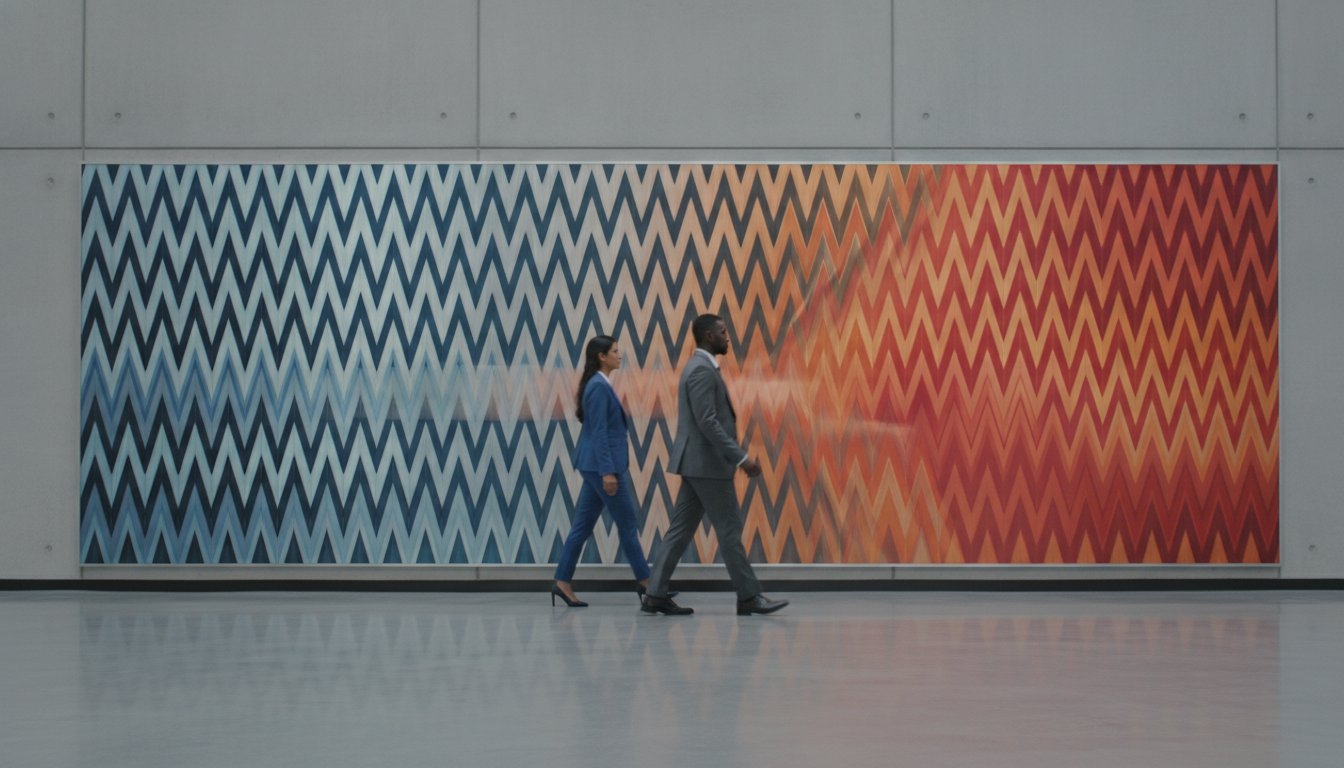
A wall shouldn’t just sit there. While traditional decor relies on a fixed vanishing point to simulate depth, true innovation happens when the art moves with the viewer. Most corporate lobbies and public hallways suffer from a quiet, static fatigue where the decor eventually fades into the background. You’ve likely felt the frustration of choosing between uninspired prints and the high-maintenance distraction of digital signage. Professional perspective shifting wall art offers a sophisticated alternative, turning a static hallway into an interactive experience that breathes with its environment.
This guide reveals how professional lenticular technology transforms these silent surfaces into dynamic narratives. By moving beyond two-dimensional limitations, you can create a kinetic dialogue between the architecture and the people moving through it. We’ll explore the mechanics of spatial transformation, the nuances of large-scale fabrication, and how to select a partner who understands the delicate balance between fine art and technical precision. It’s time to discover how your environment can finally start talking back.
Key Takeaways
- Understand how kinetic art transforms passive hallways into active narratives that respond to pedestrian movement.
- Learn the technical differences between “flip” and “motion” effects to select the right lenticular experience for your specific environment.
- Discover how luxury retail and public spaces use perspective shifting wall art to capture attention and direct foot traffic without the need for digital screens.
- Explore the critical role of custom prototyping and precision interlacing in ensuring large-scale installations meet professional architectural standards.
- See how a collaborative, end-to-end fabrication process mitigates project risk from the initial visionary concept through to final assembly.
Redefining Perspective: From Static Images to Kinetic Environments
Traditional 2D perspective relies on a mathematical trick to suggest depth where none exists. It’s a beautiful lie. This classic approach assumes a stationary viewer, someone standing perfectly still to appreciate the illusion. Kinetic art, however, uses physical geometry to create a genuine multi-dimensional environment. This isn’t just about “3D” effects. It’s about a narrative that changes with every step you take. In high-traffic areas like transit hubs or luxury showrooms, perspective shifting wall art captures the eye without the frantic flicker of a TV screen. It’s a sophisticated, analog motion that feels natural rather than intrusive.
The Evolution of the Vanishing Point
For centuries, the vanishing point was the anchor of visual realism. It created an illusion of space that lived behind the frame, inviting the viewer to look into another world. Today, we’ve moved beyond that singular, fixed point of view. High-end installations now utilize lenticular technology to create visuals that evolve as you walk past. This is the core of architectural visual storytelling. It’s no longer about a frozen moment in time. It’s about a narrative that unfolds in sequence, governed by the viewer’s own pace and physical position. The art becomes a journey rather than a destination.
Why Static Art is No Longer Enough
In environments saturated with digital noise, our brains have learned to filter out the static. A traditional painting in a corporate lobby often becomes invisible after the first week. It lacks the “surprise” necessary to break through the mental clutter of a busy workday. Perspective shifting wall art provides that necessary break. When a wall appears to change color, reveal hidden text, or shift its entire composition as you pass, it triggers a primal curiosity. It forces a pause. This kinetic interaction creates a human-first emotional connection that static images simply don’t achieve. The art isn’t just displayed; it’s experienced. It transforms a passive space into an active conversation, ensuring the environment feels alive and responsive to those who inhabit it.
The Mechanics of Motion: How Lenticular Technology Shifts the View
Kinetic art doesn’t need a power cord to come alive. By Exploring Kinetic Art through the lens of passive physics, we find a more durable solution for architectural spaces. Unlike mechanical sculptures that rely on delicate motors or battery packs, perspective shifting wall art utilizes a series of clear, semi-cylindrical lenses. These lenses isolate specific slices of an interlaced image, projecting different visual data depending on where you stand. Light does the work. It’s a reliable, low-maintenance way to introduce movement into a static environment without the risk of mechanical failure.
Lenticular vs. Agamograph: Choosing Your Effect
An Agamograph uses a series of sharp, physical folds to reveal two or three distinct images. It’s a tactile, geometric approach that works well for large, bold graphics viewed from a distance. Lenticular lenses, however, offer a much smoother transition. They allow for complex “motion” effects where multiple frames blend into a fluid sequence. If your space has a long, narrow hallway, the smooth transition of a lenticular installation is often superior to the staggered jump of an Agamograph. Choosing the right technique depends entirely on the viewing distance and the speed of the pedestrian flow.
The Science of Parallax in Art
Our brains create depth through parallax, the slight difference in what each eye perceives. When we produce large-scale perspective shifting wall art, we map these images with microscopic precision. Precision is everything. If the alignment is off by even a fraction of a millimeter, the illusion collapses into a blurred ghost image. The rate at which the visual narrative unfolds is directly proportional to the velocity of the observer’s stride. This relationship ensures the artwork feels responsive to the human element rather than just looping on a timer.
For those planning a permanent installation, the durability of these materials is a significant advantage. They resist the wear and tear of high-traffic environments while maintaining their vibrant clarity for years. If you’re curious about how these effects look in person, viewing motion murals for public spaces provides a clear example of how these lenses perform at scale.
Strategic Inspiration: Elevating Commercial and Public Spaces
Commercial environments often struggle with a sense of sterile stagnation. Static walls contribute to this fatigue, offering nothing new to the repeat visitor or the daily commuter. Integrating Kinetic art into these spaces changes the fundamental energy of the room. It turns a simple walk through a lobby into a moment of discovery. Professional perspective shifting wall art acts as a bridge between the architecture and the people who inhabit it, transforming a passive transit point into an active destination.
In transit hubs, “wait-time” anxiety is a measurable psychological burden. When people have nothing to engage with, their focus shifts to the clock. Perspective-shifting installations provide a low-stimulus, high-engagement distraction that perceptibly reduces this stress. Pedestrians engage with the visual shift as they move, which naturally regulates their pace. This is particularly effective in motion murals for public spaces, where the scale of the work dictates the rhythm of the entire environment. It forces a pause. Innovation is visible.
Corporate Lobbies and Brand Narratives
In retail, the primary challenge is breaking the consumer’s stride. We live in a screen-saturated world where digital ads are often ignored as visual noise. Lenticular displays offer a tactile, non-digital alternative that naturally stops foot traffic. It creates a “stop-and-stare” effect that digital signage often misses. Because the motion is triggered by the viewer’s own movement, it feels like a personal discovery. These installations often become shareable moments for social media; customers love to capture the transition on their phones. It’s a high-end, interactive experience that requires no power, making it both sustainable and mesmerizing.

From Vision to Installation: The Prototyping Journey
Vision is the easy part. Realizing a large-scale installation requires a disciplined bridge between digital design and physical reality. When you move into the production phase of perspective shifting wall art, the process shifts from creative exploration to technical orchestration. Digital files must be interlaced with microscopic accuracy, a method where multiple visual narratives are sliced into thousands of thin strips and mapped precisely to the geometric pitch of the physical lenses. If this mapping is off by even a fraction of a millimeter, the transition feels sluggish or cluttered. This phase is where the “human-first” design meets the rigid requirements of optical physics.
The Critical Role of Sampling
You can’t rely on a computer monitor to predict how light will interact with a physical lens. A small-scale sample is a mandatory safeguard in the creative journey. It allows you to test color accuracy and motion speed within the actual environment where the piece will live. Lighting conditions, whether they’re harsh overhead LEDs or soft ambient glow, fundamentally change how the lens refracts the hidden image layers. Reviewing an Architect’s Guide to Custom Lenticular Prototypes helps clarify how these samples mitigate risk before full-scale fabrication begins. It ensures that the final result matches the visionary intent without costly mid-project corrections.
Installation and Project Management
The final phase involves a high level of coordination between architects, site contractors, and fabrication experts. Viewing height is a critical variable that must be settled early. The “sweet spot” of the kinetic motion must align with the average eye level of the pedestrian flow to be effective. For large-scale projects, managing the logistics of multi-panel mounting requires a specialized framing system that ensures every lens is perfectly parallel to the next. Precision alignment is the difference between art and a blur. When panels aren’t perfectly flush, the visual narrative “breaks” at the seams, destroying the illusion of a continuous, breathing surface.
A successful installation is the result of a controlled, collaborative process that leaves nothing to chance. From the initial interlacing to the final mounting bracket, every step must be calculated to preserve the emotional impact of the work. If you’re ready to see how your vision translates to the physical world, you can order custom lenticular samples to begin the journey with confidence.
Collaborative Fabrication: Realizing Large-Scale Kinetic Art with Softmotion
Ordinary surfaces hold hidden potential. Transforming a static wall into perspective shifting wall art requires more than just technical skill; it demands a partnership rooted in visionary thinking. We don’t just supply materials. We provide a comprehensive, end-to-end fabrication service that guides your project from the initial digital interlacing to the final, precise assembly. This collaborative journey ensures that your creative intent remains the focal point, while we handle the complex physics of lenticular technology. By positioning ourselves as a visionary guide, we help architects and designers bridge the gap between a two-dimensional concept and a multi-dimensional reality. It’s a process designed to be risk-free, methodical, and deeply rewarding.
A Legacy of Motion
Experience provides the foundation for innovation. Since our founding in 1997, we’ve delivered over 1,000 projects to global architects and Fortune-500 corporations. This legacy isn’t just a collection of numbers. It’s a testament to our technical discipline and our commitment to a human-first approach to fabrication. We believe that technology should serve the emotional experience of the viewer, not distract from it. Our expertise allows us to offer specialized Architectural Lenticular Installations and Fine Art Lenticular Prints that meet the highest standards of durability and visual clarity. Whether the project is a massive exterior facade or an intimate gallery piece, we apply the same level of craftsmanship and care to ensure the final result resonates with its audience.
Starting Your Project
Transformation begins with a single conversation. We invite you to look at your existing lobbies, hallways, and public spaces through a different lens. If you’re ready to move beyond the limitations of static decor, the first step is a collaborative consultation to explore what’s possible for your specific environment. We prioritize clarity and partnership throughout the creative process, helping you navigate the technical nuances of viewing distances and lens selection. Don’t let your environment remain silent. By embracing perspective shifting wall art, you can turn a passive surface into a dynamic narrative that engages every person who walks past. Our team is ready to help you see the hidden potential in your ordinary environments and provide the technical discipline to realize it.
Transforming Your Space Through Kinetic Narrative
Static environments don’t have to remain silent. You’ve seen how professional perspective shifting wall art bridges the gap between traditional architecture and interactive storytelling. By focusing on the mechanics of motion and the rigor of technical prototyping, a simple hallway becomes a memorable journey. It’s about moving beyond the frame and into a space that responds to human presence. This transition from the two-dimensional to the multi-dimensional isn’t just an aesthetic upgrade; it’s a strategic investment in how people experience your brand or public space.
Since 1997, Softmotion has specialized in architectural-grade lenticular fabrication, delivering over 1,000 global projects for visionary architects and designers. We provide the end-to-end management necessary to turn complex optical physics into seamless, high-impact installations that stand the test of time. Our collaborative process ensures your vision is realized with precision and craftsmanship. Start your kinetic art journey with a custom Softmotion consultation today. We look forward to seeing the hidden potential in your environment come to life.
Frequently Asked Questions
How does perspective shifting wall art work without electricity?
This art operates entirely through passive optical physics rather than digital components. Clear semi-cylindrical lenses refract light from a precision-interlaced image hidden beneath the surface. As you walk past the installation, the viewing angle changes, which reveals different visual slices in sequence. This creates a natural sense of motion that requires no power, batteries, or wiring. It’s a sustainable solution for permanent architectural environments where electrical maintenance is a concern.
What is the difference between a lenticular print and a retail novelty?
Professional installations focus on large-format perspective shifting wall art and immersive architectural environments rather than small-scale retail novelties. The difference lies in the technical discipline required to integrate the work with building geometry. Architectural-grade pieces offer a sophisticated kinetic narrative that feels like a structural feature. We prioritize scale and visual depth that responds to pedestrian movement, creating a permanent environment that transforms as people walk through the space.
Can perspective shifting art be installed outdoors?
Yes, these installations are highly effective in outdoor environments when fabricated with the correct materials. We recommend UV-stable finishes and durable substrates to ensure the visual clarity remains vibrant for years. For coastal or harsh urban areas, using high-grade metals like 316 stainless steel or bronze provides the necessary longevity. Because the motion is passive, there are no delicate mechanical parts that could be damaged by rain, wind, or temperature fluctuations.
What is the maximum size for a lenticular wall installation?
There is no strict maximum size for a professional installation because we utilize specialized multi-panel mounting systems. We can cover entire lobby walls or long transit corridors by aligning multiple high-precision panels. The key is maintaining sub-millimeter alignment across every seam to ensure the visual narrative remains fluid. Since 1997, we’ve delivered over 1,000 projects, many of which involve massive architectural scales that transform the entire spatial experience for viewers.
How do you clean and maintain large-scale kinetic art?
Maintaining large-scale kinetic art is simple because there are no moving mechanical parts or screens. You can clean the lens surface using standard non-abrasive cleaners and soft microfiber cloths. Since the installation doesn’t rely on electricity, you don’t have to worry about hardware failures or software updates. This low-maintenance profile makes it an ideal choice for busy public spaces where traditional digital signage would be too costly to manage.
How long does the custom design and fabrication process take?
The timeline for custom fabrication depends on the scale and complexity of your specific project. Our process is methodical and purposeful, beginning with an initial consultation and moving into the critical prototyping phase. Creating custom samples allows us to verify color accuracy and motion speed in your actual environment before full production. This collaborative journey ensures that the final assembly meets professional architectural standards while minimizing risk throughout the creative execution.
Is lenticular art suitable for high-traffic transit hubs?
These installations are perfectly suited for high-traffic environments like airports or train stations. They help regulate pedestrian flow and have been shown to reduce wait-time anxiety by providing an engaging, low-stimulus distraction. Because the art is passive and durable, it withstands the rigors of public use without the downtime associated with digital screens. It turns a functional transit point into a destination that captures attention without overwhelming the senses.
What kind of images work best for a perspective-shifting effect?
Images with high contrast and clear, distinct compositions typically yield the most striking results. For a flip effect, using two bold, contrasting images ensures a clean transition as the viewer moves. For a motion effect, sequential frames that suggest a fluid narrative work best. We help you map these visuals precisely to the physical lenses during the design phase. This ensures the perspective shifting wall art feels responsive and intentional from every possible viewing angle.