
Worldwide Lenticular Installation Services for Architecture
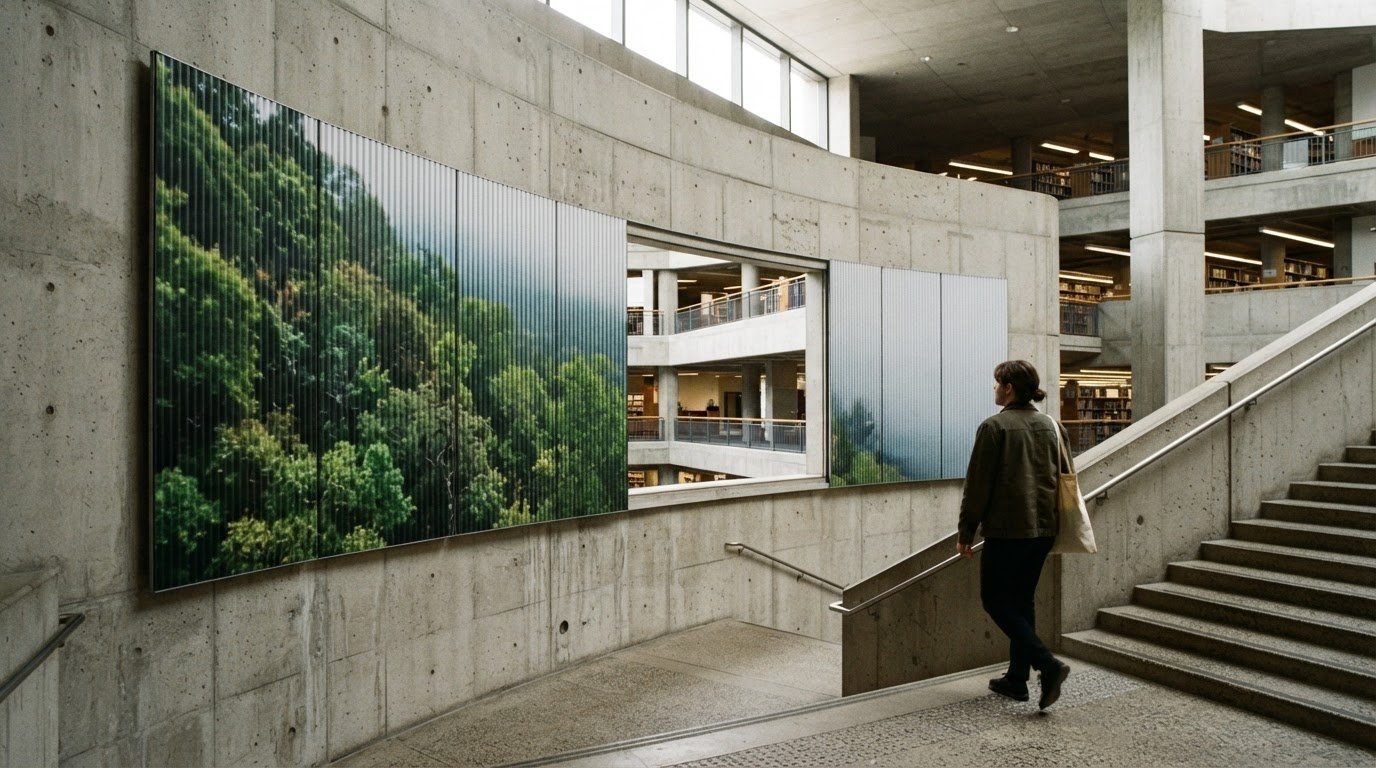
Architecture can do more than frame a view; it can shape how people experience a space. Worldwide lenticular installation services bring movement or dimensional depth into architectural settings by integrating lenticular artwork with a site’s surfaces and sightlines. The result is a visual feature designed around how people encounter the space, not an image considered in isolation.
That integration takes more than choosing an eye-catching image. The artwork, viewing angles, installation surface, and feature’s role in the wider design all affect how it reads in place. Lenticular imagery can shift between images or create a sense of depth, turning a wall or other architectural element into an engaging visual experience.
This article explains how lenticular installations can fit into architectural projects and what to consider when planning one. It also covers international project support, from aligning the visual concept with the space to coordinating production and installation at the destination.
Key Takeaways
- Learn how image movement and depth can be planned around architectural surfaces and viewing angles.
- Understand what regional support can mean for coordinating an installation across international locations.
- See which capabilities matter when assessing a provider for a large-scale lenticular project.
- Identify the project details that shape international shipping and installation costs, from print dimensions to site requirements.
Architectural integration
Architectural integration starts by matching the lenticular format to the surface, viewing path, and building use. The process connects image preparation, printing, and installation planning so the motion or depth feels intentional within the space.
Permits and Safety Requirements
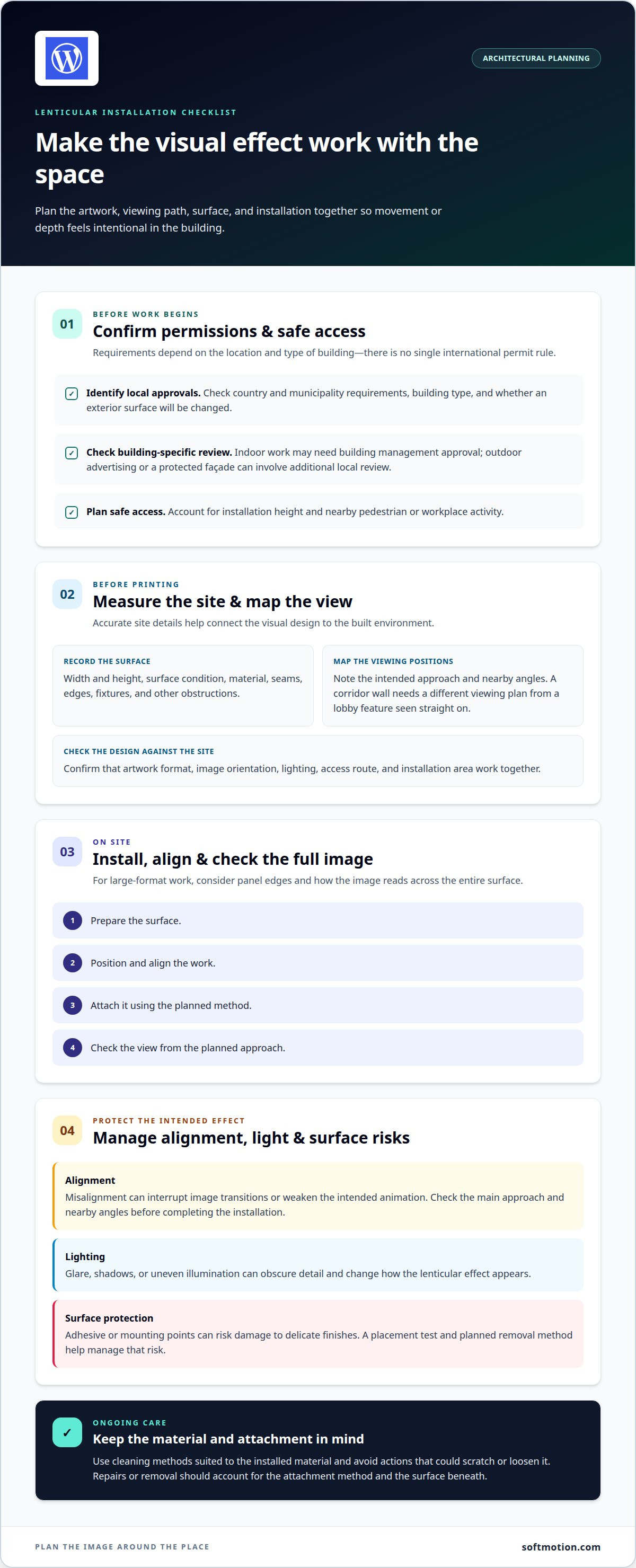
Permit requirements vary by country, municipality, building type, and whether the installation changes an exterior surface. Indoor work may require building management approval, while outdoor advertising or work on a protected facade can involve additional local review. There is no single international permit rule. The project team identifies relevant approvals and plans safe access based on the building, installation height, and nearby pedestrian or workplace activity.
Site Measurement and Preparation
Before printing, record the installation area’s width and height, surface condition, edges, obstructions, and intended viewing positions. A wall beside a corridor, for example, needs a different viewing plan from a lobby feature seen straight on. Note the surface material, seams, and fixtures that could affect placement. Then confirm the artwork format, image orientation, lighting, access route, and installation area work together. Accurate site information helps align the visual design with the built environment.
Installation and Ongoing Care
Installation typically involves preparing the surface, positioning and aligning the work, attaching it, then checking the view from the planned approach. For a large-format lenticular piece, account for panel edges and how the image reads across the full surface. Care involves using cleaning methods suited to the installed material and avoiding actions that could scratch or loosen it. Repairs or removal should account for the attachment method and the surface beneath.
Alignment, Lighting, and Surface Risks
Misalignment can interrupt the transition between images or weaken the intended animation as viewers move. Check the image from the main approach and nearby angles before completing the installation. Lighting matters too: glare, shadows, or uneven illumination can obscure detail and change how the lenticular effect appears. Surface damage is another risk, especially where adhesive or mounting points meet delicate finishes. A careful placement test and a planned removal method help manage these issues.
Regional service locations
International coverage describes how a project is supported, not simply how many countries appear on a map. Compare whether planning, lenticular printing, material selection, and on-site installation can be coordinated for your destination. A museum project in one country, for example, may need a different delivery sequence from a retail installation at several locations.
To assess experience, review completed work similar to your project in scale and setting. A lenticular poster for a gallery has different demands from large-format work integrated into an office interior. Look for demonstrated skill in image preparation, print production, installation planning, and finishing. Managing these connected stages matters as much as the visual effects shown in a portfolio.
Project support can involve direct installation teams, regional partners, or a coordinated combination. Clarify how responsibilities are organized at the destination: who manages site information, who handles installation, and how production details reach the local team. For a project spanning several sites, consistent artwork specifications and a clear handoff help maintain quality across locations.
Materials and viewing conditions also shape regional execution. A bright atrium, a shaded corridor, and an outdoor-facing wall each present different lighting and placement considerations. Before production, align the intended effects with the site’s viewing distance, surface, and local installation conditions. For 3D lenticular printing, the planned viewer position influences how the depth effect is perceived; motion designs need their own viewing path.
Use a practical comparison: match the provider’s relevant project experience to your site, confirm which stages they coordinate, then map their stated coverage to the installation location. This separates broad international capability from support that fits your specific brief. If you’re developing an architectural project, explore lenticular installation planning as a way to connect the visual concept with site requirements.
What companies provide lenticular installation services worldwide?
Worldwide lenticular installation services generally come from two types of providers: lenticular print specialists coordinating projects internationally, and local installation teams working from supplied production specifications. The first focuses on image preparation and print production; the second handles placement at the destination. For an architectural wall, these roles need a clear handoff so the finished image aligns with the surface and intended viewing path.
Assess experience through relevant project examples rather than broad claims of international reach. A provider showing only small promotional pieces may have a different production focus from one demonstrating large-format architectural work. Look for examples with comparable surfaces, dimensions, and viewing conditions. A gallery installation and a public-facing building feature, for instance, call for different site planning and coordination.
Capabilities matter across the full creative sequence. Lenticular printing combines two or more images through a lens structure, creating effects such as animation or 3D depth. Ask how the provider develops artwork, prepares interlacing, selects materials, and plans the finished format. These steps connect the visual concept to the physical installation. A strong process makes responsibilities clear from design files through final placement.
For international projects, compare how production and installation are coordinated at the destination. Clarify who manages technical specifications, communicates site requirements, and oversees the local handoff. For projects at multiple locations, consistent artwork files and installation instructions help maintain a coherent result. Make sure the service coverage suits the actual installation sites, rather than relying on a general claim of worldwide reach.
A practical comparison can follow four criteria:
- Relevant experience: Find completed work resembling the project’s scale and setting.
- Production capability: Review image preparation, lenticular printing, and material planning.
- Installation coordination: Identify how the production team and local installers share specifications.
- Destination fit: Confirm the stated support model covers each project location.
Together, these criteria show whether a provider can connect lenticular craftsmanship with the practical needs of an architectural project.
What factors affect the cost of shipping and installing large lenticular prints internationally?
The total depends on print dimensions, packaging needs, destination, and installation scope. A large, rigid piece may need different packaging and handling from several smaller panels. Shipping distance matters, but the packed format, delivery method, and site access also shape logistics. The project price depends on its requirements and is provided after a quote request.
Production details affect how a shipment is prepared. The print’s size, panel configuration, and protective packaging determine its packed dimensions and handling requirements. A design for a broad wall may be produced as one piece or as coordinated panels, depending on the project. That choice affects how the work is packed, moved through the building, and positioned during installation.
Destination and delivery arrangements add another layer. The origin and receiving location, available routes, and timing requirements all shape transport planning. At the site, stairs, elevators, narrow corridors, loading access, and the distance from the delivery point can affect the labor and equipment needed. A ground-floor gallery and an upper-level space with restricted access call for different installation plans.
Installation scope matters too. The estimate reflects the surface, attachment approach, number of components, and work needed to position and align the finished image. Site preparation or coordination with building operations can affect the sequence. For international projects, coordinating production, shipping, and local installation responsibilities helps clarify what the estimate covers.
To develop a useful estimate, the project team considers:
- Artwork: Finished dimensions, panel layout, and lenticular format.
- Transport: Destination, packed size, handling, and delivery conditions.
- Access: Route from receiving point to the installation surface.
- Installation: Surface, positioning, attachment, and alignment requirements.
Share the destination, approximate dimensions, site details, and intended installation scope to support a project-specific quote. Request an international installation quote to discuss the factors shaping your project.
The production requirements are lenticular software, printing equipment, and lenticular plastics. These sit alongside shipping and installation planning for international projects.
Softmotion: Architectural Lenticular Installations
Softmotion creates Architectural Lenticular Installations that bring movement and visual depth into built environments. Turn to the team when a project calls for lenticular artwork designed around an architectural surface, rather than a standalone print. Planning connects the visual concept with the intended space, aligning the artwork and installation with how people encounter it.
Softmotion’s large-format lenticular printing and immersive visual installation experience supports projects for architects, artists, advertisers, and corporate environments worldwide. The work can complement a space’s purpose, whether it creates a distinctive interior feature or brings image movement into a broader design. Related applications include Advertising Lenticular Displays, Fine Art Lenticular Prints, and Tradeshow Lenticular Graphics.
For an architectural project, bring together the location, intended surface, visual direction, and installation goals from the outset. Contact Softmotion to discuss your lenticular installation.
Shape the Next Step for Your Space
A strong architectural concept starts with the experience you want people to have in the space. Define the moment, mood, or story the installation should create, then let that intention guide the creative direction. For teams considering worldwide lenticular installation services, connecting visual ambition with architectural purpose can make the planning conversation more focused.
Softmotion brings this visual approach to Architectural Lenticular Installations, while Advertising Lenticular Displays and Fine Art Lenticular Prints serve distinct creative contexts. The right direction depends on how the artwork should engage its audience and contribute to its surroundings.
Bring your architectural vision, project setting, and creative goals together for a considered discussion with Softmotion. Contact Softmotion about your project and take the next step toward shaping a space with movement and visual depth.
Frequently Asked Questions
Which countries and regions do lenticular installation providers serve?
Coverage varies by provider; Softmotion serves projects worldwide. For an international installation, the destination is only one part of the plan. The project also needs coordinated production details, delivery arrangements, and site installation planning. Share the country or region, project setting, and intended scope when discussing a project so the service approach can be considered in context.
What types of lenticular installations are available, such as wall displays, floors, windows, and outdoor signage?
Common project categories include architectural installations, advertising displays, and fine art prints. Softmotion transforms static walls, walkways, and other large surfaces into visual canvases that change with viewer movement. A floor, window, or outdoor-signage concept should be considered according to its setting and purpose. The installation type should suit the intended visual experience and surface.
What materials and mounting systems are used for lenticular installations?
Lenticular installations use lenticular lenses and precision ink to create depth, motion, and perspective. The finished construction and mounting approach depend on the artwork format and installation surface, so no single system suits every project. A large wall piece and a lenticular print intended for display, for example, may need different planning. The surface and final placement guide those decisions.