
Transforming Spaces: The Architect’s Guide to Dynamic Lenticular Building Interiors in 2026
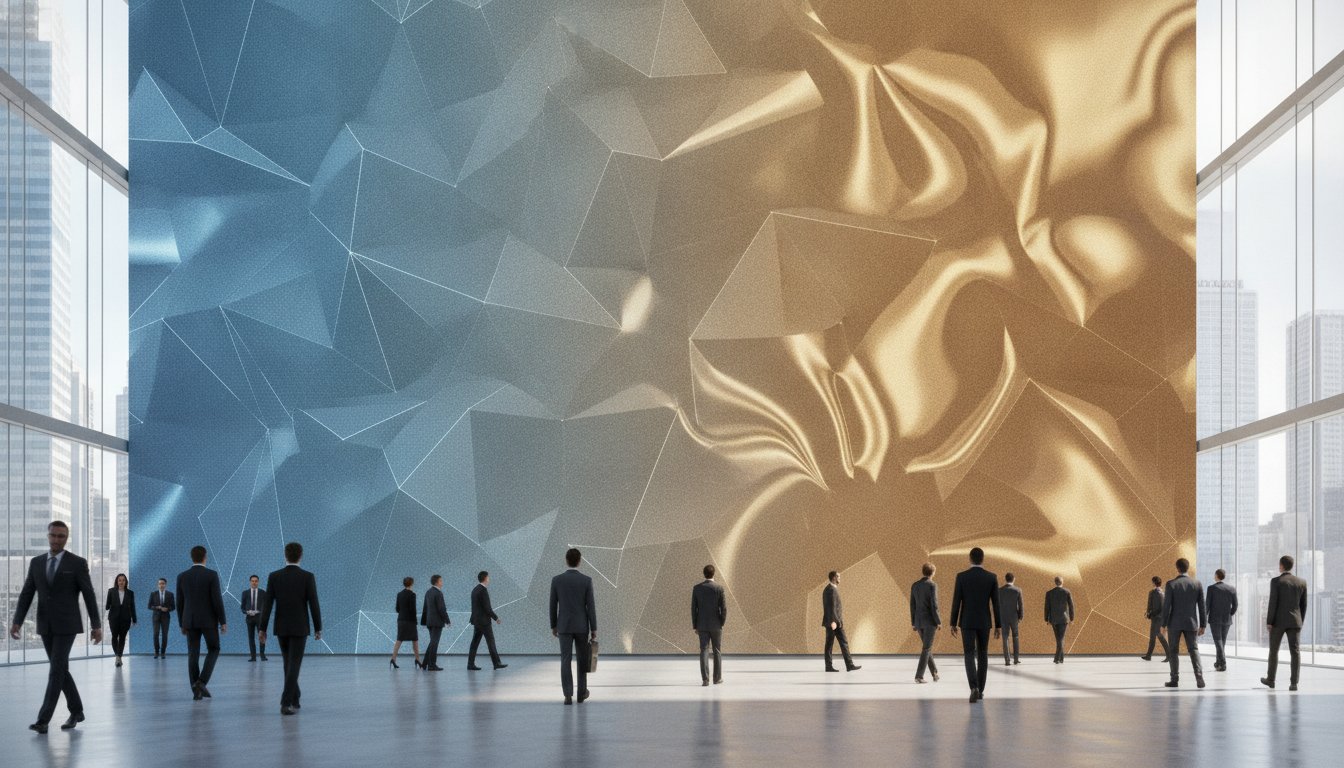
What if the most captivating feature in your next project didn’t require a single kilowatt of power or a flickering LED screen to command the room? Architects today find themselves at a difficult crossroads. Clients demand spaces that feel alive and interactive, yet occupants are increasingly exhausted by the intrusive glow and high-maintenance demands of digital displays. You’ve likely felt the frustration of designing a beautiful, high-end environment only to have it feel static or uninviting once the initial novelty wears off. Using dynamic lenticular building interiors allows you to reclaim that energy without the digital fatigue, transforming dead walls into surfaces that respond directly to the rhythm of human movement.
In this guide, you’ll discover how to integrate these motion-driven, non-digital surfaces to create truly immersive environments. We’ll provide a clear framework for specifying large-scale lenticular walls and explain the technical differences between flip and motion effects to ensure your vision translates perfectly to the physical space. From understanding custom fabrication to choosing a reliable partner for end-to-end production, this is your roadmap for bringing multidimensional life back to the built environment. It’s time to move beyond the static and embrace a more human, responsive approach to spatial design.
Key Takeaways
- Learn how dynamic lenticular building interiors transform static surfaces into motion-driven environments using the viewer’s own movement as the visual engine.
- Discover the operational benefits of analog interactivity, from zero energy consumption to the elimination of digital maintenance and IT security risks.
- Gain technical clarity on specifying the correct LPI and choosing fire-rated substrates to ensure safety and visual precision at architectural scales.
- Understand the importance of physical prototyping and collaborative design in translating complex digital files into successful large-format installations.
Defining the Dynamic Interior: Why Lenticular is Trending in 2026
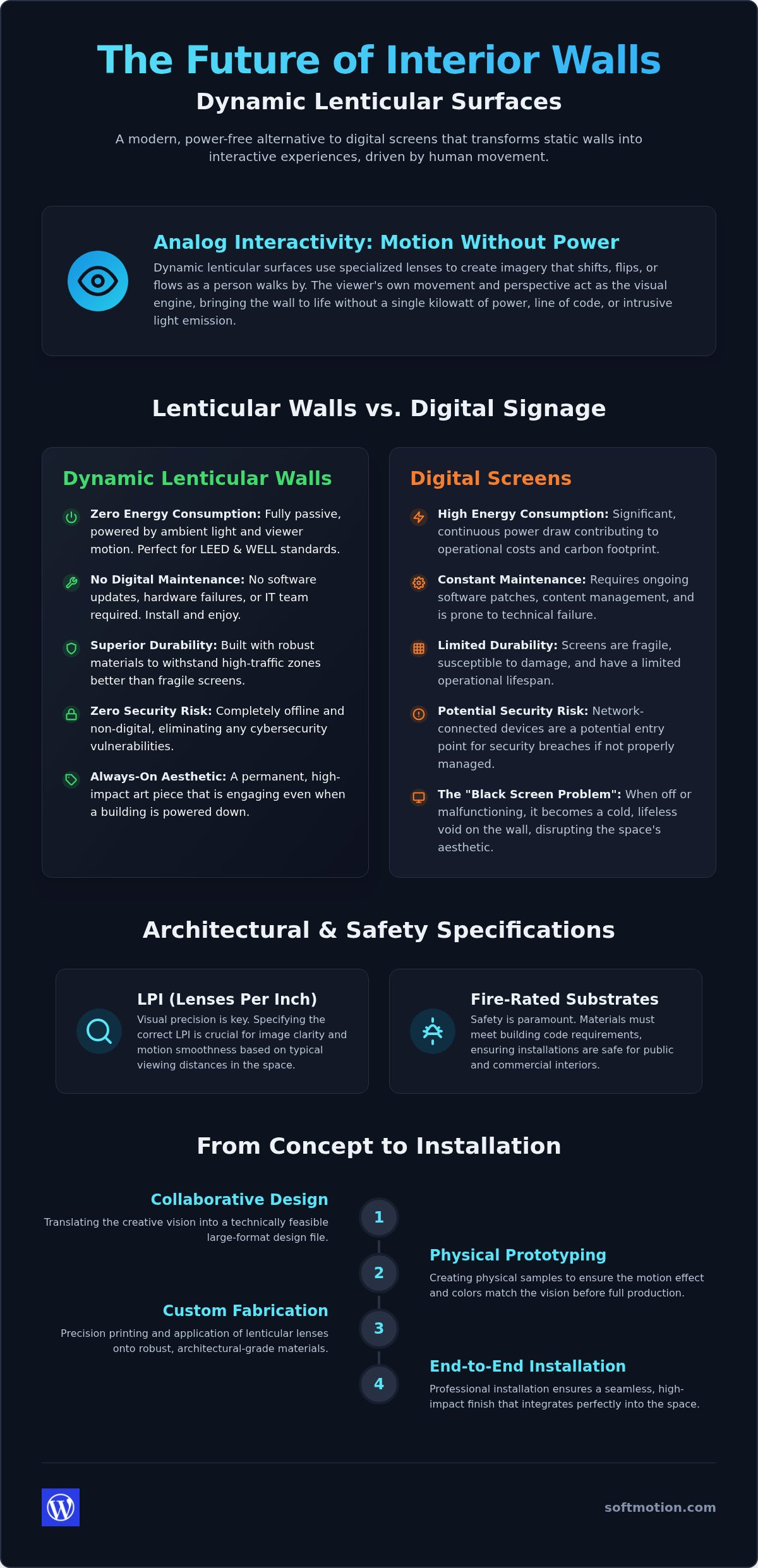
The modern interior is no longer a static box. It’s a conversation. We’re seeing a profound shift toward surfaces that breathe, react, and evolve. Dynamic lenticular building interiors represent this evolution, using specialized lenses to create imagery that shifts, flips, or flows as a person walks by. Unlike digital screens that demand attention through aggressive light emission, these surfaces rely on the viewer’s own perspective to come alive. It’s a form of analog interactivity. It’s sophisticated, grounded, and deeply human.
By utilizing Lenticular printing technology, architects can introduce the concept of “passive motion” into a space. This movement exists without power cables, software updates, or light pollution. It aligns perfectly with the rise of sensory architecture and biophilic design. A wall can now mimic the subtle shimmer of water or the dappled light of a forest canopy. This provides a rich, organic experience without the sterile, flickering quality of a monitor. It’s about creating a sense of wonder that feels integrated into the building’s very bones.
The Resurgence of Kinetic Wall Art
Static decor is quickly becoming a relic of the past. Today’s high-end corporate environments and public hubs prioritize experiential design that rewards the act of moving. For the “flaneur” or the busy commuter, a lenticular installation provides a brief, engaging narrative that unfolds at their specific walking speed. This creates a psychological anchor in a space. It effectively eliminates the “dead” feeling often found in long corridors or expansive lobbies. Because the art is non-emissive, it respects the occupant’s visual comfort while providing a high-impact focal point.
Lenticular vs. Standard Architectural Graphics
Traditional vinyl wraps have their place, but they often lack the physical presence required for truly high-stakes interiors. When you specify large format lenticular printing, you aren’t just applying a two-dimensional pattern. You’re installing a multi-dimensional experience. These installations offer superior durability in high-traffic zones, utilizing robust materials that withstand the rigors of public use far better than standard graphics. Dynamic lenticular building interiors turn a simple transit point into a destination. They prove that a wall can be both a structural boundary and a captivating journey.
Lenticular vs. Digital Signage: A Comparison for Modern Interiors
Digital displays have become the default solution for active walls. However, they carry a significant hidden burden that many architects are beginning to reconsider. High energy consumption, constant heat emission, and the incessant need for software updates create a complex, expensive operational tail. Dynamic lenticular building interiors offer a refreshing, sustainable alternative. They provide fluid movement without a single power cord or data connection. By utilizing ambient light and the viewer’s own gait, these installations achieve interactivity without the 24/7 electrical draw of LED panels. It’s a fundamental shift from active consumption to passive engagement.
Consider the “Black Screen Problem.” A digital monitor is only engaging when it’s powered and functioning perfectly. When the system fails or the building powers down, you’re left with a cold, reflective void that can feel like an architectural oversight in a high-end lobby. Dynamic lenticular building interiors possess a tactile, structural quality that a flat monitor simply cannot replicate. Instead of the sterile, uniform glow of pixels, you get a physical lens that plays with the room’s actual lighting. This depth is real, not simulated. It responds to the environment’s unique conditions, creating a sense of permanence, craft, and artistic integrity that digital screens often lack. For those interested in how other sectors of technology are adapting to 2026 trends, such as personal audio innovations, you can visit SuggestMeTech for expert hardware reviews and comparisons.
Sustainability and the 2026 Building Code
In 2026, building standards like LEED and WELL place a premium on energy efficiency and occupant well-being. Digital signage is a notorious energy drain that often conflicts with strict sustainability mandates. In contrast, architectural lenticular sheets are entirely passive. They contribute to decarbonization goals by eliminating the long-term carbon footprint associated with digital operation. High-quality polycarbonate lenses are also recyclable and can be specified to meet rigorous fire safety codes, fitting neatly into a circular material lifecycle. This stands in stark contrast to digital hardware, which involves rare earth metals and inevitable e-waste.
Cost-Benefit Analysis for Corporate Lobbies
The financial argument is equally compelling when viewed over the life of a building. While the initial capital expenditure for a custom installation is a factor, the long-term operational savings are immense. There are no IT security risks to manage, no dead pixels to repair, and no software licenses to renew. Digital hardware typically faces a 5-year lifecycle before failure or technical obsolescence. A well-fabricated lenticular wall remains vibrant and functional for decades. For transit hubs or corporate lobbies where reliability is paramount, this permanence is an invaluable asset. To explore how these surfaces can redefine your next project, you might consult with the experts at Softmotion to evaluate material options and optical clarity first-hand.
The Science of Motion: How Viewer Movement Drives Visual Engagement
The primary engine of dynamic lenticular building interiors isn’t hidden in a server room. It’s the person walking through the lobby. While traditional art remains fixed, lenticular surfaces are designed specifically to be seen in transit. The core of this technology lies in the lenticular lens, a precision-engineered array of magnifying cylinders. These lenses isolate specific slivers of a complex, interlaced image, ensuring each eye perceives a slightly different view. This binocular isolation is what allows a flat surface to project depth or change entirely based on where you stand. It’s a physical response to human presence.
The visual experience is directly tied to the viewer’s walking speed and distance. If you move slowly, the art unfolds with cinematic deliberation. If you rush, the transition is sharp and energetic. This creates a deeply personal engagement where the occupant controls the rhythm of the environment. Architects can choose between several distinct effects to suit the mood of a space:
- 3D Depth: Simulations of spatial volume that make a wall appear to recede or protrude without physical mass.
- 2-Frame Flips: High-contrast shifts between two distinct images, ideal for branding or dramatic storytelling.
- Multi-Frame Motion: Fluid, multi-stage sequences that mimic video playback through pure optics.
Identifying the “sweet spot” is critical for a successful installation. In a narrow corridor, the viewer is forced into a close, parallel path. This requires a specific lens pitch to maintain clarity and prevent the image from “ghosting.” In an open atrium, the increased viewing distance allows for broader, more sweeping motion effects that capture attention from across the room. The art doesn’t just sit on the wall; it waits for a witness to activate it.
Parallax and Perspective Shifting
The human brain is wired to interpret parallax as a sign of physical depth. When a background moves slower than a foreground, we perceive three-dimensional space. By designing art that “follows” the viewer, you create a sense of life that static graphics don’t match. It’s a perspective shift that rewards exploration. The further a viewer is from the surface, the more “compressed” the motion becomes, making precise calibration essential for the intended impact. You aren’t just decorating a wall; you’re choreographing an experience.
Agamographs vs. Lenticular Printing
A clear distinction exists between traditional folded Agamographs and modern lenticular lenses. An Agamograph relies on a physical, zig-zag structure to show two different images from two different angles. It’s a bold, geometric choice often used for interior corners where a sharp, two-sided flip is desired. Lenticular printing uses a flat, transparent lens. This allows for far more subtle and fluid transitions, including multi-frame animations that an Agamograph simply can’t achieve. Choosing the right medium depends on whether you want a sharp, structural shift or a smooth, ethereal flow across a dynamic lenticular building interiors project.
Material Selection and Technical Specifications for Interior Walls
Translating a visionary concept into a physical structure requires a rigorous approach to material science. For dynamic lenticular building interiors, the selection of the lens is the most critical technical decision you’ll make. The Lenses Per Inch (LPI) determines the viewing distance and the fluidity of the motion. While a high LPI might work for a handheld postcard, architectural scales demand a lower LPI. This ensures that the motion effect remains sharp and legible from across a lobby or down a long transit corridor. It’s about matching the optical resolution to the human scale of the environment.
Substrate choice is equally vital for longevity and safety. Polycarbonate is often the preferred medium for high-traffic zones due to its extreme impact resistance and superior clarity. Acrylic is a viable alternative for less demanding areas, but it lacks the sheer durability of polycarbonate. When projects exceed standard sheet sizes, usually around 10 feet, the challenge shifts to seamless integration. Managing the mechanical joints between panels requires absolute precision. If the alignment is off by even a fraction of a millimeter, the visual flow is broken. Successful installations rely on a “tiling” strategy that hides these seams within the artwork’s own geometry.
Fire Safety and Building Compliance
Interior finishes in commercial environments must adhere to strict safety protocols. Most jurisdictions require materials to meet ASTM E84 Class A ratings for flame spread and smoke development. High-quality polycarbonate lenses are engineered to meet these standards, ensuring your installation is as safe as it is beautiful. Beyond safety, consider the lifecycle of the surface. Public-facing art is subject to touch and environmental wear. Specifying scratch-resistant and anti-graffiti coatings is a pragmatic step that preserves the “wow factor” for years. Cleaning is straightforward, typically requiring only mild soap and water, which keeps maintenance costs low compared to digital alternatives.
Lighting the Kinetic Wall
Lighting is the silent engine that powers kinetic art. Since lenticular surfaces are non-emissive, they rely on ambient and directional light to “activate” the image. Overhead lighting must be carefully positioned to prevent “ghosting,” where multiple images bleed into each other simultaneously. Directional spotlighting is particularly effective for 3D depth effects, as it creates the necessary shadows and highlights to trick the brain into seeing volume. In atriums, natural light can be a powerful ally. As the sun moves across the sky, the wall’s appearance shifts, creating a living surface that evolves throughout the day. To ensure your specifications meet these rigorous demands, you should order a custom lenticular sample from Softmotion to test material performance under your project’s specific lighting conditions.
From Concept to Installation: The Softmotion Design Journey
Transforming a high-level architectural vision into a physical reality requires more than just technical skill. It demands a partnership rooted in clarity and precision. Since 1997, Softmotion has mastered the complex intersection of fine art and large-format fabrication, delivering over 1,000 projects to global clients. We don’t just print graphics; we engineer experiences. This journey begins with a collaborative design phase where we work alongside your team to optimize digital files for the unique demands of lenticular optics. We translate two-dimensional intent into multi-dimensional impact, ensuring that the final dynamic lenticular building interiors resonate with every person who enters the space.
Prototyping and Scaling
In the world of architectural installations, a digital proof is only half the story. You cannot truly judge depth, motion, or color shifts through a computer monitor. This is why physical custom lenticular prototypes are a non-negotiable part of our process. We create small-scale, high-fidelity “proof of concept” lenses that allow you to see exactly how the art reacts to movement. You can test viewing angles and verify how the colors shift under your specific site lighting before full-scale production begins. This risk-free approach provides the security you need to move forward with confidence, knowing the final result will be flawless.
Expert Installation and Project Management
The transition from our fabrication facility to your job site is handled with methodical care. Logistical management for global projects involves more than just shipping crates. We take an active role in coordinating with on-site contractors and glaziers to ensure the installation is seamless. Precision alignment is the hallmark of a professional dynamic lenticular building interiors project. If multi-panel graphics are misaligned by even a hair, the motion effect breaks. We provide the technical guidance and project management necessary to close the loop, ensuring that the 1,000th panel is as perfectly placed as the first. Our team remains a constant resource, bridging the gap between artistic concept and structural assembly.
The final reveal is the moment of transformation. It’s when the static materials of a building finally catch the light and begin to move. As the protective films are removed and the first occupants walk past, the wall ceases to be a barrier and becomes a journey. We take pride in this transition from the digital to the physical. It’s a testament to the power of analog interactivity and the enduring value of craftsmanship. You aren’t just finishing a room; you’re activating an environment that will continue to surprise and engage for decades to come.
Reimagining the Future of Spatial Engagement
Designing for the modern environment requires a shift from passive observation to active participation. We’ve explored how moving beyond digital saturation allows for more sustainable, tactile, and human-centric spaces. By integrating dynamic lenticular building interiors, you reclaim the energy of a room without the operational burdens of power cables or software updates. This isn’t just about decoration; it’s about creating a living architecture that rewards movement and captures the imagination of every occupant.
Softmotion has been at the forefront of this transformation since 1997. With over 1,000 projects delivered globally, we’ve become a trusted partner for Fortune-500 architectural firms seeking specialized large-format precision printing. Our collaborative approach ensures that every project, from the first prototype to the final reveal, is handled with the technical discipline your vision deserves. You don’t have to navigate the complexities of kinetic art alone. Start your dynamic interior project with a Softmotion sample kit today. Let’s work together to turn your static surfaces into multi-dimensional journeys that truly inspire.
Frequently Asked Questions
How do dynamic lenticular walls differ from 3D digital screens?
Dynamic lenticular building interiors differ from digital screens because they’re entirely passive and analog. They don’t require power or data cables. While digital screens emit light and can fail, lenticular surfaces use ambient light and the viewer’s own movement to trigger visual changes. This eliminates energy costs and the “black box” problem when systems are powered down. It’s a permanent, tactile solution for high-end architectural environments that rewards human presence.
What is the maximum size for an interior lenticular wall installation?
There is no strict maximum size for an interior installation. While individual lenticular sheets typically reach about 10 feet in height, we use high-precision tiling techniques to cover much larger surfaces. By managing the mechanical joints with absolute accuracy, we can create seamless, floor-to-ceiling environments that span hundreds of feet. The scale is limited only by the structural boundaries of your project and the creative vision you bring to the table.
Can lenticular art be installed in high-humidity areas like spas or pools?
Yes, lenticular art is highly suitable for high-humidity environments. We utilize non-porous substrates like polycarbonate and acrylic that don’t warp or degrade when exposed to moisture. These materials are ideal for spas, pool areas, or tropical atriums where traditional graphics might fail. Because the printing is protected behind the lens, the visual effect remains vibrant and crisp despite the environmental challenges. It’s a robust solution for demanding spaces.
How do I clean and maintain a large-format lenticular surface?
Cleaning a large-format lenticular surface is remarkably straightforward. You only need mild soap, water, and a soft, non-abrasive cloth to remove dust or fingerprints. It’s important to avoid harsh chemical solvents that could damage the optical clarity of the lens. Unlike digital hardware that requires technical maintenance and cooling systems, these surfaces are designed for durability in high-traffic zones. They require very little human intervention to stay beautiful.
What kind of lighting is best for enhancing the lenticular motion effect?
Directional spotlighting is the most effective way to activate 3D depth and motion effects. While ambient light serves as the “backlight,” focused beams from above or the side help define the lens’s optical shifts. It’s crucial to position lights to avoid “ghosting,” where multiple frames appear at once. In atriums, natural sun patterns can also create a living surface. This allows the artwork to evolve as the light moves throughout the day.
Are lenticular materials fire-rated for commercial building interiors?
Yes, we prioritize safety in every commercial project. The materials used in dynamic lenticular building interiors can be specified to meet ASTM E84 Class A ratings. This is the highest standard for flame spread and smoke development in interior finishes. Architects can specify these installations for lobbies, corridors, and public transit hubs with complete confidence. They comply with modern international building and fire codes while maintaining their artistic integrity.
How long does the prototyping and fabrication process typically take?
The timeline for prototyping and fabrication varies based on project complexity. We typically begin with a sampling phase to produce physical “proof of concept” lenses for your review. This allows you to test effects on-site before full-scale production begins. Once the design is finalized, the fabrication process moves efficiently through our facility. We recommend reaching out early in the design phase to align our schedule with your specific construction milestones.
Can existing artwork or photography be converted into a dynamic interior wall?
We can certainly convert existing photography, branding, or fine art into a dynamic installation. Our design team uses specialized software to “interlace” your high-resolution files, preparing them for the lenticular lens. We can add 3D depth, create two-frame flips, or develop complex motion sequences from your original assets. This process turns static imagery into an interactive experience. It rewards the viewer’s movement through the space and creates a memorable focal point.