
Motion Effect Wall Panels: A Guide to Transformative Architectural Surfaces
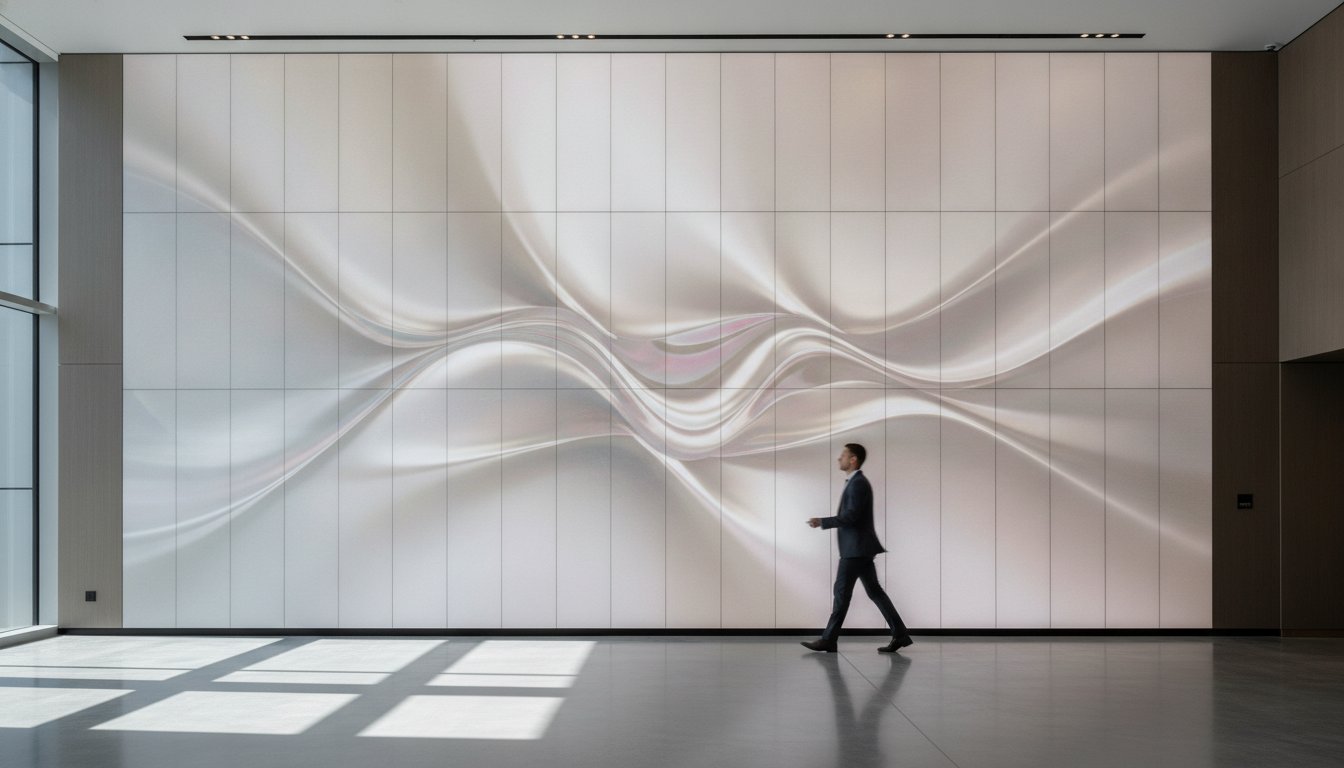
What if your architecture possessed a pulse? For many designers, the frustration with standard 3D surfaces is that they feel perpetually frozen, offering a single moment of interest that quickly fades into the background. While digital screens offer movement, they often lack the tactile presence and organic warmth required for high-end interiors. Integrating motion effect wall panels allows you to break free from these static constraints, turning a passive surface into a living, multi-dimensional experience that responds to the viewer’s every step.
We understand that creating a truly immersive environment requires more than just a textured facade; it demands a sophisticated blend of art and optics. In this guide, you’ll discover how to move beyond basic textures to implement professional lenticular technology that creates genuine kinetic energy without the need for power or maintenance. We will explore the technical differences between simple 3D depth and true motion, providing you with the clarity needed to transform large-scale architectural spaces into unforgettable visual journeys.
Key Takeaways
- Discover how human movement acts as the catalyst for transformative surfaces, turning static architecture into an interactive narrative.
- Differentiate between standard 3D textures and the sophisticated, perspective-shifting depth offered by professional motion effect wall panels.
- Explore the maintenance-free mechanics of lenticular technology, providing a high-impact, tactile alternative to expensive digital screens.
- Identify strategic applications for kinetic visuals in corporate lobbies and transit hubs to captivate high-traffic audiences.
- Navigate the collaborative journey from initial concept to full-scale installation with a focus on precision and risk-free prototyping.
What are Transformative Architectural Surfaces?
Architecture is no longer a silent backdrop. Transformative architectural surfaces represent a fundamental shift in how we perceive physical space, moving beyond the limitations of static materials to create environments that breathe and react. Unlike traditional cladding that remains fixed in time, motion effect wall panels utilize the viewer’s own movement to reveal hidden layers of color, depth, and pattern. While some commercial products describe a simple wavy pattern as “motion,” true kinetic surfaces are not about the physical shape of the panel; they’re about the relationship between the light, the lens, and the person walking past.
This transition relies on Lenticular printing technology, a method that uses precise optical lenses to isolate different visual data points based on the observer’s perspective. Leading architects are increasingly moving away from digital screens because high-resolution displays often feel cold and require constant technical maintenance. In contrast, analog kinetic art offers a tactile, maintenance-free presence that commands attention through curiosity rather than brightness. The psychological impact is profound. When a surface shifts as you walk, it creates an immediate “wow” factor that anchors a visitor’s memory to that specific physical location.
The Evolution of Motion in Interior Design
Static surfaces are no longer enough for modern corporate and retail branding. In the past, designers relied on 3D textures to add interest, but these panels feel “frozen” once the initial novelty wears off. Modern design now prioritizes multi-dimensional installations that offer a narrative experience. We’ve seen a significant rise in non-digital interactive walls in high-traffic public zones, where the goal is to engage commuters or visitors without the visual fatigue associated with traditional signage. These installations turn a hallway into a journey, rewarding every change in perspective with a new visual discovery.
Key Characteristics of High-End Kinetic Panels
Creating a successful motion installation requires a balance of artistic vision and technical discipline. High-end kinetic panels are defined by their precision-engineered lenses, which are far superior to standard commercial printing methods. These lenses must be perfectly aligned to ensure the motion effect is fluid rather than jarring. Key traits include:
- Optical Clarity: Professional-grade materials ensure the colors remain vibrant and the transitions stay sharp across large-scale surfaces.
- Seamless Integration: These panels are designed to fit into existing architectural frameworks, appearing as a natural part of the building’s skin.
- Technical Durability: Fabrication focuses on longevity, ensuring the kinetic effect remains effective in high-traffic environments for years without degradation.
By focusing on the viewer’s journey, these surfaces transform a standard wall into a collaborative piece of art that only fully reveals itself when someone is there to experience it.
Motion Effect Wall Panels vs. Static 3D Texture
Choosing between physical texture and optical motion is a choice between a decorative finish and a narrative experience. Conventional 3D textures rely on external lighting to cast shadows across their physical ridges. While these surfaces provide a tactile rhythm, they’re ultimately bound by the lighting conditions of the room. If the light is flat, the design disappears. In contrast, motion effect wall panels generate their own internal sense of movement, utilizing light from any angle to trigger a perspective-shifting response as the viewer walks past. The depth isn’t just physical; it’s perceived and interactive.
The Limitations of Traditional 3D Cladding
Traditional 3D panels often feel frozen. Because the shadows and highlights are fixed to the physical mold, the surface cannot tell a story or change its message. Most consumer-grade options are mass-produced from thin PVC, which can result in a repetitive, “plastic” aesthetic that lacks the sophistication required for high-end corporate environments. These materials are limited to a single state. They don’t react to the human presence in the room, which often leads to a “static” atmosphere that fails to sustain engagement in high-traffic zones like transit hubs or luxury lobbies.
Why Professional Lenticular is the Superior Choice
Professional lenticular technology transforms a wall into a living canvas. Unlike static cladding, these panels can display multiple high-resolution images or smooth, cinematic animations. Integrating large format lenticular printing allows architects to cover massive surfaces with bespoke designs that are specifically engineered for the space’s unique viewing angles. It’s a sophisticated solution that offers maintenance-free interactivity. There are no power cables to hide and no digital components that might fail.
The result is a surface that remains vibrant and engaging without the operational overhead of a digital screen. When you move, the wall moves with you. This creates a powerful “wow factor” that captures attention more effectively than a static pattern ever could. For those looking to redefine a physical environment, seeing the technology in person is often the best way to understand its impact. You might consider reviewing our latest architectural installations to see how these kinetic surfaces redefine modern interiors. By moving beyond mass-produced patterns, you gain the freedom to craft a truly unique architectural signature.
The Mechanics of Movement: Perspective-Shifting Visuals
Movement in architectural design isn’t just a visual trick; it’s a precise calculation of geometry and human perception. While a static wall remains indifferent to its audience, motion effect wall panels are engineered to respond. The core of this technology lies in the ability to isolate different image slices for each eye. As a viewer moves, the angle of sight changes, causing the lenticular lens to reveal a different set of visual data. This creates the science of parallax, where the brain perceives depth or motion because each eye is technically seeing a slightly different perspective at the same time.
Understanding the Lenticular Lens
The success of a large-scale installation depends on the relationship between the lens and the viewer’s distance. This is measured in LPI, or Lines Per Inch. A high LPI lens is perfect for hand-held art, but architectural surfaces require a lower LPI to ensure the motion remains clear from across a lobby or transit hall. Because the margin for error is so slim, custom lenticular prototypes are essential for large-scale success. Prototyping allows designers to test material clarity and minimize “ghosting,” which is the faint remains of one image bleeding into another. When executed correctly, the transition is seamless and the visual impact is absolute.
Architects must also choose between lenticular and agamograph techniques. An agamograph uses a folded, zig-zag surface to show two distinct images from sharp left and right angles. While effective for massive, geometric statements, lenticular lenses offer a much smoother transition and can support complex animations that feel fluid rather than fragmented.
Designing Content for Motion Effects
Content design for kinetic surfaces requires a different mental model than traditional 2D graphics. You aren’t just designing a picture; you’re designing a sequence of events. The “Flip” effect is the most common, allowing a wall to transition between two distinct brand messages or colors as a person walks by. This is ideal for storytelling in corporate environments.
For more sophisticated installations, the “Motion” effect uses up to 30 or more frames to create fluid movement from static source files. Calculating the “walk-by” speed is critical here. If the animation is too dense, the image may blur for a fast-moving commuter. Color considerations also play a vital role. High-contrast palettes and bold shapes tend to react best to lens refraction, ensuring the motion remains vibrant even in challenging lighting conditions. By mastering these mechanics, you turn a simple corridor into a living narrative that rewards every step the viewer takes.

Strategic Applications for Large-Scale Motion Walls
Transforming a physical space requires a deep understanding of how people move through it. While standard wall coverings remain passive, motion effect wall panels actively participate in the environment, making them ideal for high-traffic zones where engagement is a priority. In corporate lobbies, these installations serve as a powerful signal of brand innovation. Instead of a static logo, a kinetic wall communicates energy and forward-thinking vision, greeting visitors with a surface that evolves as they approach the reception desk. It turns a first impression into a lasting memory.
Public transit hubs and large-scale retail environments benefit significantly from this technology. In busy terminals, kinetic advertising displays provide a way to cut through the visual noise of digital screens. These surfaces capture the attention of commuters by rewarding their movement with shifting messages or fluid animations. Retailers use these dynamic displays to stop foot traffic, turning a mundane window into a perspective-shifting experience that draws the eye without the harsh glare of an LED monitor. By focusing on the human journey, these surfaces transform mundane corridors into immersive visual experiences.
Corporate and Architectural Integration
Beyond aesthetics, kinetic surfaces offer practical benefits for interior navigation. Wayfinding becomes more intuitive when perspective-shifting graphics guide a visitor’s eye toward specific destinations. In hospitals or large office complexes, motion murals can reduce the perceived stress of walking through long, windowless corridors by providing a sense of progress and visual rhythm. Organizations also use these installations to visualize corporate social responsibility narratives, translating complex goals into a multi-dimensional story. This approach creates a sense of partnership and clarity, ensuring the brand’s values are felt rather than just read.
Advertising and Exhibition Impact
In the competitive atmosphere of trade shows, the ability to stand out is paramount. Professional motion panels consistently outperform traditional posters because they offer an interactive element that requires no power or technical support. Industry professionals report that kinetic visuals capture vastly higher engagement rates than static displays, often holding a viewer’s gaze for longer as they move to explore the full effect. This non-digital interaction is particularly appealing to eco-conscious brands looking to reduce their energy footprint while maintaining a high-end, artistic presence. If you’re ready to explore how these surfaces can redefine your next project, you can review our portfolio of architectural installations to find a tailored kinetic solution.
The Fabrication Journey: From Concept to Installation
The transition from a conceptual sketch to a multi-dimensional reality is a journey of technical discipline. A digital file is merely a static promise. Through fabrication, it becomes a kinetic experience. Realizing motion effect wall panels at an architectural scale requires a rigorous, end-to-end management approach that bridges the gap between imaginative design and physical durability. We begin this process by translating an architect’s vision into lens-ready files, a step that demands a deep understanding of how light interacts with large-format surfaces. It’s a collaborative partnership that transforms a two-dimensional idea into a multi-dimensional landmark.
Prototyping and Technical Validation
Physical prototypes are non-negotiable for large-scale success. You shouldn’t rely on digital simulations when the final result depends on the physical movement of people through a space. Our sampling phase allows us to test viewing angles on-site, ensuring the motion effect triggers exactly where intended. We use this time to refine the animation speed, matching it to the natural walking pace of the specific environment. This phase also serves as a durability check. We verify that materials can withstand the rigors of high-traffic public zones, ensuring the installation remains as vibrant on day 1,000 as it was on day one. This risk-free prototyping ensures clarity and confidence before full-scale production begins.
Mastering the Installation Process
Precision is the final hurdle in the fabrication journey. Delivering and assembling large-scale panels involves complex logistics, particularly when working within the constraints of active construction sites or busy corporate headquarters. The most critical technical challenge is lens alignment. If the lenses across multiple vertical panels are off by even a fraction of a millimeter, the kinetic effect will stutter. We manage this through a meticulous assembly process that prioritizes seamless transitions and perfect alignment across every seam.
Our approach is rooted in a human-first philosophy. A final site inspection isn’t just about checking technical specs; it’s about ensuring the work resonates with the people who will inhabit the space. This collaborative methodology has been refined over more than 1,000 projects delivered since 1997. It provides architects with the security of a controlled process and the freedom to pursue bold, visionary outcomes. By handling everything from custom samples to the final bolt, we ensure that the transformative potential of the surface is fully realized, turning a standard wall into a living piece of architectural art.
Redefining the Architectural Journey
The transition from a static environment to a kinetic one is more than an aesthetic upgrade; it’s a fundamental reimagining of how we experience physical space. Every step reveals something new. By choosing motion effect wall panels over traditional textures or high-maintenance digital screens, you invite the viewer to become an active participant in the architecture. This shift ensures your environment remains dynamic and engaging without the operational complexity or coldness of digital hardware.
Realizing these complex visions at an architectural scale requires a partner with both artistic vision and technical discipline. Softmotion has delivered over 1,000 projects since 1997, providing the grounded expertise needed for high-impact results. Our process covers everything from initial concept to end-to-end custom fabrication. It’s a collaborative journey that prioritizes clarity, precision, and the human experience. We invite you to move beyond the limitations of the two-dimensional and embrace a surface that truly breathes.
Start your custom kinetic project with Softmotion’s expert team and transform your environment into a living narrative today.
Frequently Asked Questions
What is the difference between a 3D wall panel and a motion effect panel?
A 3D wall panel uses physical ridges to create texture, while motion effect wall panels use optical lenses to create the illusion of movement. While 3D panels are static and rely on external shadows, motion panels change their visual content based on your viewing angle. This allows for flips between different images or fluid animations that react to your presence. It turns a decorative surface into a dynamic narrative experience that captures attention more effectively than physical relief alone.
Can motion effect wall panels be used outdoors for building facades?
Kinetic installations can be adapted for various environments, though material selection is critical for longevity. While many architectural projects are interior-focused, we utilize specialized UV-stable resins and durable substrates to ensure the visual impact remains consistent over time. For building facades or semi-outdoor transit zones, we focus on technical validation during the prototyping phase. This ensures the lenses withstand environmental exposure while maintaining the clarity and precision required for large-scale motion effect wall panels.
How do I clean and maintain a large-format lenticular wall?
Maintenance for a large-format lenticular wall is remarkably simple because the technology is entirely analog. You don’t need to worry about power failures or software updates. The surface is typically a high-grade polymer that can be cleaned with a soft, lint-free cloth and mild, non-abrasive cleaners. Because there are no delicate electronic components, these installations are ideal for high-traffic public zones where durability and ease of care are essential for long-term project success.
Are these panels fire-rated for use in public transit hubs and corporate lobbies?
Professional architectural installations are designed to meet rigorous safety standards, including fire ratings required for public spaces. We ensure that the materials used in our large-format projects comply with local building codes, such as ASTM E84 for surface burning characteristics. This makes them suitable for high-occupancy environments like corporate lobbies and transit hubs. Safety is a core part of our collaborative process, ensuring that visionary design never compromises the security of the physical environment.
Do motion effect panels require electricity or special lighting?
No, these panels are entirely passive and don’t require any electricity or internal power sources to function. The motion effect is triggered solely by the viewer’s movement and the refraction of ambient light through the lenticular lenses. While special lighting isn’t necessary, strategic placement of directional lights can enhance the vibrancy and depth of the visual transitions. This makes them a sustainable, maintenance-free alternative to energy-intensive digital signage or LED displays.
What is the maximum size for a custom motion effect wall installation?
There is effectively no maximum size for a custom installation because we utilize a precision-tiling approach for large-format projects. By aligning multiple panels with sub-millimeter accuracy, we can cover entire building interiors or massive transit corridors. Each project is engineered to ensure that the lens alignment remains seamless across the entire surface. This allows for an uninterrupted visual journey, regardless of whether the wall is ten feet wide or stretches across an entire corporate lobby.
How long does the design and fabrication process typically take?
The timeline for a custom kinetic project varies based on the scale and complexity of the design. A typical journey involves a collaborative design phase, technical prototyping, and final fabrication. Because we’ve delivered over 1,000 projects since 1997, we’ve refined a methodical rhythm that prioritizes precision over haste. Prototyping is a critical step that ensures the final installation meets your exact expectations. We provide detailed project schedules during the initial consultation to ensure a professional process.
Can I use my own custom artwork for a lenticular wall project?
Absolutely, our process is built on translating an architect’s or artist’s unique vision into a lens-ready format. We act as a visionary guide, helping you adapt your source files to maximize the kinetic potential of the lenticular technology. Whether you have a specific brand message or a complex fine-art concept, we work closely with you during the design phase. This partnership ensures that your original artwork is reimagined effectively as a multi-dimensional, perspective-shifting architectural surface.