
Modern Experiential Marketing: The Definitive Guide to Lenticular Advertising Displays in 2026
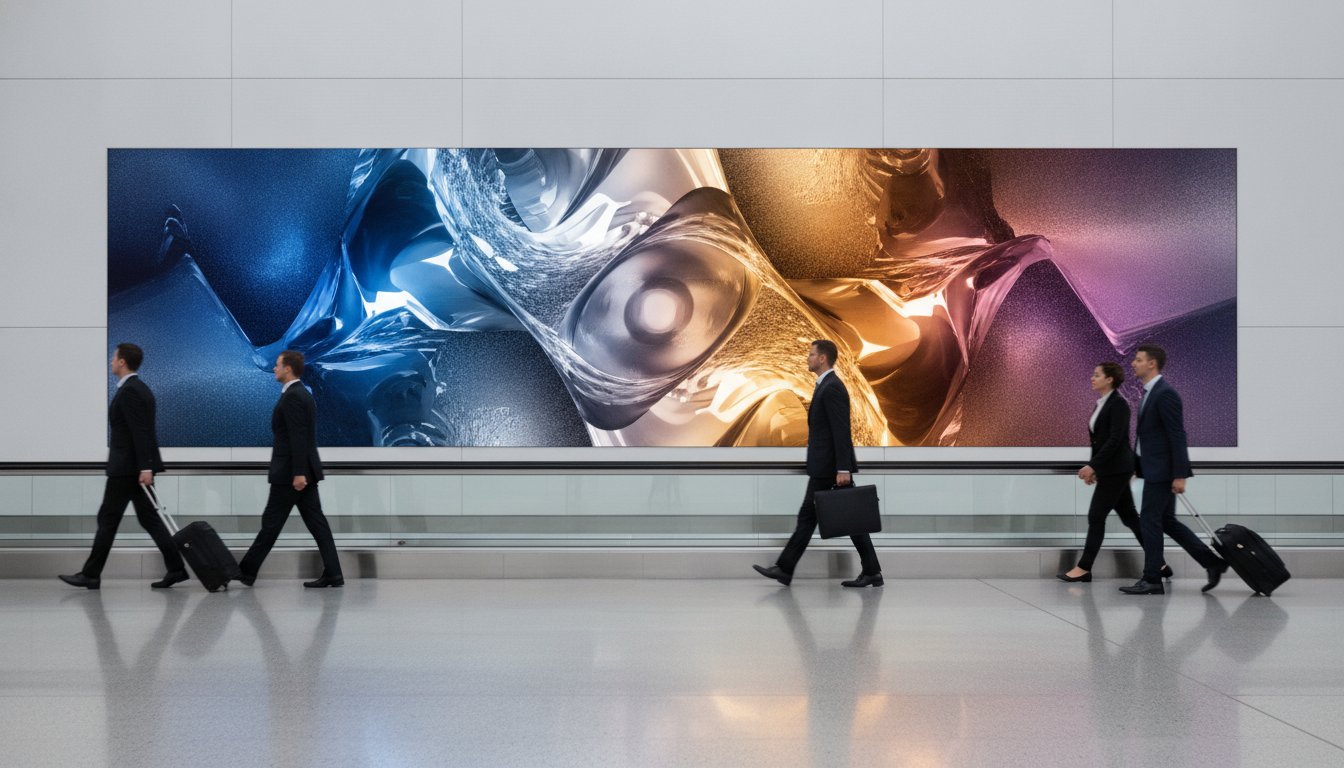
The most expensive real estate in your retail environment isn’t the floor space; it’s the attention you lose every time a customer walks past a static display without looking up. In an era defined by digital fatigue, your audience has become experts at ignoring the glow of traditional screens and the silence of paper posters. You’ve likely felt the pressure to innovate with lenticular advertising displays to bridge the gap between static and digital, yet the high maintenance and power costs of LED hardware often feel like a burden. It’s a common struggle for brands that want to stand out in crowded spaces while maintaining operational simplicity.
As the global lenticular graphics market climbs toward a $5.00 billion valuation in 2026, discover how to transform static surfaces into dynamic, motion-driven brand experiences that captivate audiences without the maintenance of digital screens. This guide explores the evolution of these sophisticated architectural mediums. We’ll examine how multi-dimensional installations create a “wow-factor” that drives deep brand affinity, offering a durable and low-maintenance visual solution. From retail environments to large-scale tradeshow graphics, we’ll show you how to move beyond the two-dimensional to command attention through pure, analog movement.
Key Takeaways
- Understand how lenticular advertising displays transform static surfaces into perspective-shifting experiences that command attention in high-traffic environments.
- Master the technical distinction between “Flip” and “3D Depth” effects to select the most resonant storytelling method for your brand’s spatial narrative.
- Evaluate the long-term advantages of non-digital motion, focusing on the durability and zero-maintenance benefits that traditional LED screens cannot provide.
- Identify high-impact applications in luxury retail and transit hubs where motion-driven installations convert passive commuters into engaged brand advocates.
- Learn how a collaborative prototyping process and physical sampling eliminate risk and ensure your vision integrates seamlessly into its final architectural environment.
The Evolution of Visual Engagement: What are Lenticular Advertising Displays?
Static surfaces often feel like missed opportunities. They’re silent participants in a world that never stops moving. Lenticular advertising displays solve this by using specialized lenses to create sophisticated motion illusions, transforming ordinary 2D imagery into multi-dimensional, perspective-shifting art. Unlike digital screens that demand constant power and maintenance, this medium engages viewers through pure optical physics. It requires no heavy hardware, no electricity, and no specialized glasses. As your Visionary Guide, we help you reimagine ordinary architectural surfaces, turning them into dynamic environments that breathe with life as people walk past.
The Mechanics of Motion and Depth
The magic of this medium lies in the precise marriage between an interlaced image and a physical lens. Lenticular printing technology works by slicing multiple images into thin strips and aligning them behind a series of hemi-cylindrical lenses. While traditional graphics remain frozen in time, these kinetic displays change based on the viewer’s position. Parallax is the perceived displacement or difference in the apparent position of an object viewed along two different lines of sight, which creates the sensation of 3D depth in a large-scale print. This effect ensures that every step a customer takes reveals a new layer of your brand’s story.
Why Motion Matters in 2026 Advertising
With the global market for lenticular advertising displays estimated at $5.00 billion in 2026, brands are prioritizing sensory experiences that cut through digital noise. Human psychology is hardwired to notice peripheral motion; it’s a survival instinct that modern marketing can leverage to capture attention in crowded retail or transit spaces. By adopting a human-first design philosophy, we create installations that feel like a collaborative discovery rather than an aggressive sales pitch. This approach fosters a deeper emotional resonance, making the brand feel more like a partner in the consumer’s journey. For those ready to explore the strategic implementation of these effects, our kinetic advertising displays guide provides deeper insights into high-impact storytelling. We focus on the impact the final result has on an audience, ensuring that every installation feels both artistically significant and commercially pragmatic.
Mastering the Visual Effects: From Flip to 3D Depth
Mastering the visual vocabulary of lenticular advertising displays requires an understanding of how light interacts with geometry. A static image invites a glance, but a kinetic display demands a conversation. By selecting the right optical effect, you transform a passive surface into a narrative tool that responds to the viewer’s movement. The most fundamental of these is the Flip effect. It allows a single display to alternate between two or three distinct images, making it the ideal choice for “Before and After” demonstrations or multi-message storytelling where space is at a premium.
For brands seeking to create a more immersive sensory experience, the 3D Depth effect offers a profound spatial transformation. This technique places elements on different perceived planes, creating a window-like environment that draws the eye deep into the composition. While the Flip effect communicates information, 3D Depth communicates atmosphere. Beyond these, the Zoom and Morph effects provide high-impact brand reveals, where logos can grow in scale or one product can fluidly transition into another. For those seeking a purely architectural approach, the Agamograph serves as a sophisticated alternative for perspective-shifting walls, using physical angles rather than a lens to create a rhythmic, changing environment.
Choosing the Right Effect for Your Campaign
Success depends on matching the visual effect to your specific marketing KPIs. If your goal is product education, the Flip effect provides the clarity needed to show features or use cases. Conversely, if you’re building brand awareness in a luxury retail setting, 3D Depth creates the “wow-factor” necessary to stop foot traffic. You must also consider the viewing environment. High-speed transit areas favor simple, bold Flips that commuters can process in seconds, while retail windows allow for the intricate detail of 3D or Zoom effects. Custom lenticular design ensures these choices align with your brand’s aesthetic, elevating the installation from a simple sign to a piece of fine art. To see how these effects perform in your specific environment, requesting lenticular samples is a vital step in the collaborative journey.
The Importance of Precision Fabrication
The transition from a creative concept to a physical installation requires technical discipline. High-precision printing is critical; even a microscopic misalignment can cause “ghosting,” where remnants of one image bleed into another. To maintain clarity at a massive scale, we utilize high-quality large format lenticular sheets that provide superior light transmission and durability. Softmotion ensures museum-quality results across more than 1,000 projects by combining this technical rigour with an artistic sensibility. This methodical approach eliminates the risks associated with large-scale fabrication, ensuring that your vision is realized with absolute clarity and professional reliability.
Lenticular vs. Digital Signage: The Case for Non-Digital Motion
The glow of a digital screen has become white noise in the modern urban landscape. When brands ask, “Why not just use an LED screen?” they often overlook the growing phenomenon of digital fatigue. Lenticular advertising displays offer a rhythmic, analog alternative that captures attention through physical perspective rather than flickering pixels. They provide motion without the glare, inviting a more organic interaction between the viewer and the environment. Because these displays require zero power, they eliminate the ongoing electricity costs and software subscription fees that typically accompany digital signage. You won’t face the frustration of dead pixels or hardware glitches, ensuring your brand message remains flawless from the moment of installation.
Aesthetic integration is where the non-digital medium truly excels. A screen often feels like an afterthought, a black rectangle bolted to a wall. In contrast, lenticular installations feel like a fundamental part of the architecture. They harmonize with the surrounding materials, offering a sophisticated texture that digital hardware cannot replicate. This transformation from “advertising hardware” to “architectural art” elevates the brand’s presence, moving it away from the clutter of traditional commercial signage and into the realm of curated environmental design.
Sustainability and Longevity in Public Spaces
Digital hardware is notoriously sensitive to temperature, humidity, and environmental wear. Lenticular materials are built for durability, withstanding high-traffic conditions without the need for protective cooling systems or specialized enclosures. They utilize a “passive interaction” model where the motion responds directly to the viewer’s movement, creating a personal, localized experience that doesn’t rely on a computer program. For the most ambitious projects, lenticular building facades represent the ultimate marriage of durable motion and architectural integrity, standing as permanent landmarks that don’t drain the power grid. To ensure these installations are supported by a complete suite of high-quality branding materials, working with a specialist like ideasfactory can provide the necessary printing and digital expertise.
While the upfront fabrication of custom lenticular is a specialized investment, the long-term TCO is significantly lower than digital counterparts. You bypass the need for technical support teams and 24/7 power consumption. Luxury brands increasingly favor this medium because it offers a tactile, artistic quality that feels permanent and intentional. This analog-interactive appeal resonates deeply with Gen Z and Alpha consumers who value authentic, physical experiences over the constant saturation of digital content. It transforms a commercial space into a curated environment, positioning your brand as a sophisticated leader that values craftsmanship as much as impact.

Strategic Applications: Luxury Retail, Transit, and Trade Shows
Strategic applications turn technical theory into tangible brand affinity. While smaller formats have their niche, the true power of lenticular advertising displays is realized at scale in environments where human movement is the primary driver of interaction. In luxury retail, a static window is often a missed opportunity. By integrating lenticular window displays, brands create a dynamic street presence that transforms a casual passerby into an engaged observer. This isn’t just about catching the eye; it’s about establishing a high-end atmosphere that reflects a brand’s commitment to craftsmanship and visionary design.
Corporate lobbies and trade shows offer additional canvases for this perspective-shifting medium. In a crowded exhibition hall, standing out is a survival requirement. Multi-dimensional wall graphics cut through the noise of competing booths with a sophisticated, analog motion that feels premium and permanent. Similarly, motion murals in corporate headquarters tell a brand’s story to visitors and employees alike, transforming a utilitarian wall into a rhythmic narrative of the company’s evolution and future vision.
Elevating the Retail Experience
Beyond stationary displays, brands often seek to mobilize their message to capture attention across wider urban landscapes. To explore how to integrate movement into your broader out-of-home strategy, you can discover TexWood Media for specialized mobile advertising solutions.
Motion-driven displays do more than just attract attention; they increase dwell time and social media shareability. A well-executed installation becomes a destination, prompting shoppers to capture the visual transformation on their phones and share it with their networks. We design with a dual perspective in mind: the bold, high-impact motion required for the sidewalk viewer and the intricate, subtle details that reward the in-store browser. For technical specifications on realizing these large-scale visions, our guide to large format lenticular printing offers essential guidance for architects and designers seeking to push the boundaries of retail environments.
Impact in High-Traffic Transit Hubs
Transit hubs like airports and subways present a unique canvas for perspective-shifting wall art. Here, the “walking-by” effect is at its most potent. As commuters move through terminals, their natural pace triggers the lenticular animation, creating a sense of wonder in otherwise transitional spaces. Case studies for transit hub visual installations suggest that engaging art can actually reduce perceived wait times by providing a meaningful sensory distraction. Managing projects at this scale requires a partner who understands the complexities of public space installation. Softmotion’s history of delivering over 1,000 projects since 1997 makes us the preferred collaborator for Fortune-500 brands seeking risk-free, high-impact results. If you’re ready to command attention in your next high-traffic environment, contact Softmotion today to discuss your custom lenticular display project.
The Softmotion Process: From Prototype to Global Installation
Moving from a high-level marketing strategy to a physical installation requires a bridge between artistic vision and technical discipline. Every project is a collaborative journey where we position ourselves as a partner rather than a vendor. This process begins long before the final assembly, ensuring that the transition from a digital concept to physical lenticular advertising displays is seamless and predictable. By focusing on the practicalities of application early in the design phase, we help you avoid the common pitfalls of large-scale production. We believe that a successful installation is the result of a guided experience, leading you from “what is possible” to “how it is achieved” with total clarity.
The sampling phase is the most critical stage of our engagement. While digital proofs offer a glimpse of the design, only physical lenticular samples can truly demonstrate how a specific lens will behave under your project’s unique lighting conditions. We test for viewing angles, ambient light interference, and the speed of the motion transition. This methodical approach ensures that the final result captures the exact emotional resonance you intend for your audience. It’s about more than just printing; it’s about mastering the sensory experience of the space.
Risk-Free Prototyping and Sampling
Proving the visual effect before full-scale production is a cornerstone of our commitment to professional reliability. We utilize custom samples to test various lenticular lens options, selecting the specific LPI (lines per inch) that best suits the intended viewing distance. This phase allows architects and designers to see exactly how the light interacts with the material in the physical environment. For those managing complex, multi-faceted projects, our custom lenticular prototypes guide provides a detailed framework for testing at scale. This risk-free approach ensures that by the time we move to custom fabrication, every technical variable has been resolved.
Installation and Project Management
Large-scale lenticular fabrication involves sophisticated logistics, especially when delivering to global sites. We take end-to-end responsibility for the project, managing everything from the initial design interlacing to the final screw on-site. Our team coordinates with local contractors or provides on-site project management to ensure the installation of your lenticular advertising displays is flawless. This comprehensive oversight is vital for maintaining the integrity of the visual effect across multiple panels or large architectural surfaces. We act as your Visionary Guide, providing the rare combination of creative insight and technical discipline needed to realize hidden potential in ordinary environments. The result is a polished, corporate-dependable installation that commands attention and stands the test of time.
Commanding Attention in a Multi-Dimensional World
The transition from static signage to dynamic experience is no longer a luxury; it’s a necessity for brands that refuse to be ignored. You’ve seen how lenticular advertising displays bridge the gap between architectural permanency and the kinetic energy of motion, providing a sustainable, maintenance-free alternative to digital screens. By prioritizing high-precision fabrication and a rigorous sampling process, you ensure that every spatial transformation resonates with clarity and artistic integrity. Whether you’re redefining a luxury retail window or engaging commuters in a global transit hub, the goal remains the same: converting passive viewers into active participants in your brand’s narrative.
Softmotion brings over 1,000 successful installations to our partnership, offering the technical discipline and visionary insight trusted by Fortune-500 corporations and world-class architects. Our proprietary high-precision printing ensures museum-quality results that stand the test of time. It’s time to move beyond the limitations of the two-dimensional and realize the hidden potential of your environment. Partner with Softmotion to transform your space with custom lenticular displays and lead the next era of visual engagement. Your vision deserves a canvas that moves as fast as your audience does.
Frequently Asked Questions
How do lenticular advertising displays actually work?
Lenticular advertising displays function through a precise marriage of optical physics and high-precision printing. We align specialized lenses over an interlaced image composed of multiple sliced frames. As a viewer moves past the display, the lens directs light from different parts of the image to each eye. This creates a sophisticated illusion of motion or three-dimensional depth. It’s a purely analog interaction that transforms a static surface into a rhythmic, sensory experience without any power source.
Can lenticular displays be used for outdoor advertising?
Yes, these displays are exceptionally well-suited for outdoor environments. Unlike sensitive digital hardware, we use durable, high-quality plastic materials that resist weather and UV exposure. They don’t require protective enclosures or cooling systems, making them a pragmatic choice for building facades and street-level retail. This durability ensures your brand message remains vibrant and impactful in high-traffic public spaces for years. Our global installation experience covers diverse climates and architectural requirements.
What is the maximum size for a large format lenticular installation?
There is virtually no upper limit to the scale of an installation. While individual large format lenticular sheets have physical manufacturing limits, we achieve massive dimensions by seamlessly tiling multiple panels together. This allows us to transform entire transit hub walls or corporate building facades into perspective-shifting artworks. Since 1997, our team has delivered over 1,000 projects worldwide, proving that high-precision design can realize hidden potential in even the largest architectural environments.
How do I choose between a 2-image flip and a 3D effect?
The choice depends on your specific campaign goals and the viewer’s environment. A 2-image flip is highly effective for product education, such as demonstrating “before and after” results or toggling between different features. Conversely, a 3D effect creates an immersive, window-like depth that is ideal for luxury brand awareness and high-end retail windows. We provide custom samples during the prototyping phase to help you visualize how each effect performs in your specific space.
What kind of maintenance do these installations require?
These installations are remarkably low-maintenance compared to electronic signage. Because lenticular advertising displays require zero electricity and contain no moving parts, there are no software updates or hardware failures to manage. A simple, periodic cleaning with non-abrasive materials is typically enough to maintain the museum-quality clarity of the lens. This passive operation model provides a durable, risk-free visual solution that eliminates the ongoing technical support costs associated with traditional LED screens.
How long does the custom fabrication and installation process take?
The timeline is determined by the scale and complexity of your vision. We follow a methodical, purposeful process that begins with a collaborative design phase and physical sampling. This ensures every technical detail is resolved before custom fabrication begins. While large-scale global installations require careful logistical planning, our end-to-end project management ensures the journey is reassuring and composed. We lead you from the initial concept to the final on-site assembly with professional reliability.
Is lenticular printing more expensive than standard large format graphics?
The upfront investment for lenticular is higher than standard static printing due to the technical precision and specialized materials involved. However, the total cost of ownership is often lower when you consider the absence of power bills and maintenance fees. More importantly, the engagement and brand affinity generated by a “wow-factor” installation provide a much higher return on investment. You’re not just buying a print; you’re creating a memorable, motion-driven experience for your audience.
Do I need special lighting for my lenticular wall installation?
While standard commercial lighting often suffices, its placement is vital for the best visual result. The goal is to provide even illumination while avoiding harsh, direct glare that can interfere with the lens’s optical effect. During our sampling phase, we test different lens options against your specific architectural lighting. This collaborative approach ensures that the final perspective-shifting wall art remains clear and impactful from every angle, regardless of the surrounding environment’s light levels.