
Lenticular Wall Murals: How to Turn a Wall into a Moving Experience
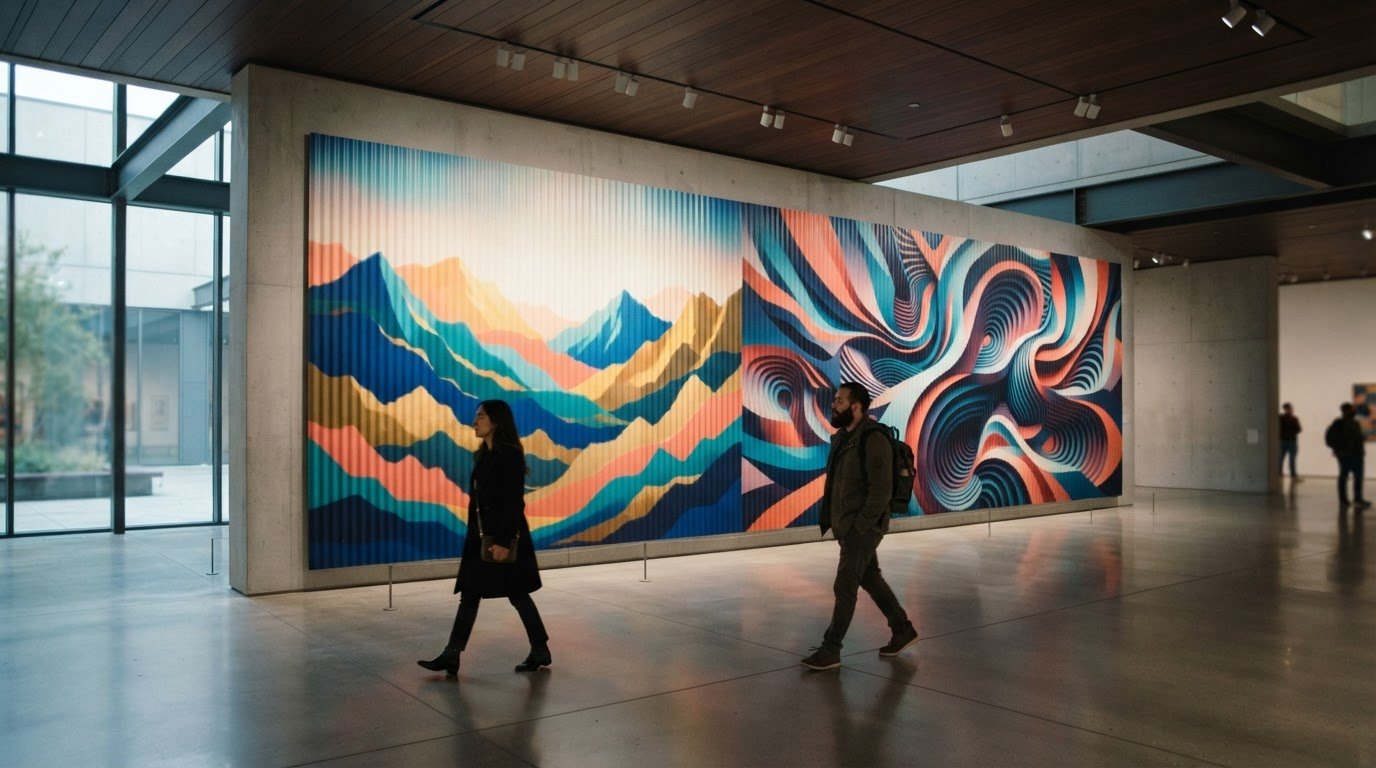
What if a wall could change as people cross a room, revealing a new image, a sense of depth, or a moment of motion? Lenticular wall murals can create that shift, but the effect depends on more than the artwork. It’s shaped by where viewers stand, how far they are from the wall, and how they move through the space.
A striking concept also needs to work in the actual setting. If you’re unsure whether your wall and viewing area suit the effect, careful planning can clarify what’s possible and what needs review. This guide explains how lenticular imagery changes with viewing angle, which visual transformations it can create, and what to consider about the room before committing to a design.
You’ll also learn what to prepare before speaking with a specialist, from wall dimensions and audience flow to the experience you want to create. We’ll cover how sampling, prototyping, production, and installation can help connect the concept with the conditions at the site, so you can assess potential partners for a large-format project with confidence.
Key Takeaways
- Lenticular wall murals can reveal changing images, apparent motion, or depth, but the effect depends on where viewers stand and how they move.
- Assess the wall, viewing distance, and audience path to determine whether the space can support the intended visual transformation.
- Compare lenticular artwork with static murals and digital displays by considering the experience you want and the needs of the setting.
- Prepare wall dimensions, location, lighting, audience flow, and access constraints before discussing a custom project with a specialist.
- Understand how creative discovery, samples, prototyping, production, and installation help align the concept with the realities of the space.
What Are Lenticular Wall Murals, and What Can They Make a Wall Do?
Lenticular wall murals are custom, wall-scale images that shift as viewers change position. Instead of presenting one unchanging picture, they can reveal alternate images, suggest movement, create an impression of depth, or transition between visual states. The artwork responds to the viewer’s position in the room, rather than physically moving.
A lenticular mural differs from static wallpaper, which shows the same image from every angle. It also differs from digital signage, which uses screens to display changing content, and mechanically moving art, which relies on physical motion. In lenticular work, the visual change comes from the relationship between the printed imagery and a lens surface. The intended effect depends on the artwork, viewing angles, and conditions at the site. For a foundational overview of the technique, see Lenticular printing.
How does a lenticular mural change as people move?
A lenticular surface contains many narrow lenses. Beneath them, image elements are arranged in fine strips so that different parts become visible from different angles. As a viewer shifts position, the angle of light entering the lenses changes too. This viewpoint change is called parallax, and it allows one image to give way to another without a screen or motor.
Imagine a wall image that shows a closed flower from one side of a corridor and an open flower from the other. As someone walks between those viewpoints, the image may transition gradually or switch more distinctly, depending on the design. The viewing path is part of the composition. An effect designed for people walking past a wall may feel different from one intended for viewers standing in a particular area.
What visual effects can a wall-scale lenticular image create?
A lenticular wall mural is a custom image whose visible content changes with the viewer’s angle, creating effects such as image transitions, apparent motion, or depth. The source artwork and the experience the design should create determine the specific transformation.
- Image transitions: One scene or message shifts into another as the viewer moves.
- Apparent motion: A sequence of related images can suggest an action unfolding across the viewing angle.
- Depth: Layered visual elements can appear to sit at different distances, lending the artwork a dimensional quality.
- Agamograph-style transformations: Interwoven images alternate as the viewer changes position, creating a more pronounced change between compositions.
These effects aren’t interchangeable. A dramatic transformation needs imagery designed to read clearly from the intended angles, while a subtle sense of depth calls for a different visual approach. At architectural scale, the artwork also needs to suit the actual viewing area so the shift feels intentional rather than unpredictable.
How Lenticular Wall Murals Work at Architectural Scale
At architectural scale, an image must be designed for a real room, not simply enlarged to fill a wall. Lenticular lenses direct different narrow strips of an interlaced image toward different viewing angles. As viewers move, the visible strips change, allowing the image to transition. The production process brings those elements together; FESPA offers an industry overview of how lenticular murals are made.
The viewing angle determines which interlaced image elements reach the viewer, so the direction and pace of movement across the mural influence where transitions appear and how they’re experienced. A design for people walking past a long wall may need to work differently from one viewed head-on in a lobby. Consider the image sequence, wall dimensions, and likely viewer positions together.
Why viewing distance and sightlines shape the effect
Start with the viewer’s journey. Where will someone first encounter the mural? How far away will they be, and will they approach from the side or face it directly? A corridor creates a moving sightline; a lobby may offer several approach angles; an open-plan interior can expose the artwork to shifting viewpoints throughout the day. Each condition can affect how clearly the intended transition reads. Share likely viewing distances and angles with the production team before finalizing the artwork.
What wall, lighting, and image details need early review?
Document the wall’s height and width, surface condition, ambient lighting, and practical installation constraints. Note windows, light fixtures, architectural features, and anything that could obstruct the view or complicate installation. These are site factors to assess, not guarantees of a particular visual result. Reviewing them early helps the creative and technical teams identify questions to resolve before production.
The source images also need to be prepared for the intended transition. For example, a sequence designed to shift between two scenes must be composed as connected parts of one lenticular image, rather than as unrelated pictures placed side by side. For more on the technical decisions involved, read this large-format lenticular printing guide.
When discussing a custom project, share measurements, site photographs or plans, lighting observations, and notes on how people use the space. If you’re considering an architectural lenticular installation, Softmotion’s architectural lenticular work offers a starting point for exploring how creative intent can be coordinated with site requirements.
Where Lenticular Wall Murals Work Best, and When to Choose Another Approach
Lenticular wall murals make the most sense when movement through the room can become part of the visual story. They may suit a corridor where people pass along a defined route, a lobby where visitors approach from different directions, or an interior where viewers can pause and explore a changing image. The format isn’t right for every wall. If people rarely see it from different angles, or the message must stay identical for everyone, another approach may communicate more clearly.
Which spaces benefit from viewpoint-driven wall art?
Possible settings include corporate interiors, cultural venues, hospitality spaces, and public environments. A transformation can reward visitors moving through an exhibition; in a hotel or workplace, a designed sequence might add a distinctive focal point. In galleries, the effect can be considered alongside fine-art presentation, as in this guide to lenticular art for corporate spaces, which focuses on gallery and fine-art contexts. In each setting, assess sightlines, audience flow, and the visual story before deciding.
Lenticular mural or static graphic: how do you decide?
Compare what viewers should experience, how the image needs to change, and whether content must be updated after installation. The format should serve the brief, not simply add movement for its own sake.
| Format | Viewer interaction | Visual change | Content flexibility |
|---|---|---|---|
| Lenticular mural | Viewers shift position to experience the effect | Printed imagery changes with viewing angle | Designed visual content is generally fixed after production |
| Static mural or graphic | Viewed without needing to move | Image stays the same from different positions | Changing the image typically means replacing or reworking the graphic |
| Digital display | Viewed on a screen; interaction depends on the system | Content can change on screen | Best suited when the brief requires programmable or frequently updated content |
Choose a static graphic when every viewer needs to receive the same image or message, regardless of where they stand. Consider a digital display when content needs to be scheduled, revised often, or programmed to change. Lenticular artwork offers a different kind of change: the image responds to viewpoint, while the designed content itself is not automatically refreshed.
Maintenance also differs by format and installation. A printed artwork has different care and upkeep considerations from an electronic display, so confirm cleaning, access, and ongoing maintenance requirements for the specific site. The strongest choice aligns the visual goal with how people actually use the space.

How to Plan a Lenticular Wall Mural for Your Space
A successful custom mural starts with a clear visual goal and a grounded understanding of the site. Before artwork moves into production, align the creative idea with the wall, the audience’s route through the space, and the way the image should change. This gives designers and technical teams a shared basis for decisions and review.
What should a mural project brief include?
Gather the practical and creative details in one brief. Include the site location, wall dimensions, surface information, audience flow, likely viewing path, lighting conditions, and access constraints. Add architectural drawings or site plans, reference imagery, brand requirements, and restrictions that may affect installation. Identify project decision-makers and approval stages so creative feedback and technical review stay coordinated.
Then define what the artwork should do. Should it transition between two images, suggest movement, or reveal a different composition as people pass? Agree on the intended viewing experience and how the team will assess whether the result meets the brief before production begins. For lenticular wall murals, that shared understanding helps keep the visual concept and the realities of the space in step.
Why samples and prototypes matter before full-scale production
Samples let stakeholders assess how the chosen imagery and transition read through a lenticular surface before moving to a full installation. A prototype review can bring questions about image sequence, viewing angles, or the relationship between artwork and site into the open while changes are still easier to discuss. Explore custom lenticular prototyping guidance for more on using prototypes to validate a design.
Use the review to identify project-specific decisions that remain open, rather than assuming every technical detail is settled by the concept. Discuss proposed dimensions, production method, schedule, and installation requirements with the specialist responsible for the work.
- 1. Define the visual goal. Describe the intended image change and what viewers should experience.
- 2. Record the site. Document wall measurements, location, lighting, audience movement, access, and relevant architectural features.
- 3. Assemble the brief. Bring together reference images, brand guidance, drawings, constraints, and approval contacts.
- 4. Review samples or prototypes. Assess the imagery and transition, then resolve open creative and viewing questions.
- 5. Approve the site plan. Confirm that the design, dimensions, production approach, schedule, and installation details have been reviewed with the project team.
For support with samples, prototyping, and architectural-scale work, discuss your lenticular mural project with Softmotion.
From Lenticular Wall Mural Concept to Installed Artwork
A large-scale lenticular mural moves through distinct stages, from the first creative conversation to installation at the site. Each stage connects the desired visual experience to practical decisions about the artwork, the wall, and how people will view it. Clear coordination helps preserve the creative intent while addressing the conditions of the space.
- Creative discovery: Define the story, audience, setting, and image transition the project should create.
- Site and technical review: Share measurements, plans, viewing paths, lighting information, access details, and other known constraints so the team can assess project requirements.
- Samples and prototyping: Review how the imagery behaves through the lenticular surface and refine the concept before full-scale production.
- Production planning: Confirm the approved artwork, dimensions, production approach, schedule, and responsibilities for reviews.
- Installation preparation and site installation: Coordinate access, logistics, and site readiness with the people responsible for the project and installation.
These steps are collaborative, not isolated handoffs. Design teams focus on the image and its intended impact; technical teams consider how that artwork can be produced for the actual space. Samples and prototype reviews provide opportunities to check that the proposed transition and viewing experience still align with the original goal.
What to expect from a specialist production partner
A specialist partner can help connect creative choices with production and site requirements through sample review, technical coordination, production planning, and installation preparation. Establish who owns artwork approvals, who supplies accurate site information, and who coordinates logistics and installation. Confirm project-specific dimensions, methods, schedules, and responsibilities directly with the team. These details depend on the project, so don’t assume fixed timelines or outcomes before the requirements are reviewed.
Softmotion creates large-format lenticular and agamograph works and supports projects from sampling and prototyping through production and on-site installation. Founded in 1997, the company has delivered more than 1,000 projects for architects, advertisers, artists, and Fortune 500 corporations worldwide. Its process brings creative and technical considerations into the same conversation, while the approach and requirements remain specific to each project.
How to take the next step with Softmotion
To begin a project discussion, prepare the wall’s location and dimensions, who will encounter the artwork, the visual change you want to create, and any available plans or site information. This gives the team a practical starting point for considering feasibility and appropriate next steps, without presuming that every concept or site calls for the same solution.
Discuss your lenticular wall mural project with Softmotion.
Give Your Wall a Story That Moves
Lenticular wall murals can transform a static surface into an experience that unfolds as people move through a space. The effect works best when the image, viewing angles, audience flow, and site conditions are considered together. A clear creative goal, supported by practical planning and early sample or prototype reviews, helps connect the vision to the realities of the wall.
Softmotion creates large-format lenticular work and supports projects from samples and prototypes through production and installation. This brings creative and technical considerations into the same conversation as the project develops.
Have a wall in mind? Share the site, intended audience, and visual transformation you hope to create to begin assessing what may suit the space. Discuss your lenticular wall mural project with Softmotion, and take the next step toward making your idea part of the environment.
Frequently Asked Questions
What is a lenticular wall mural?
A lenticular wall mural is a custom, wall-scale image designed to change as a viewer changes position. A lens surface directs different parts of prepared imagery toward different viewing angles, so the artwork may shift between images or suggest motion or depth. Unlike a static mural, it responds to viewpoint. The effect depends on the artwork and the room’s viewing conditions, so the design should be planned for its intended audience and setting.
How does a lenticular mural create a moving image?
A lenticular mural creates apparent movement by combining a lens surface with image elements arranged in narrow, interwoven strips. Each lens directs a different part of the image toward the viewer. As someone walks past or changes their angle, the visible elements shift, revealing a sequence that can look like motion or a transition between scenes. The artwork doesn’t physically move, and the effect depends on designing the image sequence for the intended viewing path.
Can lenticular wall murals be made for large or irregular walls?
They may be suitable for large or irregular walls, but dimensions, surface conditions, and project constraints need specialist review before the design is finalized. A site plan, accurate measurements, photographs, and notes about architectural features can help the production team assess the space. The mural’s layout and installation approach depend on the project. Discuss unusual shapes, surface changes, access limits, or obstructions early, rather than assuming every wall can accommodate the same solution.
What viewing distance is needed for a lenticular wall mural?
There isn’t one viewing distance that suits every lenticular mural. The appropriate distance and angle depend on the artwork, lens design, wall scale, and intended effect. A mural viewed along a corridor may be approached differently from one seen across a lobby. Share likely viewing positions and the audience route with the production team, then assess samples or prototypes from relevant distances and angles before approving final artwork.
Are lenticular wall murals suitable for offices and public spaces?
Lenticular wall murals can suit offices and public spaces when the audience’s movement and viewing conditions support the intended visual experience. A lobby, corridor, or exhibition area may offer useful sightlines, while a space where viewers see the wall from one fixed position may not. Consider the project’s purpose, the people using the space, lighting, and how consistently the image needs to communicate. Suitability depends on the site and creative goals, not the setting alone.
How are lenticular wall murals designed and installed?
Projects typically begin with a brief describing the site, audience, wall dimensions, and desired visual transformation. The team then reviews the creative concept and technical requirements, with samples or prototypes helping stakeholders assess the imagery and transition. Once the design and project details are approved, production and site installation can be planned. Confirm responsibilities for artwork approval, site information, logistics, access, and installation coordination with the specialist involved in the project.
How is a lenticular wall mural different from a digital display?
A lenticular wall mural changes visually as viewers move, using a physical lens surface and prepared imagery rather than a screen. Its designed content is generally fixed after production, and the transition depends on viewing angle. A digital display presents content on a screen, where it can be programmable or updated, depending on the system. Choose based on the brief: viewpoint-driven visual change suits lenticular work, while frequently changing content may call for a digital display.