
Lenticular visuals for marketing agencies: effects and uses
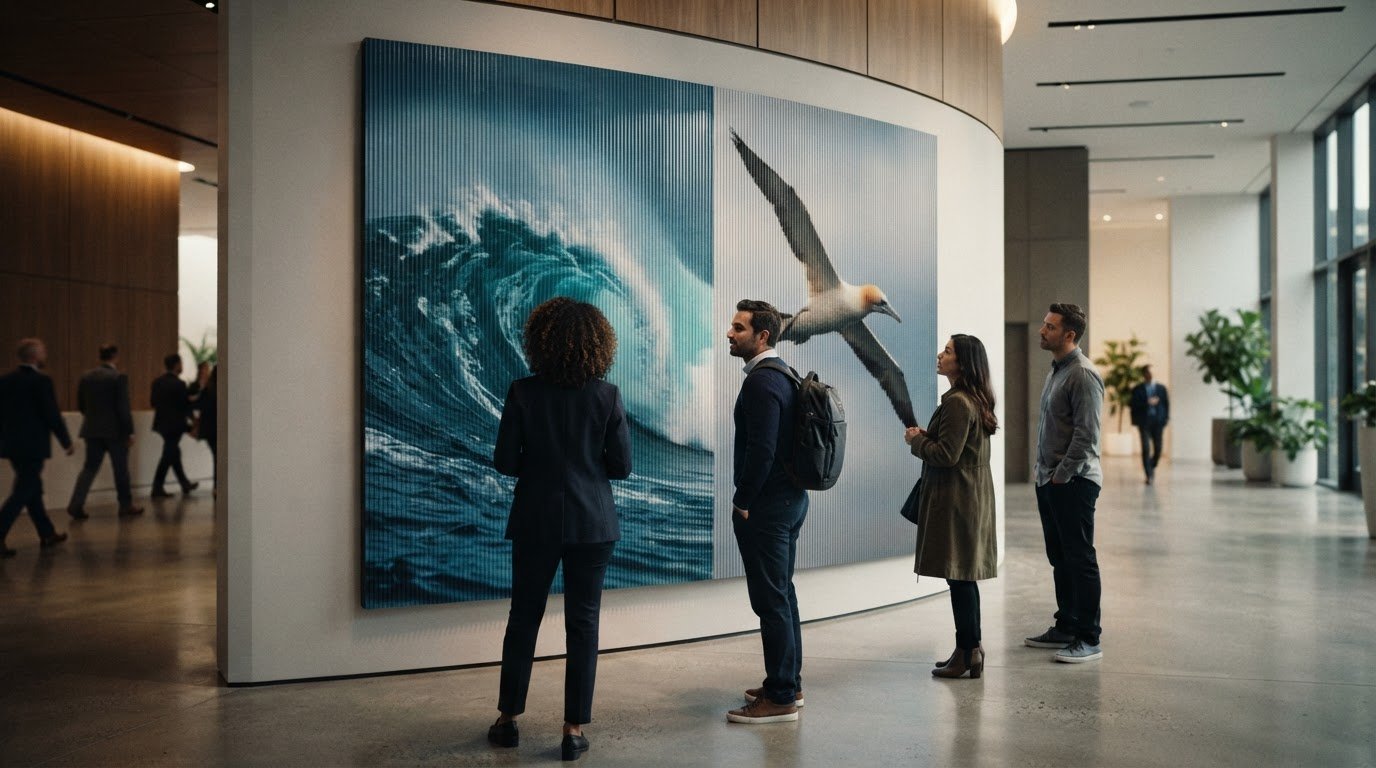
A printed surface doesn’t have to tell only one story. Lenticular visuals for marketing agencies layer two or more images beneath a lens, so the same piece can flip between frames, appear animated, or create a glasses-free 3D effect. It’s print with a shift in perspective, designed to make a physical message feel active.
That makes lenticular printing especially compelling where people encounter a brand in person: across retail displays, trade-show graphics, and other event visuals. A moving image can draw the eye, while a change in frame gives viewers a reason to pause and look again. The effect works best when the visual idea is clear and the movement supports the message rather than distracting from it.
This article explains how lenticular lenses and printed images work together, which effects they create, and how agencies can use them to shape brand experiences. It also covers where large-format lenticular visuals can bring dimension to a retail or event space, and what to consider when developing a campaign.
Key Takeaways
- Understand how layered images and a lens turn a flat print into a visual that changes with the viewer’s angle.
- Match the effect to the message: depth, a frame-to-frame flip, or a more continuous sense of movement each creates a different experience.
- Use physical displays where viewers can pause, shift perspective, and engage with a brand in person.
- Shape large-format retail and event visuals around their viewing distance, surroundings, and campaign purpose.
What is Lenticular Printing?
Lenticular printing places two or more images beneath a ridged lens, revealing different views as the audience changes position. The result can add depth or motion to posters and promotional displays without a screen.
Lenticular Movement and Depth
Lenticular movement and depth are angle-dependent effects created when a lens directs different parts of a printed image toward the viewer. For 3D, layered elements appear at different depths on a flat sheet, without glasses. Flip effects switch between images; animation sequences suggest motion, while zoom can make a subject appear to approach or recede. These visual features give a campaign a memorable physical presence and invite closer engagement.
Design mistakes can weaken the effect. Careful alignment and consistent tones can help preserve clear transitions between frames. Align the artwork carefully and keep tones consistent to make transitions clearer.
Multiple Images in One Print
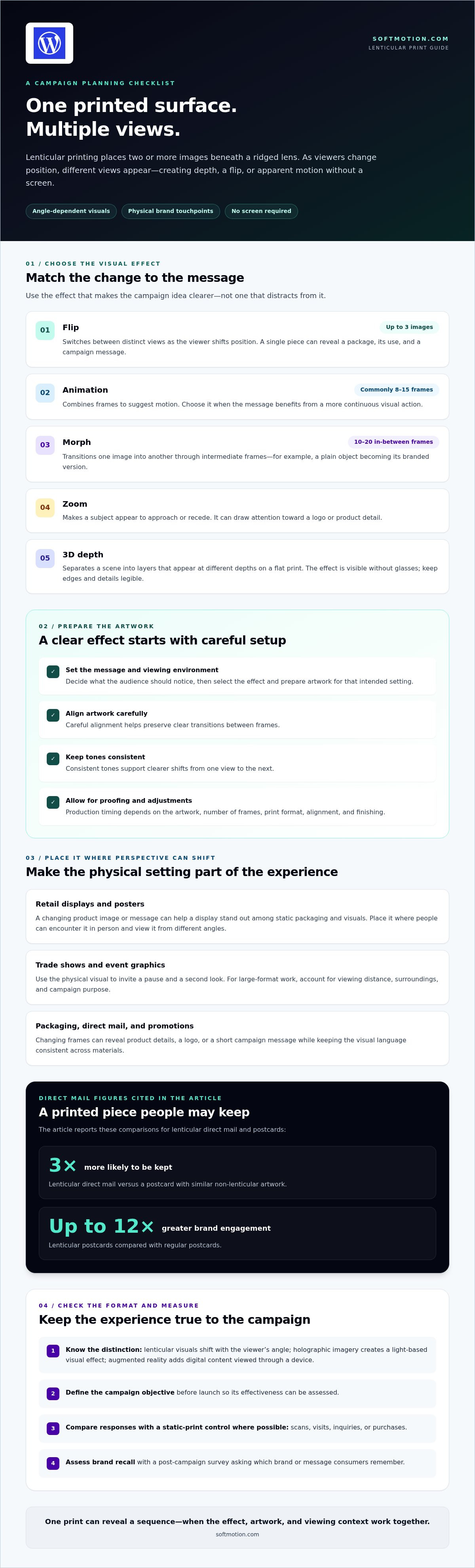
A lenticular lens divides the view into fine strips, interlacing two or more images so each becomes visible from a different angle. A flip can combine up to three separate images in one piece, such as a product’s packaging, its use, and a campaign message. Morphing uses 10 to 20 in-between frames to transition between images, while lenticular animation commonly combines 8 to 15 frames. Each approach turns one printed surface into a compact sequence.
For agencies, one lenticular print can present changing messages without a digital screen. Start with a clear campaign message and intended viewing environment, then prepare artwork for the chosen effect and place the finished piece where people will see it from different angles. This physical interaction can set a campaign apart from conventional static printing.
Lenticular printing differs from holographic and augmented-reality experiences. Lenticular effects shift with the viewer’s angle; holographic imagery creates a light-based visual effect, while augmented reality adds digital content viewed through a device. For retail posters or event graphics, lenticular printing keeps the changing visual within the printed piece.
Benefits for brand awareness, engagement, affinity, and recall
Lenticular campaigns give audiences a reason to pause, look again, and connect a visual change with a brand. For agencies, the effect can support awareness, engagement, and recall across physical touchpoints.
Brand Awareness Through Distinctive Materials
Distinctive lenticular materials help brands stand out by making a familiar format, such as a poster or display, change as viewers move. A product image might shift into a campaign message, turning a passing glance into an active moment. This visual contrast gives consumers a clearer feature to associate with the brand, especially in busy retail spaces where static packaging and displays compete for attention.
Branding and Promotional Applications
Lenticular printing can carry corporate identity across packaging, direct mail, promotional materials, and event displays. Agencies can use changing frames to reveal a product detail, a logo, or a short call to action while keeping the campaign’s visual language consistent. The effect suits a launch where one piece needs to introduce a product and communicate its benefit without relying on a screen.
Direct mail adds a keepsake dimension. Consumers are three times more likely to keep lenticular direct mail than a postcard with similar non-lenticular artwork. Lenticular postcards can generate up to 12 times greater brand engagement than regular postcards. These figures point to a practical role for the format: extend the life of a campaign piece beyond its first viewing.
Production timing depends on the artwork, number of frames, print format, alignment, and finishing. Agencies can plan by setting the campaign message first, preparing approved visual assets, and allowing time for proofing and adjustments before distribution.
Define the campaign objective before launch to assess its effectiveness. Where possible, compare responses, such as scans, visits, inquiries, or purchases, with a static-print control. To assess brand recall, use a post-campaign survey asking consumers which brand or message they remember.
Review lenticular samples to see how angle and artwork shape the campaign experience.
Lenticular visual effects: morphing, zoom, 3D, flip, and animation
A lenticular lens directs different image details toward viewers at changing angles. This technique turns still graphics into angle-dependent effects, from a clear product reveal to a sense of depth.
Flip and Animation Effects
A flip effect switches between distinct images as the viewer shifts position, while animation presents a sequence that suggests motion. A lenticular flip can combine up to three images, such as a package, its contents, and a promotional message. Animation commonly combines 8 to 15 frames. The right choice depends on whether the campaign needs a quick comparison or a more continuous visual action.
Morphing and Zoom Effects
Morphing blends one image into another through in-between frames, while zoom makes a subject appear to approach or recede. A morph may use 10 to 20 transition frames, for example, changing a plain object into its branded version. A zoom can draw attention toward a logo or product detail. Both effects work best when the change supports one clear message.
Creating 3D Depth
A 3D lenticular effect separates a scene into layers, then presents those layers at different apparent depths. In a product graphic, the foreground package can seem to sit ahead of a softly receding background. Viewers perceive the dimensional shift without glasses. Careful separation keeps edges and details legible, so the special effect adds perspective rather than obscuring the subject.
Combining Depth and Flip
A depth-and-flip combination gives each changing image a layered perspective. For example, a campaign could shift from a closed product package to an opened view, with foreground details appearing to move forward. The lens reveals each interlaced view as the audience changes angle. This combination can make a transition more expressive, but both the depth and image change should serve the same idea.
Large-format retail and event visuals
In a retail aisle or trade-show booth, a large-format lenticular visual can turn a static surface into a changing focal point. As viewers move, they see different images or a shift in dimension, giving the display an active role in the space.
Placement shapes the experience. A poster beside a product shelf might use a flip to show packaging and a product benefit, while a booth backdrop could use depth to distinguish foreground graphics from the event setting. Plan for the viewer’s approach, viewing angle, and available space so the effect reads clearly rather than appearing as visual noise.
Lens pitch is one production consideration. For lenticular posters and signage, 40 to 60 LPI is a suitable range. The choice of format and artwork should also reflect how close viewers stand and how they move past the display. A graphic intended for a passing shopper needs a legible central message; a tradeshow piece may allow more time for viewers to explore a visual transition.
At retail, use a changing image to connect a product with a specific benefit or campaign idea. At an event, let a sequence reveal a feature, brand message, or shift in the visual narrative. Keep essential copy readable in each frame, and avoid placing key details where the angle-dependent change could obscure them.
Plan the creative around the physical location before finalizing the artwork. Map likely sightlines, identify the main viewing position, and decide what the audience should notice first. Then match the effect to the purpose: use a flip for a clear reveal, or depth when spatial presence matters. This makes large-format work a considered part of the environment, not simply a bigger print.
Discuss a large-format visual concept for your next retail or event setting.
Softmotion: Advertising Lenticular Displays
Softmotion creates lenticular visuals for marketing agencies when a campaign calls for a physical display that shifts with the viewer’s perspective. Advertising Lenticular Displays bring changing imagery to campaign settings, while Tradeshow Lenticular Graphics can create a distinctive focal point in an event space.
For projects beyond campaign displays, Softmotion’s Architectural Lenticular Installations and Fine Art Lenticular Prints suit spatial and artistic applications. The right direction depends on the setting, artwork, and effect you want audiences to experience. A clear creative brief connects the campaign message with the visual transformation, whether the goal is a product reveal, added depth, or a change of image that holds attention.
Contact Softmotion to discuss a lenticular display for your next campaign.
Shape Your Next Campaign Around a Clear Visual Idea
Before choosing a format, decide what you want people to feel, notice, or remember after encountering the campaign. That intention can guide the creative brief, align the visual concept with the brand, and give the finished work a coherent role across physical spaces. Lenticular visuals for marketing agencies are most purposeful when the effect serves a distinct communication goal, not simply novelty.
Softmotion offers Advertising Lenticular Displays for campaign settings, Architectural Lenticular Installations for built environments, and Fine Art Lenticular Prints for image-led projects. These formats let agencies explore how a visual idea can translate into a display, an environment, or a print.
Bring your campaign concept and intended setting into the conversation, then contact Softmotion about lenticular visuals. A well-defined idea is a strong starting point for creating work that feels distinctive and considered.
Frequently Asked Questions
How does it work?
A lenticular image pairs interlaced artwork with a ridged lens sheet. Each narrow lens directs different image details toward the viewer, so the picture changes with their position. For a campaign mockup, assess the design from the expected viewing distance and angle. This helps show whether essential copy and brand marks stay legible as the visual shifts.
What types of Lenticular Impressions are there?
Lenticular impressions can use flip, animation, morph, zoom, or 3D effects. A flip suits a simple comparison, such as two package designs; animation can suggest a short action. Morphing transitions between subjects, while zoom draws attention to a selected detail. A dimensional effect creates visual separation between elements. Select the effect that communicates the campaign idea most clearly.
What are lenticular visuals and how do they work?
Lenticular visuals are printed images designed to change appearance as a viewer’s angle shifts. A lens sheet directs the view across specially arranged image details, creating an effect within the physical print. Unlike a fixed graphic, one piece can present different views as someone moves. This can suit public-facing displays where people encounter the visual from varied positions.
How can marketing agencies use lenticular visuals in campaigns?
Agencies can use lenticular visuals in product launches, retail promotions, direct mail, and trade-show materials. Their value lies in connecting a physical touchpoint with a focused message, such as revealing a product detail or campaign theme. Decide what information must register at first glance, then use the visual change to support, rather than compete with, that message.
What are the main lenticular effects, such as flip, motion, and 3D?
Flip alternates between separate images, animation suggests a sequence, and 3D creates apparent depth. Morphing transitions between subjects, while zoom makes an image seem to approach or recede. For lenticular visuals for marketing agencies, the useful question is what the audience should notice: a comparison, a transformation, or a dimensional feature. That decision helps keep the effect purposeful.
How do lenticular visuals compare with standard print, digital signage, and augmented reality?
Standard print presents a fixed image; lenticular print changes with the viewing angle. Digital signage displays changing content on a screen, while augmented reality adds digital elements through a device. The distinction is in how the audience encounters the message: lenticular effects are part of the printed piece, while screens and augmented reality rely on digital technology. Choose according to the setting and the intended viewing experience.