
Lenticular Printing vs. Digital Signage: Choosing High-Impact Visuals in 2026
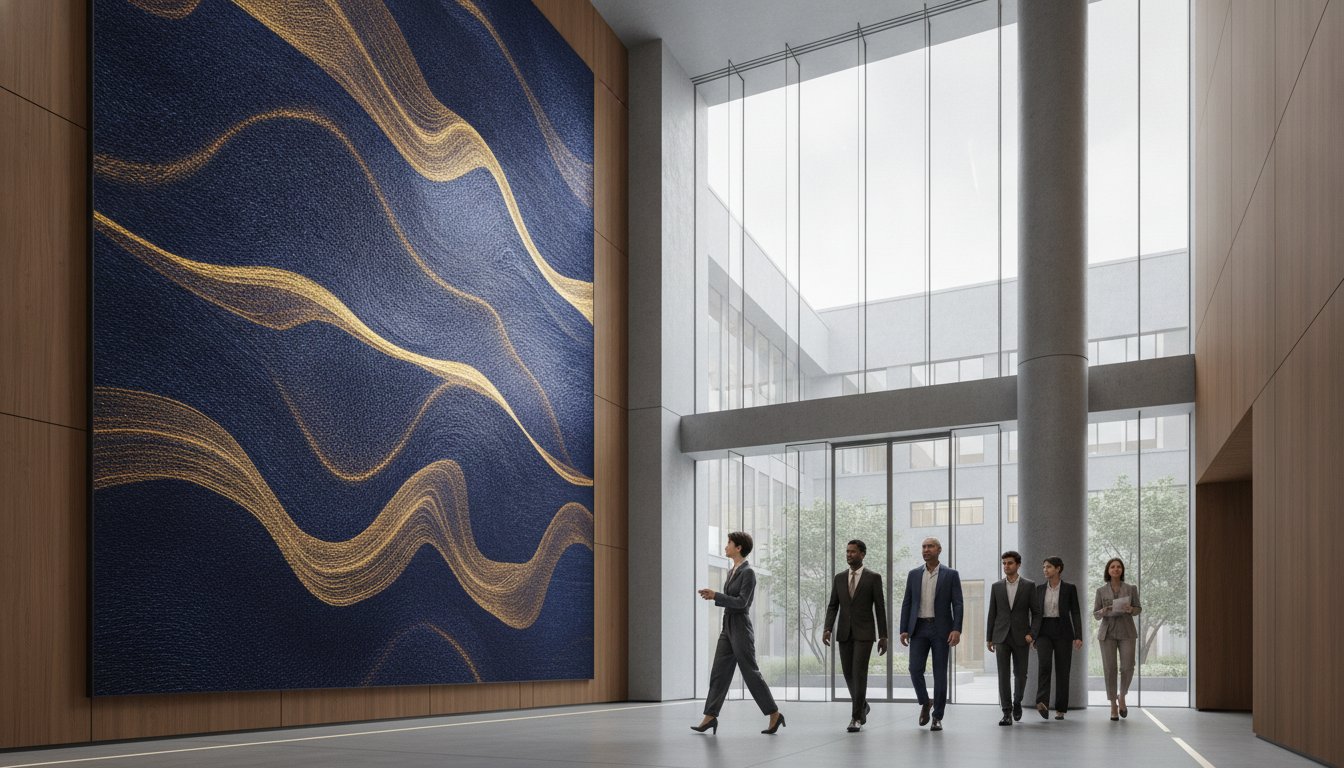
The most sophisticated motion in a premium architectural space doesn’t require a single watt of electricity. While we’ve been conditioned to believe that movement requires a plug, the reality of 2026 is that digital fatigue has reached a breaking point. You’ve likely felt the frustration of a dead pixel on an expensive LED wall or the heat radiating from a screen that feels more like an appliance than an installation. We agree that luxury environments deserve better than the flickering glow of a monitor.
This guide explores why high-end lenticular installations are emerging as the preferred choice for those seeking power-free dynamic visual displays that command attention without the technical debt. You’ll discover how to achieve deep engagement through kinetic art that remains maintenance-free for decades. We’ll examine the specific trade-offs between digital signage and lenticular printing, focusing on sustainability, sensory impact, and the long-term value of a solution that works even when the power goes out. By the end, you’ll understand how to transform a static wall into a living experience that feels both timeless and innovative.
Key Takeaways
- Eliminate energy costs and technical debt by transitioning to power-free dynamic visual displays that never require software updates or hardware cooling.
- Learn how the physics of the lenticular lens transforms a static surface into a kinetic experience driven entirely by the viewer’s physical movement.
- Contrast the ongoing maintenance burdens of digital screens with the enduring, art-focused longevity of architectural lenticular installations.
- Discover the collaborative prototyping process that ensures large-scale visual projects deliver high-impact results without the risk of technical failure.
- Explore how to combat digital fatigue in luxury environments by replacing glowing monitors with tactile, high-impact visuals that feel like art rather than appliances.
Beyond the Screen: The Case for Non-Digital Interaction
Modern environments are saturated with light. From the phones in our pockets to the massive LED walls in our lobbies, we’re constantly bathed in the artificial glow of pixels. While digital signage was once a novelty that signaled innovation, it’s now often perceived as visual noise. It demands attention rather than inviting it. In high-end corporate and public spaces, this constant flicker can lead to a phenomenon known as digital fatigue, where viewers subconsciously tune out screens to protect their sensory focus.
The challenge for architects and brand designers is to create impact without intrusion. We must move beyond the “appliance look” that plagues many digital installations. A screen, no matter how large, remains a flat surface that feels separate from its surroundings. It has bezels, cables, and a specific “on/off” state that can feel jarring against sophisticated architectural finishes. We believe the future of engagement lies in visuals that feel like an organic part of the built environment.
The Problem with Digital Overload
Screens often compete for attention in a way that feels intrusive rather than collaborative. They push content at the viewer, often at a brightness level that clashes with carefully designed ambient lighting. This creates a disconnect. When a digital display fails, even partially, it doesn’t just look broken; it cheapens the entire environment. Dead pixels or software glitches transform a premium space into a tech-support headache.
True luxury environments prioritize passive interactivity. This is a subtle yet powerful design philosophy that rewards curiosity without demanding focus. It’s about creating a moment of discovery that happens at the viewer’s own pace. Instead of a looping video that plays regardless of who is watching, a physical installation can respond to the person’s physical presence in the room.
Lenticular as a Sophisticated Alternative
Architectural lenticular installations offer a different path. They aren’t just prints; they’re spatial transformations. By leveraging Lenticular printing technology, designers can create movement that feels organic and deeply integrated. These power-free dynamic visual displays rely on the viewer’s own perspective to come alive. It’s a silent dialogue between the person and the wall, where every step reveals a new layer of the image.
This transition from a two-dimensional static surface to a three-dimensional kinetic experience is profound. It provides a “wow factor” that feels like art rather than hardware. Because these installations don’t require power, they offer a sense of permanence and reliability that digital screens simply cannot match. They don’t just sit on the wall; they inhabit the space, changing as the light and the people within it move, creating a living feature that remains timeless.
The Physics of Motion: How Lenticular Technology Works
Lenticular technology is a masterpiece of optical engineering. It replaces complex circuitry with the elegant physics of light refraction. At its core, the process involves two critical components: a high-precision interlaced print and a specialized lenticular lens. This lens acts as a sophisticated light director. It ensures that each eye sees only a specific portion of the printed image at any given time. This is how we create power-free dynamic visual displays that appear to move or possess depth without a single electronic component.
Understanding the Lenticular Lens
The resolution of the effect is governed by Lenses Per Inch (LPI). For a small display, a high LPI provides crisp detail at close range. In large-scale architectural installations, we often utilize a lower LPI. This allows the effect to resolve perfectly from across a lobby or down a corridor. The choice of material is equally vital. While commercial printing often uses thin plastic, premium installations require architectural-grade polymers. These materials maintain optical clarity and structural integrity over decades. This longevity stands in stark contrast to the rapid obsolescence and Ecological Impacts of Digital Infrastructure that define screen-based alternatives.
Motion and Depth Effects
Choosing the right effect depends on the spatial goals of the environment. A “Flip” effect creates a clean transition between two or three distinct images. It’s perfect for “before and after” narratives or bilingual messaging. “True 3D” uses parallax to create a sense of deep spatial volume. The image appears to recede into the wall or float in front of it, providing a tactile sense of depth without the need for specialized glasses. Finally, “Kinetic Animation” uses multiple frames to create smooth movement that follows the viewer as they walk past.
Achieving these results at scale requires a level of precision that far exceeds standard commercial printing. Every microscopic lens must align perfectly with the interlaced image beneath it. Even a fraction of a millimeter of misalignment can ruin the illusion. This technical discipline is why we recommend exploring custom lenticular prototypes to see how these optical physics perform under your specific lighting conditions before committing to a full-scale installation.
Sustainability and Maintenance: A Cost-Benefit Analysis
Digital signage is often praised for its versatility, yet the operational reality reveals a significant burden of technical debt. Behind every glowing LED wall lies a continuous stream of energy consumption and heat generation. In contrast, power-free dynamic visual displays achieve motion through passive optics. They function at exactly zero watts. They don’t require cooling systems, specialized ventilation, or dedicated electrical circuits. By removing the need for power, you remove the primary point of failure.
Maintenance cycles for digital displays are notoriously demanding. A single dead pixel can compromise the integrity of a high-end brand message. Software updates, security patches, and content management system fees create a recurring drain on resources. Lenticular installations bypass these complications entirely. There are no screens to burn out and no software to crash. Once installed, the kinetic effect remains consistent for decades, outlasting the typical three-to-five-year hardware refresh cycle of most digital systems.
Operational Costs Over Time
Calculating the Total Cost of Ownership (TCO) for a ten-year period highlights the economic advantage of physical installations. Digital signage providers in 2026 often charge per-screen software fees that can reach $1,600 monthly for large deployments. When you add the cost of technical support and hardware replacement, the investment escalates rapidly. Choosing power-free dynamic visual displays isn’t just an aesthetic decision; it’s a strategic move to eliminate long-term operational volatility. This makes it ideal for transit hubs and public spaces where downtime isn’t an option and maintenance access is limited.
Sustainability in Modern Design
Modern design projects increasingly prioritize LEED certification and ESG goals. Traditional digital screens contribute significantly to a building’s carbon footprint and eventually become toxic e-waste. Architectural lenticular installations utilize durable, often recyclable materials that don’t rely on rare earth minerals or constant power. This approach allows developers to tell a dynamic visual story while maintaining a commitment to environmental responsibility. For those seeking specific technical requirements, The Architect’s Guide to Large Format Lenticular Printing provides a deeper look into how these materials integrate into sustainable building plans.

Designing for Human Movement: The Psychological Edge
The human eye is biologically tuned to detect motion. However, there’s a profound psychological difference between watching a flickering pixel and experiencing a physical shift in perspective. Digital screens offer a passive experience. The viewer stands still while the content moves. Power-free dynamic visual displays reverse this dynamic. They require the viewer to move, turning a casual observer into an active participant in the artistic process. This physical interaction creates a unique psychological bond. When a person realizes that their own pace dictates the speed of the visual narrative, curiosity takes over. It’s no longer just a wall; it’s a responsive environment.
This sense of agency creates higher dwell times and deeper emotional resonance than a high-definition monitor. Dwell time in luxury environments is often a metric of success. While bright lights might catch an eye, they rarely hold a mind. Curiosity is a powerful anchor. A lenticular installation acts as a visual puzzle that the brain wants to solve. This engagement isn’t forced; it’s invited. By rewarding the viewer’s movement with a changing perspective, the installation creates a memorable anchor point in their spatial memory.
Active vs. Passive Engagement
The “aha!” moment occurs when the brain synchronizes physical movement with visual transformation. It’s a rewarding sensory loop. Unlike the intrusive nature of glowing billboards, these installations respect the viewer’s autonomy. They don’t shout for attention. Instead, they whisper a promise of discovery. This subtle approach is particularly effective in luxury retail and corporate headquarters where the “hard sell” of digital ads feels out of place.
Exploration becomes the primary mode of interaction. A visitor might walk back and forth, experimenting with angles to see how the image evolves. This kinetic dialogue is at the heart of our work with Architectural Lenticular Installations. By designing for the human body rather than the static eye, we create spaces that feel alive and deeply personal. The art doesn’t just exist on the wall; it exists in the space between the surface and the person.
Spatial Storytelling
Motion murals do more than decorate; they guide. In high-traffic environments like transit hubs or museums, lenticular art can influence movement. A visual that gradually shifts color or form as a person walks toward an exit provides a natural, intuitive cue. It transforms a mundane hallway into a purposeful journey. The emotional impact of this storytelling is significant. Because the motion is analog and tied to the viewer’s own body, it feels more organic and less manufactured than digital video. It bridges the gap between static architecture and immersive media. If you’re ready to reimagine how people experience your space, we invite you to consult with our design team to explore the possibilities of kinetic wall art.
Implementing Large-Scale Lenticular: The Softmotion Process
Realizing a high-impact architectural vision requires more than a specialized printer; it demands a partnership rooted in technical discipline and creative foresight. While small-scale prints are common, the complexity of power-free dynamic visual displays at an architectural scale is an entirely different challenge. We guide our clients through a methodical journey that transforms an abstract concept into a permanent, kinetic landmark. This process ensures that the final installation doesn’t just sit on a surface but actively enhances the environment’s character and flow.
Every project begins with a deep dive into the spatial context. We consider the ambient lighting, the primary paths of travel, and the intended emotional resonance of the piece. This collaborative design phase is where we align the artistic intent with the physical realities of the site. Whether we’re designing for a corporate lobby or a global transit hub, our goal is to create a seamless integration between the visual effect and the architectural substrate.
The Importance of Prototyping
Testing is the foundation of a risk-free installation. We believe that custom lenticular prototypes are essential for de-risking large investments, especially for Fortune-500 clients who cannot afford a visual mismatch. These samples allow us to verify viewing angles and motion fluidity under the specific lighting conditions of the final location. We examine how colors interact with the lens material and ensure the transition between frames is as smooth as intended. This iterative refinement phase provides the certainty needed to move from a small-scale proof of concept to a full-scale architectural feature.
Global Fabrication and Installation
Execution is where our decades of experience become your greatest asset. Since 1997, we’ve delivered over 1,000 projects worldwide, navigating the logistical hurdles of large-format production and international shipping. Handling massive, high-precision sheets requires specialized equipment and a meticulous eye for detail. We manage the entire lifecycle, from the interlacing of the high-resolution files to the final mounting on the building’s facade or interior walls.
Our team understands that an installation is only as good as its final placement. We coordinate with onsite contractors to ensure that every panel aligns perfectly, maintaining the optical illusion across dozens of linear feet. This end-to-end management style provides a sense of security and ease, allowing architects and designers to focus on the vision while we handle the technical realization. If you’re ready to move beyond static surfaces, you can Contact Softmotion to start your custom visual journey and discover the potential of kinetic art in your next project.
Elevating Spaces with Intentional Motion
The transition from a glowing monitor to a sophisticated kinetic surface is more than a technical upgrade; it’s a shift in how we value the viewer’s experience. We’ve seen how power-free dynamic visual displays solve the persistent headaches of maintenance, energy waste, and digital noise. By grounding movement in the physical world, these installations create a sense of permanence that digital hardware simply cannot replicate. They reward curiosity and invite a deeper level of engagement that feels organic rather than forced.
Since 1997, we’ve delivered over 1,000 projects for Fortune-500 companies, bringing expertise to architectural, advertising, and fine-art applications worldwide. Our team provides end-to-end service, guiding you from the first custom prototype to the final on-site assembly. This collaborative approach ensures that your vision is realized with precision and technical discipline. We’re ready to help you transform your environment into a living, breathing experience. Partner with Softmotion for your next visionary installation and discover the impact of art that moves with your audience. The potential of your space is waiting to be revealed.
Frequently Asked Questions
Is lenticular printing more expensive than digital signage?
Lenticular installations often require a higher upfront investment compared to consumer-grade screens, but they offer a significantly lower total cost of ownership. Digital signage incurs ongoing expenses, including electricity, monthly software subscriptions, and hardware replacement every few years. Because our installations require zero power and zero technical maintenance, the long-term ROI is superior for permanent architectural spaces and high-traffic advertising environments where durability is paramount. This focus on tangible, high-impact results is also a priority for We Mail America, which helps brands maximize their advertising ROI by measuring and improving response rates in direct mail campaigns.
Yes, large-scale lenticular technology is highly effective for building facades when fabricated with architectural-grade polymers. These materials are engineered to withstand UV exposure and varying weather conditions while maintaining optical clarity. Unlike LED walls that generate heat and require complex cooling systems, these physical installations provide a kinetic experience that remains stable and vibrant in outdoor environments without the risk of electronic failure or high energy consumption.
How do you update the content on a lenticular wall if the campaign changes?
Updating a lenticular installation involves replacing the physical printed panels rather than uploading a new digital file. While digital screens offer instant updates, they lack the tactile, art-like quality of a physical installation. For seasonal campaigns or long-term brand evolutions, we manage the logistics of producing and installing fresh panels. This ensures your space continues to feel intentional and curated rather than looking like a generic digital billboard with flickering pixels.
What is the maximum size for a large-format lenticular installation?
There is no functional limit to the scale of a lenticular installation because we utilize a precision tiling process. Individual large-format sheets are seamlessly assembled on-site to cover entire lobby walls or expansive building exteriors. Our experience with over 1,000 projects since 1997 has allowed us to refine the alignment techniques necessary to maintain a consistent 3D or motion effect across hundreds of square feet without visible seams disrupting the illusion.
How does lighting affect the visibility of a lenticular display compared to a screen?
Power-free dynamic visual displays rely on ambient light to activate their effects, whereas digital screens must compete with it. In bright environments or direct sunlight, LED walls often appear washed out or require massive amounts of energy to remain visible. Lenticular surfaces utilize the existing light in the room to illuminate the interlaced image, ensuring the motion effect remains crisp and legible without the harsh glare or blue-light strain associated with monitors.
Do lenticular installations require any specific maintenance over time?
Maintenance is remarkably minimal compared to the technical debt of digital signage. There are no dead pixels to repair, no software patches to install, and no cooling fans to replace. The primary care involves standard cleaning with non-abrasive materials to keep the lens surface free of dust. This “set it and forget it” reliability makes these installations ideal for transit hubs and public spaces where consistent uptime is critical and maintenance access is often limited.
Can you combine lenticular printing with other architectural materials?
We frequently integrate lenticular elements with high-end architectural materials like glass, metal, and wood. The panels can be mounted behind protective glazing or inset into custom millwork to create a cohesive design aesthetic. For projects that require combining these kinetic features with traditional environmental graphics, Signarama provides the fabrication and installation expertise to ensure a cohesive brand presence. This flexibility allows the kinetic effect to feel like an integral part of the building’s DNA rather than a secondary appliance. We work closely with design teams to ensure the mounting systems complement the surrounding finishes and structural requirements.
The timeline for a custom installation typically ranges from eight to twelve weeks, depending on the project’s complexity and scale. This duration includes the collaborative design phase, high-precision prototyping, and final fabrication. We manage the entire lifecycle, ensuring that the transition from initial concept to on-site assembly is methodical and purposeful. Our end-to-end project management approach minimizes risk and guarantees that the final kinetic mural meets the exact specifications of the environment.