
Lenticular branding for convention centers and event venues
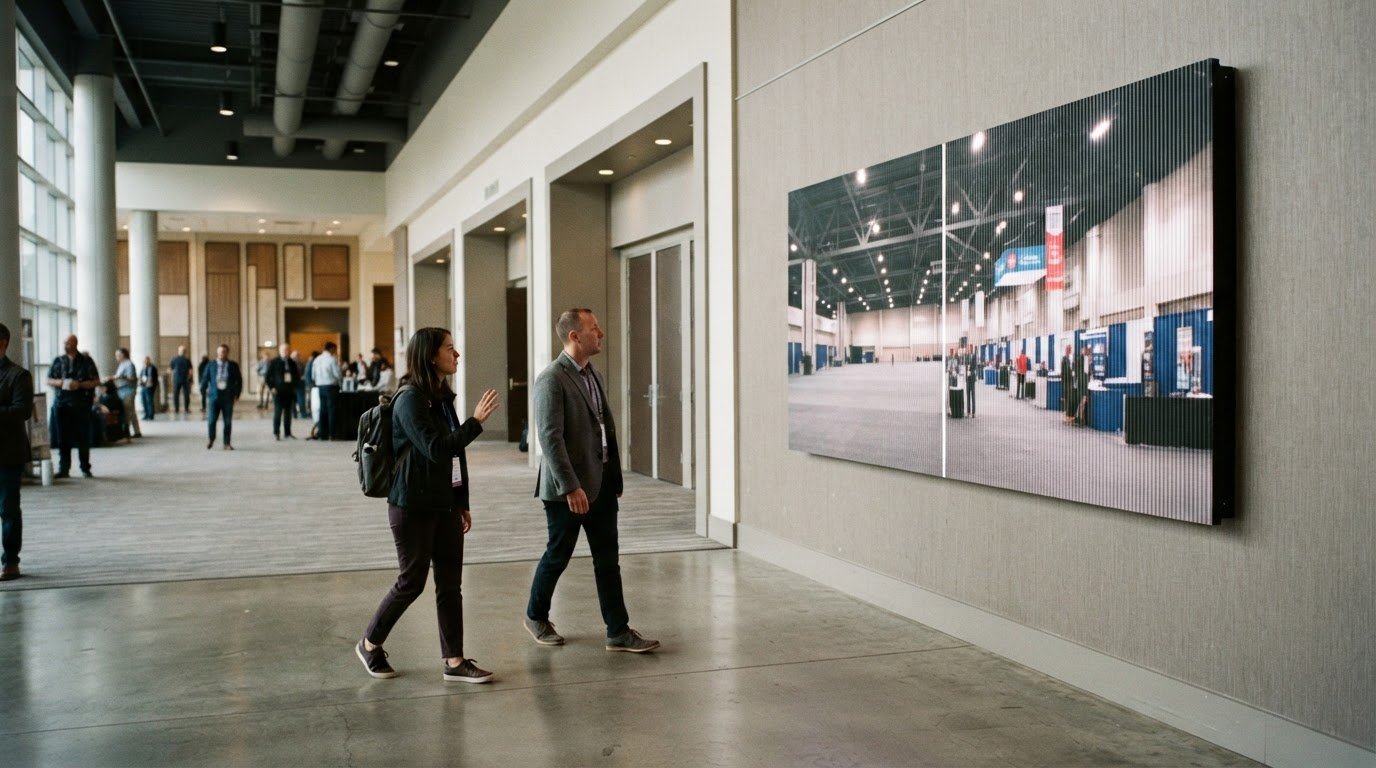
A convention-center wall can do more than hold a logo. Lenticular branding for convention centers uses two or more images beneath a lens to create movement or depth as visitors change their viewing angle. The effect turns a fixed display into a visual moment that can shift with the flow of people through a venue.
Clear messaging and strong visuals matter in a busy event space. Lenticular printing adds a changing perspective without asking visitors to use a phone or app. This article explains how it works, where it can support convention-center branding and event experiences, and how thoughtful image preparation can help reduce ghosting and pixelation. It also covers what to consider when designing a display for the way people move through a convention center.
Key Takeaways
- Learn how lenticular lenses shift between images as visitors move, creating a sense of motion or depth in a fixed display.
- See how consistent tones and high-resolution artwork can help limit ghosting and pixelation in large-format designs.
- Explore ways to use changing visuals for booth backdrops, brand messages, product launches, and visitor experiences.
- Consider sightlines and pedestrian movement when choosing where a display belongs and how its imagery should transition.
Design challenges including ghosting and pixelation
Clarity starts with the source file. Lenticular printing interlaces two or more images beneath a lenticular lens, directing each view at precise angles. At final print size, prepare source images at least 300 DPI. Animation sequences need 400 DPI or higher to preserve detail through the interlacing process. A small image enlarged for a wall format can lose crisp edges, making pixelation visible across faces, logos, or fine text.
Ghosting appears when fragments of adjacent frames remain visible together instead of transitioning cleanly. Keep tonal values consistent between frames, especially in areas that cross the image, such as a person’s outline or a product edge. For example, a bright logo against a dark background in one frame and a pale background in the next can create distracting overlap. Simplify the transition, align key shapes, and avoid placing small text across moving elements. Packaging artwork benefits from the same care: bold forms and clear contrast hold together better than delicate detail.
Unlike LED displays or digital signage, lenticular graphics are printed surfaces that create movement or depth as viewers change position, without requiring a phone or app. A standard print keeps one image fixed, while an electronic display can change its on-screen content. The right format depends on whether the venue needs a physical visual effect or changeable messaging.
Production time and minimum quantities depend on the artwork, format, lens selection, and production setup. A single large architectural panel and a run of smaller event graphics call for different preparation and finishing, so the project’s scope shapes the schedule and quantity.
Durability depends on a display’s construction and placement. Protect the lens surface from scratches and rough handling, and maintain it with regular dusting and occasional cleaning using a soft, damp cloth. In a convention corridor, this routine helps keep the printed image clear and its movement effect engaging.
Business applications and marketing benefits
A lobby can introduce an organization before visitors reach its meeting rooms. Lenticular wall displays can reinforce a brand identity in offices, conference rooms, and public-facing spaces. For example, a venue display can shift from an architectural image to an event identity as visitors change their viewing angle. The transition gives the artwork a role beyond decoration: it makes a fixed wall part of the experience of moving through the building.
Lenticular imagery can also connect a brand message with a product story. A display might transition from a product detail to its complete form, or from a campaign image to a concise callout. Lenticular lenses direct each image at a different angle, creating an animation effect without requiring a phone or app. The message is visible to people passing by, and a focused sequence keeps it legible rather than crowded.
At an event, a changing image can give a tradeshow booth a distinct visual presence among neighboring exhibits. A brand might show a product before and after use, or move between a campaign image and a launch message. The same approach can draw attention in shared spaces such as stadiums or transit terminals. Plan each transition around the audience’s path so the images appear from natural viewing angles.
For lenticular branding in convention centers, the marketing benefit comes from matching the image sequence to a specific audience and moment. A conference organizer could use one visual for arrival and another for the day’s featured program. A collectible-style print can extend that visual idea beyond a wall, while coordinated artwork keeps the venue experience coherent. Explore lenticular display concepts when a campaign needs a physical visual that shifts with its audience.
Convention centers and event venues
In convention halls, displays need to work across changing sightlines and steady pedestrian movement. Pair a clear visual effect with a location visitors naturally pass.
Large-Display Effects and Formats
A large lenticular display uses depth, flip, or animation effects to change what visitors see from different angles. These formats can suit displays ranging from 2 feet by 2 feet to free-standing walls. For a broad lobby wall, depth can add dimension to an architectural image, while a flip can shift between a venue identity and an event message. Choose the effect according to viewing distance and how much movement the concept needs.
For an animated effect, align the image sequence with the direction people approach the display. A gradual transition can reward visitors as they walk past, while strong shapes help the visual remain legible at a distance. Check that the artwork retains detail at its final print size instead of relying on enlargement to fill the wall.
Venue Branding Applications
Venue branding can make fixed surfaces part of the visitor experience. A vertical display near registration could transition from the convention center’s identity to a featured event, catching attention as attendees move through the space. Because the image changes with the viewing angle, place the display with the natural direction of foot traffic in mind.
At a conference booth, lenticular graphics can provide an attention-catching backdrop for a product launch or brand message. Organizations coordinating broader promotional campaigns alongside physical displays can look to carlteq.io for integrated branding and event services. In a lobby, a display can create an immersive impression without asking visitors to interact with a screen. Keep each transition focused: shifting from a product detail to its complete form is easier to follow than presenting several competing ideas.
Planning, Design, and Installation
Planning connects the creative concept to the venue’s sightlines, walls, and visitor paths. Map where attendees approach, pause, and turn, then position the display so its image sequence aligns with those movements. Review the artwork at its intended resolution and scale, and assess how the effect reads from the main viewing angles. This helps the installation feel intentional rather than incidental.
ADA, fire-code, and building-code requirements depend on the venue, jurisdiction, placement, and installation. Coordinate the proposed location and mounting with venue facilities staff so they can assess applicable requirements and ensure the display does not obstruct accessible routes, exits, or safety signage.

What are common lenticular signage and branding applications at convention centers?
Convention centers can place lenticular visuals where visitors naturally pause, enter, or change direction. Each location gives the image sequence a different role. At an entrance, a display can transition from the venue identity to the event theme. Near registration, it can shift between the conference name and a featured program. In each case, a fixed surface responds to visitors’ movement.
Exhibit halls offer another setting. A booth backdrop can shift between a brand mark and a product image, giving attendees a clear visual introduction as they approach. At a product expo, the sequence might reveal a detail before showing the complete product. Keep the message focused so each image reads clearly in the brief moment someone spends passing the booth.
- Lobby displays: Transition from the convention center’s identity to a current event message for arriving guests.
- Registration areas: Pair a conference visual with a program highlight where attendees stop to orient themselves.
- Exhibit booths: Use a changing backdrop to connect a company identity with a featured product or launch.
- Corridors: Position vertical graphics so the image changes naturally as pedestrians walk past.
In sponsor areas, a lenticular graphic can alternate between the event identity and a sponsor’s campaign visual. This creates a shared display concept without crowding the artwork with several messages at once. In a public lobby, a depth effect can give an architectural image a more dimensional presence, while a flip effect can shift between event branding and venue imagery. Match the transition to the audience and placement.
Successful lenticular signage starts with a clear viewing path. Identify where visitors approach, then choose images that remain recognizable through the transition. A corridor display should work for people walking past; a registration visual should reward a closer pause. For a convention-center project, plan an advertising lenticular display around the location, audience, and message you want visitors to remember.
Softmotion: Advertising Lenticular Displays
Softmotion creates Advertising Lenticular Displays for convention centers that want a fixed surface to carry a changing visual message. Choose this offering when a lobby, event entrance, or exhibit booth needs branding that responds to visitors’ movement. The display concept can connect an event identity with a product image or campaign message, shaped around the setting and audience.
For larger architectural settings, Architectural Lenticular Installations bring the same dimensional approach to venue surfaces. Tradeshow Lenticular Graphics suit exhibit environments, while Fine Art Lenticular Prints support a more artistic visual direction. Each application starts with the role the display should play, then brings the artwork and space into alignment.
Visit Softmotion online to discuss an advertising display for your convention center or event venue.
Shape the Next Visitor Experience
Start by defining what you want visitors to notice, feel, or remember. That intention can guide the image sequence, display placement, and visual relationship between your venue and its events. With a clear purpose, lenticular branding for convention centers becomes part of the visitor journey, not simply another surface to decorate.
Softmotion offers Advertising Lenticular Displays for brand communication, Architectural Lenticular Installations for venue environments, and Fine Art Lenticular Prints for a more artistic direction. Choose the format that best expresses your space and message, then shape the concept around the people who will encounter it.
Contact Softmotion about lenticular branding to explore a direction for your convention center or event venue. A thoughtful visual can give visitors a fresh perspective on the place they’ve come to experience.
Frequently Asked Questions
What Is Lenticular Printing and How Does It Work?
Lenticular printing combines interlaced images with a lens sheet, so the visible image changes as the viewer moves. The artwork is divided into narrow strips and aligned with the lens structure, with each angle revealing a different set of strips. For example, a graphic can shift from a venue logo to an event title. Careful alignment is essential because image placement determines how clearly the transition reads.
What is a Lenticular Wall Display?
A lenticular wall display is a fixed graphic that appears to change or gain depth as people move past it. In a convention center, it can transform a static architectural image into a layered visual experience. The effect depends on where visitors stand and how they approach the wall, so a display viewed from a corridor may read differently from one facing a lobby entrance.
What is lenticular branding and how does it work for convention centers?
Lenticular branding uses changing printed imagery to express a venue or event identity through movement and perspective. With lenticular branding for convention centers, a display might transition between the building’s identity and a conference theme, creating a visual connection to the event as attendees move through the space. The message works best when each image is distinct and supports the same overall brand story.
What are the risks and limitations of lenticular signage in high-traffic venues?
High-traffic locations bring practical considerations: displays may face frequent contact and dust, while viewing positions vary throughout the day. Fine details can be hard to read from a distance, and poorly matched frames may create ghosting. Choose a protected location, keep key text and logos visually simple, and consider the audience’s approach path. Avoid places where normal foot traffic could obscure the intended effect.
Which U.S. vendors specialize in large-format lenticular printing for convention centers?
Softmotion specializes in large-format lenticular printing and immersive visual installations for public spaces, tradeshows, corporate environments, advertising, fine art, and architecture. Its offerings include Advertising Lenticular Displays, Architectural Lenticular Installations, and Tradeshow Lenticular Graphics. For a convention-center project, the right fit depends on whether the goal is event messaging, a venue-scale installation, or an exhibit visual. Softmotion serves projects worldwide.