
Kinetic Transformation: The 2026 Guide to Lenticular Building Facades
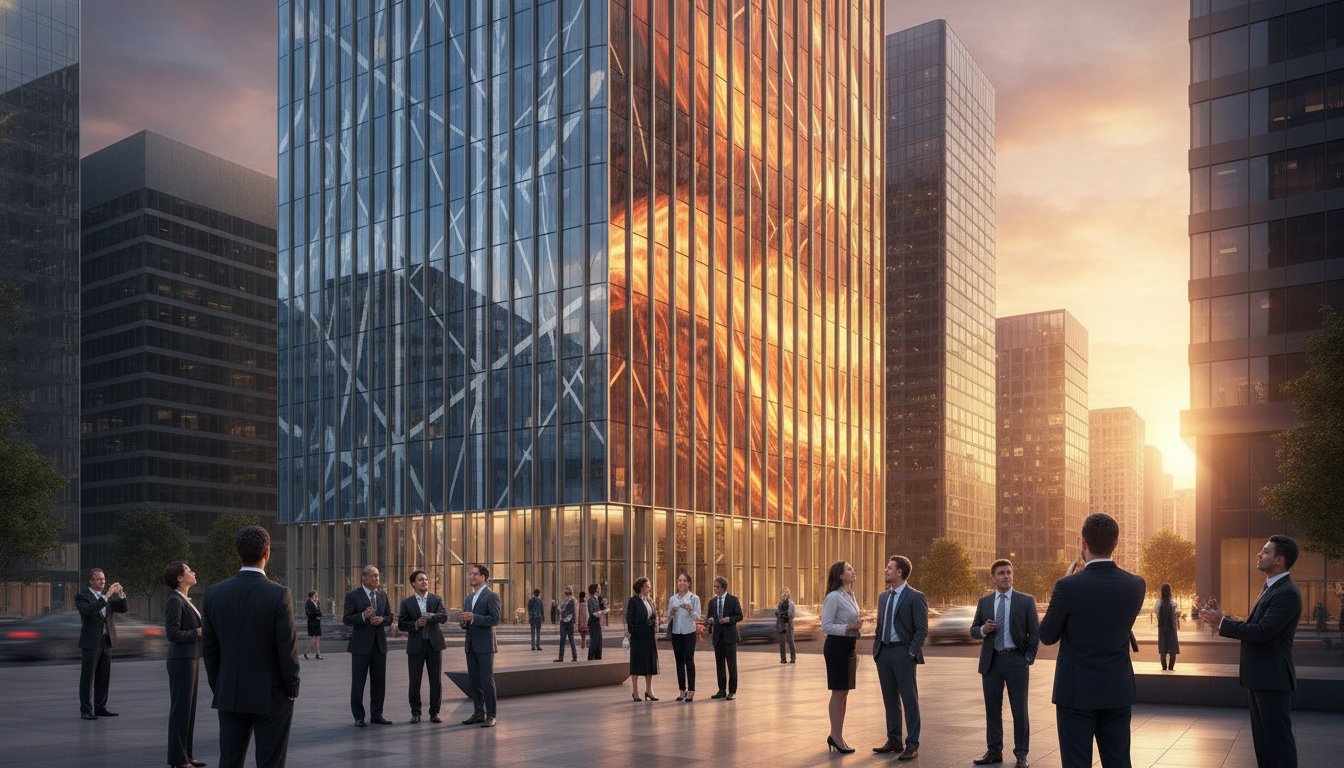
A building shouldn’t just occupy space; it should breathe, move, and converse with its environment without drawing a single watt of power. You’ve likely felt the tension between wanting to create a vibrant, kinetic landmark and the reality of strict light pollution regulations and soaring energy costs. Digital screens often feel like a maintenance trap, yet leaving a facade static in a bustling urban center can make even the most modern structure feel curiously lifeless. It’s a challenge that many developers and architects face as they strive to balance visual impact with environmental responsibility.
This guide explores how to bridge that gap using lenticular building facades. You’ll discover how to transform static surfaces into dynamic, motion-driven experiences that engage pedestrians through pure optical physics rather than electricity. We’ll examine the 2026 shift toward sustainable kinetic architecture, the technical precision required for large-format installations, and the strategic path to creating a maintenance-free landmark that complies with the most rigorous energy codes. From navigating material trends to mastering spatial transformation, we’re here to help you realize the hidden potential of your building’s exterior and turn a conventional structure into a visionary landmark.
Key Takeaways
- Reclaim the narrative of your structure by replacing static surfaces with responsive, motion-driven experiences powered by optical physics rather than power grids.
- Master the technical nuances of architectural scale, including the precise calibration of lens alignment for visibility across vast urban distances.
- Discover how lenticular building facades offer a maintenance-free alternative to digital signage, bypassing restrictive light pollution regulations and high operational costs.
- Bridge the gap between vision and reality through rigorous prototyping and the seamless integration of kinetic panels into existing curtain wall systems.
- Build for the future with durable materials like polycarbonate and stainless steel, ensuring your landmark remains a vibrant part of the city for decades.
Beyond Static Surfaces: Why Lenticular Building Facades are the Future of Urban Design
Buildings shouldn’t be silent monoliths. For decades, a facade was a static barrier, a fixed expression of glass or masonry that remained indifferent to the life moving around it. That paradigm is shifting. We’re entering an era where structures respond, breathe, and transform. Lenticular building facades represent this evolution, turning rigid architecture into a rhythmic, motion-driven experience powered entirely by the principles of optical physics. This isn’t a digital illusion; it’s a physical transformation that turns a simple walk past a building into a choreographed visual narrative.
Static cladding often feels “dead” in the vibrant pulse of a 2026 cityscape. By contrast, a kinetic exterior tells a story. It doesn’t just sit there; it interacts. This transition from “dead” surfaces to responsive exteriors is driven by a desire for deeper engagement. The foundation of this effect lies in Lenticular printing technology, which combines multiple images behind a specialized lens to create the illusion of movement. As pedestrians move, the building moves with them. It’s a psychological reward for physical presence, creating a human-first experience that digital screens often fail to replicate.
The Analog-Digital Bridge in Modern Architecture
We view these installations as the “analog-digital bridge.” They capture the fluid energy and vibrancy of a digital display using purely physical materials like polycarbonate and stainless steel. This approach prioritizes the human experience, rewarding movement and perspective with a shifting visual landscape. Kinetic architecture is the intersection of structural permanence and visual fluidity.
Sustainability and the Regulatory Landscape
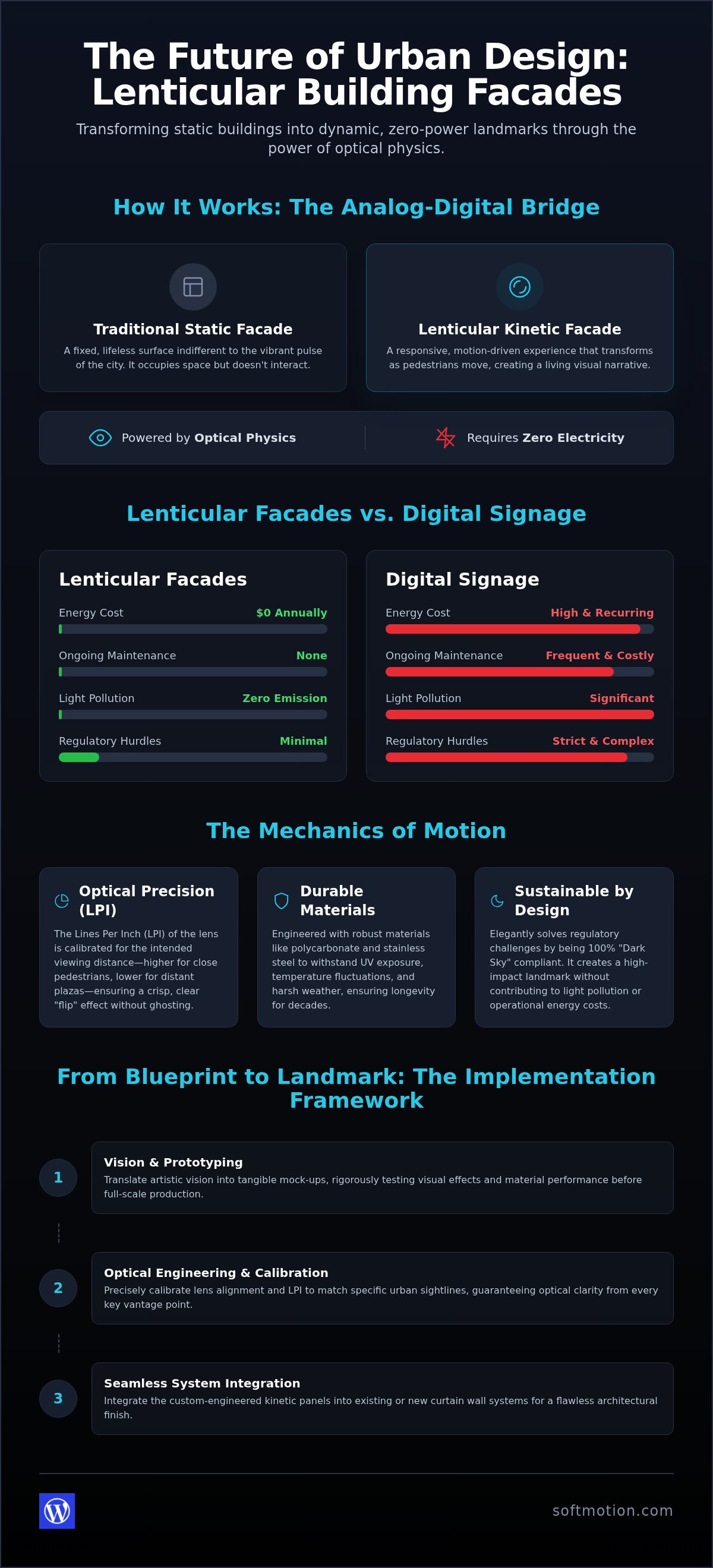
Urban planning in 2026 favors “quiet” kineticism over light-emitting digital screens. Regulations are tightening, and with a renewed focus on “Dark Sky” compliance, architects must find ways to create high-impact landmarks without contributing to light pollution. Lenticular building facades solve this elegantly. They require zero electricity to operate, making them the ultimate green-building feature for the modern age. They bypass the regulatory hurdles that often stall digital signage permits in historic or residential zones. While the market has seen a 7% to 15% rise in material costs for specialized lenses, the long-term operational savings are undeniable. You gain a maintenance-free landmark that respects both the environment and the local community’s aesthetic standards.
The Mechanics of Motion: Engineering Kinetic Visuals at Architectural Scale
Engineering a landmark requires more than just an artistic vision; it demands a deep understanding of optical geometry. Unlike small-scale prints, lenticular building facades must function across hundreds of feet of urban space. Precision is everything. A fraction of a millimeter in lens misalignment can collapse the visual narrative, turning a sharp “flip” effect into a muddy, ghosted blur. We approach this as a technical partnership, ensuring that the structural engineering supports the delicate physics of the lens at every stage of the process.
LPI and Optical Clarity Across Distances
The core of this technology is the LPI (Lines Per Inch). This metric dictates how many micro-lenses are packed into a single inch of material. For a pedestrian standing ten feet away, a higher LPI provides the necessary detail for a fluid transition. However, for viewers a hundred feet away, the math changes. Lower LPI lenses are often better suited for vast distances, as they allow for deeper, more pronounced optical shifts that remain legible from across a plaza. Selecting the right large format lenticular sheets is a balancing act between image resolution and the physical thickness of the architectural lens. High-precision interlacing prevents “ghosting,” where parts of two images appear simultaneously, diluting the impact of the motion.
Weatherproofing and Environmental Resilience
Architectural installations face a brutal reality: the elements. Materials must withstand intense UV exposure and seasonal temperature fluctuations without warping. We prioritize high-grade polycarbonate and specialized UV-stable resins to ensure longevity. While suppliers have reported a 7% to 15% rise in material costs for these specialized lenses in 2026, the investment in durability is non-negotiable. Proper sealing techniques protect the interlaced image from moisture and city pollutants, maintaining the “install and enjoy” nature of the surface.
Designing for parallax also means accounting for the speed of the observer. A visual flip that works for a slow-moving pedestrian might feel frantic to a driver passing at thirty miles per hour. We engineer these transitions to be rhythmic, allowing the building to reveal its story at a pace that matches the local traffic flow. If you’re ready to see how these technical specs can be applied to your specific site, reaching out for a technical consultation is the first step toward a risk-free installation.
Lenticular vs. Digital Signage: Navigating ROI and Impact in 2026
Choosing between a high-definition LED wall and a lenticular installation isn’t just about the initial price tag. It’s about deciding whether you want to manage a complex hardware system or a permanent piece of architectural art. Digital screens are demanding. They require dedicated cooling systems, constant pixel repairs, and a steady stream of electricity that makes them vulnerable to rising utility costs. Lenticular building facades, by contrast, rely on the movement of the sun and the observer, offering a 10-year durability that easily outlasts the typical 3-5 year replacement cycle of outdoor LEDs.
Urban environments are increasingly saturated with glowing rectangles, leading to a phenomenon known as “digital fatigue.” Pedestrians have learned to tune out screens, often categorizing them as visual noise. Physical motion triggers a different psychological response. It feels tactile, intentional, and real. Because these installations don’t emit light, they bypass the heavy regulatory hurdles and permit restrictions that often block digital signage in historic or residential zones. You gain the visual impact of motion without the legal headaches of light pollution compliance.
The Cost of Complexity vs. The Power of Physics
While suppliers have noted a 7% to 15% rise in material costs for specialized lenses in 2026, this one-time investment serves as a hedge against the skyrocketing energy costs of digital walls. Being electricity-free is the strongest selling point for modern developers focused on ESG goals. A lenticular landmark maintains its impact 24/7 without a single wire, power source, or software update. It’s a sophisticated solution that uses the laws of physics to do the work that once required a power grid. This approach aligns with the broader industry focus on the digital and sustainable transformation of the built environment, a topic explored at ctf-ksa.com.
Brand Identity and Visual Storytelling
Visual storytelling shouldn’t be interrupted by technical glitches or dead pixels. We utilize “flip” effects to allow for dual-message branding, where a corporate logo seamlessly transforms into a brand tagline as a viewer passes by. This fluid motion enhances the urban fabric rather than clashing with it. By integrating kinetic advertising displays into the building’s permanent skin, you create a narrative that is both artistic and commercially effective. It turns the facade into a legacy piece that speaks clearly to every person on the street, ensuring your message remains as durable as the structure itself.
From Blueprint to Installation: A Framework for Architectural Implementation
A vision is only as strong as its execution. Transitioning from a conceptual rendering to a physical, multi-story structure requires a disciplined framework that respects both artistic intent and structural reality. Lenticular building facades are not merely applied graphics; they are sophisticated building components that must be woven into the very fabric of the architecture. This process demands a technical partnership that begins long before the first panel is manufactured, ensuring that the kinetic effect is perfectly calibrated to the building’s unique orientation and urban context. To stay updated on the fabrication trends supporting these innovations, you can discover Offsite Dirt Network for the latest news in the modular and offsite sector.
Digital mockups are often insufficient for capturing the nuance of kinetic art. While a screen can simulate motion, it cannot replicate how a physical lens reacts to the shifting angle of the sun at four in the afternoon. This is why we prioritize the development of custom lenticular prototypes. These physical “look-see” samples allow architects and developers to validate color shifts, motion speed, and viewing angles under actual site conditions. This collaborative feedback loop ensures that the final installation delivers the intended emotional resonance without visual surprises.
Integration into the building’s envelope is the next critical step. We design these panels to integrate seamlessly into standard curtain wall systems or rainscreen assemblies. This requires careful coordination regarding panel sizes and tiling patterns to maintain a continuous visual narrative across thousands of square feet. By engineering the panels to fit within existing structural footprints, we reduce the need for specialized secondary framing, keeping the focus on the visual transformation rather than the hardware behind it.
Logistics and Project Management
Coordinating the delivery of high-precision, large-format panels to an active construction site is a feat of logistics. These components are durable once installed, yet they require careful handling during the assembly phase to protect the micro-lenses from damage. We utilize specialized mounting hardware designed for long-term structural integrity, ensuring that thermal expansion and contraction don’t compromise the sub-millimeter alignment required for the motion effect. Softmotion utilizes a risk-free and collaborative project management approach for Fortune-500 scale projects, providing a guided experience from the initial concept to the final bolt-tightening. If you are ready to begin the transition from a static blueprint to a dynamic landmark, request a technical consultation with our team to discuss your project’s specific requirements.
Designing Your Legacy: The Softmotion Collaborative Journey
Architecture is a statement of intent that outlasts trends and cycles. When you choose to integrate architectural lenticular installations into your project, you’re not just selecting a material; you’re choosing a legacy. Since 1997, Softmotion has navigated the complex intersection of fine art and technical production, delivering over 1,000 projects that redefine how buildings interact with their audience. Our role is to serve as your Visionary Guide, providing the technical discipline required to realize ambitious concepts while ensuring every detail is grounded in professional reliability.
The journey from a blank canvas to a kinetic landmark is a methodical one. We provide an end-to-end service model that begins with initial concept brainstorming and concludes only when the final bolt is tightened. A critical part of this journey is selecting the right geometric approach for your structure. You might consider an Agamograph, which uses a folded, stepped structure to create sharp, two-way image shifts. Alternatively, lenticular building facades utilize micro-lens technology to offer fluid, multi-phase motion that feels organic and responsive. We help you weigh these options against your building’s specific geometry and viewing distances to ensure the final impact is nothing short of transformative.
Why Experience Matters at Scale
Scale introduces challenges that only experience can anticipate. Our portfolio of 1,000+ projects serves as a deep well of architectural inspiration, but it also represents a proven track record of craftsmanship in high-stakes environments. We don’t just print; we partner. This human-first approach means we’re deeply invested in your vision, providing the clarity and reassurance you need throughout the creative process. We translate complex artistic goals into technical realities that stand the test of time.
Transforming the Urban Landmark
An iconic building exterior does more than house a business; it creates a destination. In an age where digital content is fleeting, physical optical illusions offer a tactile sense of wonder that people want to capture and share. These “Instagrammable” moments are built into the very skin of the building, providing long-term value that static cladding simply cannot match. By choosing a motion-driven exterior, you’re ensuring your structure remains a vibrant, conversational part of the city for decades to come. If you’re ready to redefine what your building can achieve, it’s time to Collaborate with Softmotion on your next kinetic facade and turn your structural vision into a living landmark.
Reimagining the Urban Horizon
The transition from a static structure to a breathing landmark is more than a design choice; it’s a commitment to a responsive, human-centric future. By choosing lenticular building facades, you’re bypassing the energy drains and regulatory complexities of digital screens in favor of pure, maintenance-free optical motion. This technology transforms a building’s skin into a narrative that evolves with every passerby. It creates a lasting impact that respects both the environment and the urban fabric.
Success at this scale requires a partner who understands the delicate balance between artistic vision and structural discipline. As industry leaders since 1997, we bring specialized large-format architectural precision to every project. With over 1,000 successful installations delivered worldwide, our team is prepared to guide you through the nuances of material science and sub-millimeter alignment. We’re here to ensure your project isn’t just a building, but a legacy. If you’re ready to define your structure’s place in the modern city, it’s time to start your collaborative journey with Softmotion. Let’s realize the hidden potential of your environment together.
Frequently Asked Questions
What is a lenticular building facade and how does it work?
A lenticular building facade is a dynamic exterior system that uses specialized micro-lenses to create the illusion of depth or motion as a viewer moves. It works by interlacing multiple images behind a transparent, high-precision lens layer. As your perspective shifts, the lens isolates and magnifies specific strips of the underlying artwork. This physical process transforms a static wall into a responsive, living narrative without any digital intervention or complex hardware.
Are lenticular facades more expensive than traditional cladding?
While the initial investment for these specialized installations is higher than standard masonry or glass, they provide a unique value proposition through engagement and landmark status. Developers often view this as a strategic branding investment rather than a simple material cost. In 2026, material costs for specialized lenses have risen by 7% to 15% across the industry. However, the long-term ROI is found in zero operational energy costs and the avoidance of digital maintenance fees.
How do lenticular panels hold up against extreme weather and UV rays?
We engineer these panels using high-grade polycarbonate and UV-stable resins specifically designed for architectural longevity. These materials resist yellowing, warping, and embrittlement even under intense solar exposure. The structural housings, often made of stainless steel, ensure the panels remain secure during high winds and temperature fluctuations. This robust construction allows the kinetic effect to remain clear and vibrant through decades of seasonal changes, ensuring the building’s visual impact doesn’t fade.
Can lenticular facades be installed on existing buildings as a retrofit?
Yes, these systems are highly adaptable and can be integrated into existing structures as a secondary skin or rainscreen. Retrofitting allows older buildings to gain a modern, kinetic identity without requiring a full structural overhaul. We coordinate the panel sizes to align with the original building’s grid, ensuring the installation feels like a deliberate architectural evolution rather than an afterthought. It’s an efficient way to breathe new life into an ordinary urban environment.
Do lenticular building facades require electricity to move?
No, lenticular building facades are entirely passive and require zero electricity to produce their motion effects. The movement is triggered by the natural movement of the sun and the changing perspective of the pedestrian or driver. This makes them an ideal solution for Dark Sky compliance and green-building certifications. You gain a high-impact, dynamic landmark that functions perfectly during a power outage while maintaining a zero-carbon operational footprint for the structure.
What is the maximum size for an architectural lenticular installation?
There is no functional limit to the scale of an installation because we utilize a modular tiling system. We have successfully delivered over 1,000 projects since 1997, many covering thousands of square feet across multi-story exteriors. The key to large-format success is sub-millimeter alignment between panels to ensure the visual narrative remains seamless across the facade. By tiling precision-engineered sheets, we can transform an entire city block into a single, cohesive optical experience.
How do I choose between a ‘flip’ effect and a ‘motion’ effect for a building?
The choice depends on your project’s specific geometry and the speed of the local traffic. A flip effect is excellent for dual-message branding, such as switching between a corporate logo and a tagline. A motion effect provides a more fluid, cinematic experience that works beautifully for artistic storytelling. We help you evaluate these options during the prototyping phase to ensure the chosen effect matches the viewing distances and angles of your site.
What kind of maintenance does a kinetic lenticular wall require?
These installations are designed for an install and enjoy lifecycle with very little maintenance required. Unlike digital signage, there are no pixels to replace, no software to update, and no internal cooling systems to service. Standard architectural cleaning, such as periodic rinsing to remove city dust and environmental pollutants, is typically all that’s needed to maintain clarity. This low-maintenance profile ensures the installation remains a reliable and beautiful asset for the building’s owners for years.