
How to Stop People at a Trade Show Booth: A Practical Guide
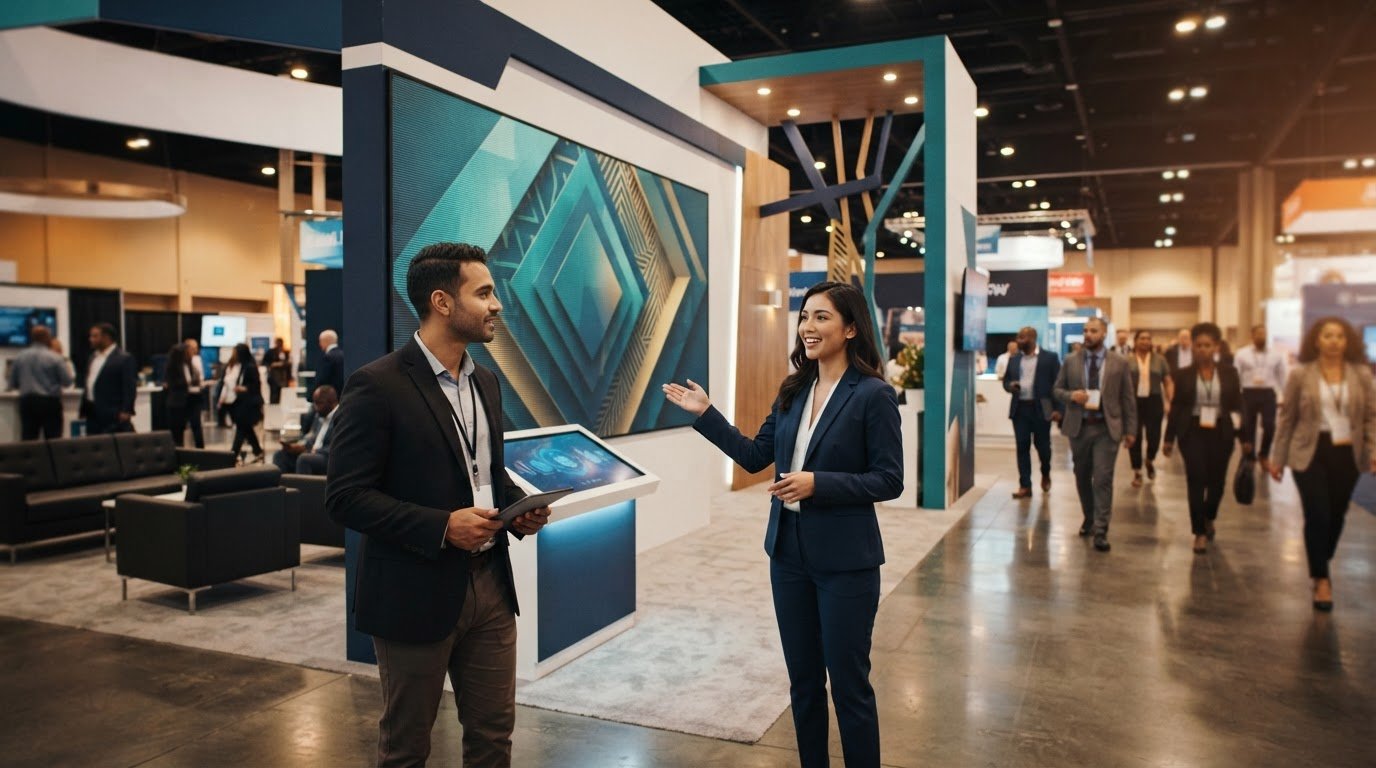
What if the best way to stop people at a trade show booth isn’t to call out to them, but to give them a reason to pause? If you’ve watched attendees pass by while your team wonders how to start a conversation without interrupting, you’re not alone. Learning how to stop people at a trade show booth starts with earning a moment of attention, then making the next step feel natural.
A compelling booth doesn’t need to shout. Clear messaging, an inviting layout, and a visual detail that changes with an attendee’s movement can create curiosity without pressure. Lenticular graphics, for example, bring motion and changing perspective to a booth surface, offering one way to draw the eye while keeping the interaction human and welcoming.
This guide connects booth design with meaningful engagement. You’ll learn how to make your message easier to grasp at a glance, create room for comfortable conversations, and help staff open with relevant, low-pressure questions. The goal is a clear path from visual interest to a business conversation that matters.
Key Takeaways
- Learn how to stop people at a trade show booth by earning attention with a welcoming invitation, not by interrupting aisle traffic.
- Use a clear visual hook and message hierarchy to help visitors quickly understand why your booth may matter to them.
- Match visual displays, concise messaging, demonstrations, and staff invitations to your audience and event goals.
- Guide promising booth visits from a warm welcome to a useful conversation and a relevant next step.
- Explore how lenticular graphics can add depth, motion, and perspective to make your booth more visually engaging.
How to Stop People at a Trade Show Booth Without Being Pushy
A show floor asks attendees to process a steady stream of signs, conversations, and demonstrations. They’re choosing where to spend their attention, so a booth team’s job isn’t to halt people in the aisle. It’s to make the value of pausing easy to see, then let visitors decide whether they want to engage. That distinction is central to how to stop people at a trade show booth without turning a welcome into pressure.
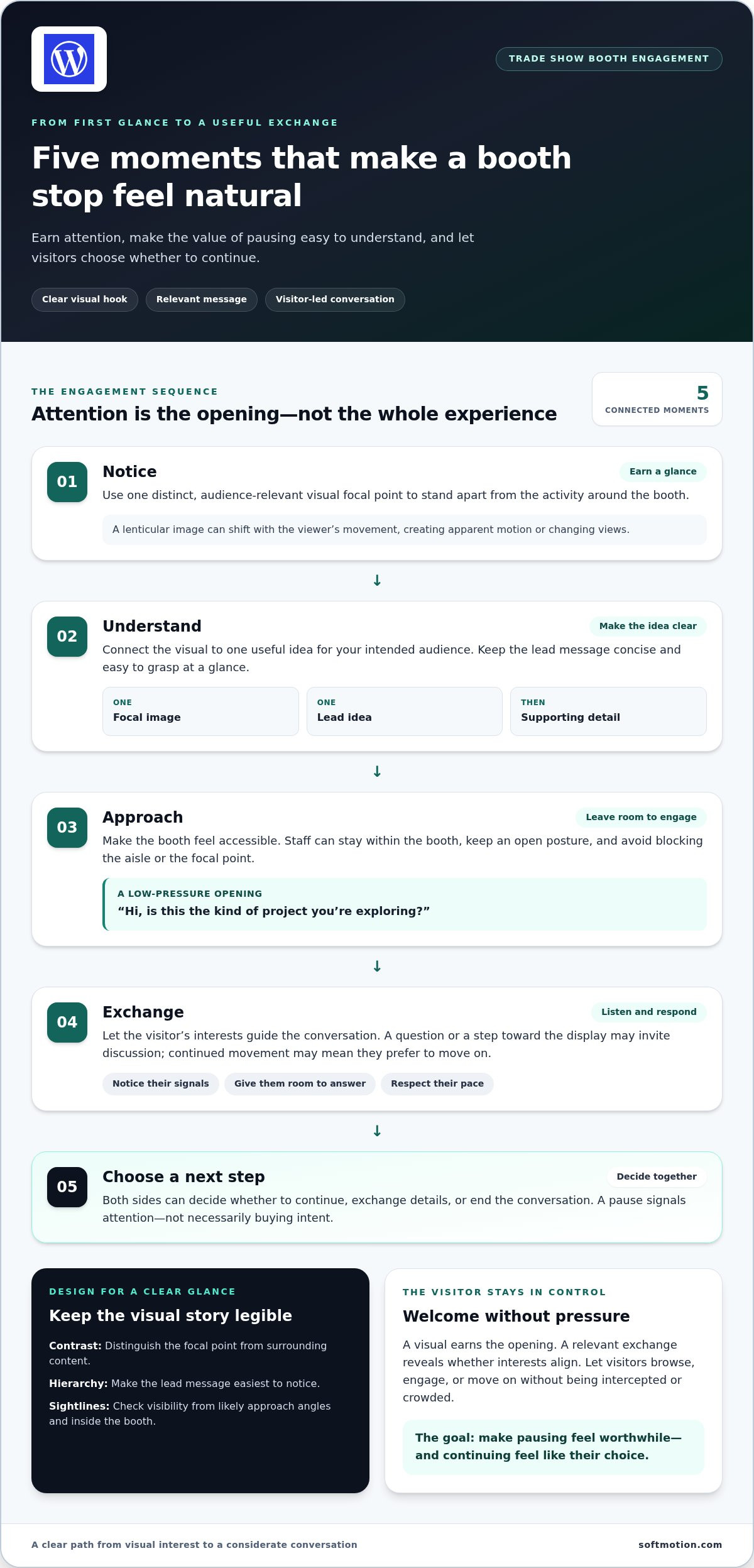
Think of the experience as a sequence, not a single pitch:
- Notice: A distinct visual focal point earns a glance.
- Understand: A concise message connects that visual to an idea relevant to your audience.
- Approach: The visitor can move toward the booth without being intercepted.
- Exchange: Staff listen and respond to what the visitor cares about.
- Choose a next step: Both sides can decide whether to continue, exchange details, or end the conversation.
This progression gives booth design and staff behavior a shared purpose. The display creates an opening; the conversation establishes whether there’s a genuine fit. A pause signals attention, not necessarily buying intent.
What makes an attendee pause at a booth?
A clear focal point can distinguish a booth from the activity around it, but it should do more than look striking. Connect its central image to one useful idea for your intended audience. For example, if the image changes as people move, the shift can make a concept feel tangible. Lenticular printing technology uses lenses to create effects such as apparent motion or changing views, offering one way to make a booth’s visual story more dimensional.
Keep the relationship between image and message easy to understand. If visitors have to decode several competing claims, the focal point loses its purpose. A pause means the booth has caught someone’s eye. A relevant exchange can reveal whether their interests align with what you offer.
How can staff invite rather than interrupt?
Make the booth feel accessible before speaking. Staff can stay within the booth, keep an open posture, and remain attentive without staring down passersby. When someone slows or looks toward the display, offer a brief greeting, such as, “Hi, is this the kind of project you’re exploring?” Then give them room to answer. Avoid blocking the aisle, crowding a visitor, or launching into a pitch they haven’t asked for.
Watch for signals and let the attendee set the pace. A question or step toward the display may invite conversation; continued movement may mean they’d rather browse or move on. Respect that choice. A successful booth invitation respects the visitor’s choice to continue. This principle helps teams turn visual interest into a considerate exchange while leaving every attendee in control of what happens next.
How Booth Design and Visual Storytelling Create a Reason to Stop
A visual hook is an audience-relevant feature that gives someone passing by a reason to look again. It might be a striking image, a contrast in form, or a surface that changes as the viewer moves. The hook works best when it points toward one idea your audience cares about, rather than competing with a wall of product claims. Attention is the opening, not the whole experience: a visual can earn a glance, but a coherent brand experience gives that glance somewhere meaningful to go.
Start with the visitor’s perspective. What challenge, opportunity, or question might bring them to your booth? Let that inform the central image and lead message. The International Trade Administration’s trade show preparation guide emphasizes aligning trade show preparation with business objectives. It’s a useful reminder that booth visuals should support the outcome you want from floor conversations.
Build one clear visual focal point
Choose one focal point and give it room to register. Supporting copy should clarify the idea, not compete with it. For instance, a booth focused on helping visitors understand a complex process could use one image that makes the process tangible, paired with a brief headline about the outcome. A changing lenticular image can shift with the viewer’s position, revealing depth or motion and inviting a second look.
Give the visual shift a purpose. If it catches the eye but doesn’t connect to the message, visitors may notice the effect without understanding what the booth offers. Keep the story legible: one focal image, one lead idea, and supporting details that reward closer attention.
Make the booth’s message readable at a glance
Concise wording helps visitors grasp why stopping could be worthwhile. Instead of listing every capability, express the central value in plain language. Then align the headline, imagery, and staff’s opening line around that same idea. This creates continuity: what a visitor sees from the aisle is what they hear when they step closer.
Review the design from likely approach angles and from inside the booth. Check whether the central image remains visible, whether nearby elements obscure the message, and whether staff can welcome visitors without standing in front of the focal point. A brief team rehearsal can reveal mismatches, such as a headline about one benefit while staff begin with another.
- Contrast: Use a clear difference in color, image, or form to distinguish the focal point from surrounding content.
- Hierarchy: Make the lead message easiest to notice, with supporting information clearly secondary.
- Sightlines: Consider what visitors can see as they approach and move through the space.
- Restraint: Remove details that don’t explain the central idea or invite a relevant conversation.
These choices make it easier to understand how to stop people at a trade show booth without relying on visual noise. For a booth surface designed to shift with perspective, Softmotion’s tradeshow lenticular graphics connect a moving visual with a clear message.
Which Trade Show Attention Tactics Fit Your Audience and Goals?
There’s no single attention tactic that suits every booth. Choose by asking what a visitor needs to notice, understand, or experience before a conversation can be useful. A visual display can make an idea tangible; concise messaging can clarify its relevance; a demonstration can show how something works; and a staff invitation can open a direct exchange. Novelty alone isn’t a strategy. The tactic should fit the visitor’s needs and your brand’s way of communicating.
Use this comparison to decide where to lead. Consider audience relevance, clarity, approachability, and whether the tactic supports the impression you want to leave.
| Tactic | Strength | Limitation | Best-fit objective |
|---|---|---|---|
| Visual display | Makes an idea visible before it’s explained | Can attract attention without clarifying the offer | Give visitors a reason to look closer |
| Concise messaging | Communicates relevance quickly | Can feel generic without audience-specific wording | Help visitors understand the value of a conversation |
| Demonstration | Shows a process or outcome in context | Needs a clear, easy-to-follow focus | Make a product or idea easier to grasp |
| Staff invitation | Creates a personal opening for questions | Can feel intrusive if poorly timed | Start a relevant, human conversation |
| Giveaway | Offers a tangible supporting detail | May draw interest unrelated to your offer | Complement a message or interaction |
Pair tactics when they serve the same purpose. A concise headline can frame a visual display, while a staff member offers a low-pressure explanation to visitors who linger. For design ideas that combine imagery, contrast, and space, explore these visual storytelling techniques for trade show booths. A coordinated approach gives visitors a clear path from first impression to meaningful engagement.
When should a booth lead with a visual display?
Lead with a visual when the idea makes more sense once someone sees it. Lenticular graphics offer one option: a surface that appears to change as the viewer shifts perspective, revealing motion or depth. This can suit a concept that benefits from a visual demonstration before explanation. For a closer look at the format, see this guide to interactive lenticular tradeshow displays.
When should staff, demonstrations, or promotions lead?
Lead with staff when understanding depends on questions or context. Use a demonstration when visitors need to see a process or outcome clearly, and keep the explanation focused on what they’re watching. Giveaways can support a relevant interaction, but they can’t replace a clear reason to engage. The best mix depends on what your audience needs to move from curiosity toward a useful business conversation.
How to Turn a Booth Stop into a Useful Conversation
A visitor who pauses has offered attention, not necessarily permission for a pitch. Make the exchange useful on their terms. Meaningful booth engagement starts with the visitor’s priority, not the exhibitor’s pitch. That principle turns how to stop people at a trade show booth into a broader skill: guiding an interested visitor from an initial glance to a relevant conversation and a mutually useful next step.
Use a simple sequence to keep the interaction natural:
- Welcome: Offer a warm greeting, then pause so the visitor can respond or keep browsing.
- Discover: Ask an easy, open question about their project, challenge, or reason for attending.
- Connect: Relate what they’ve shared to one relevant message, example, or demonstration.
- Agree: If there’s a fit, decide together what would be useful next. If not, thank them for stopping by.
This isn’t a script to recite word for word. It’s a framework for listening before explaining, and for making sure a follow-up grows from the conversation rather than from a lead target alone.
What should booth staff say first?
Choose an opener that’s brief, specific to the booth, and easy to answer. Try, “What brought you to the show today?” or “Would you like a quick look at how this works?” If someone is studying a display, you might ask, “What are you curious about here?” These questions invite a response without assuming the visitor is ready to buy.
Then follow their cues. A detailed question or a step toward a demonstration may be a reason to continue. A short answer, glance away, or continued movement can signal that they’d prefer space. Offer a concise explanation only if it helps, then let them browse or leave without pressure. Avoid launching into a rehearsed monologue before you know what matters to them.
How should staff qualify interest and follow up?
Discover the context with one question at a time: “What are you working on?” or “What would you like to improve?” Listen for the visitor’s priorities, then connect those details to the most relevant part of your offer. If they describe a challenge that a demonstration can clarify, show that element rather than giving a tour of everything at the booth.
Before the conversation ends, agree on a next step that suits both sides, such as sharing a particular resource or arranging a follow-up discussion. Ask before recording contact details, and note the context the visitor has agreed to share so any later message feels relevant. If there’s no clear fit, close warmly without trying to manufacture one.
A clear visual story can give staff a natural starting point for that exchange. Explore Softmotion’s tradeshow lenticular graphics to connect a booth display with the conversation it’s designed to begin.
How Softmotion Lenticular Graphics Can Help a Trade Show Booth Earn Attention
A trade show visual has a brief opportunity to turn a passing glance into curiosity. Lenticular graphics make a booth surface more dynamic: as viewers move, the image can shift, revealing motion, depth, or a different perspective. That visual change may prompt someone to look again, but it can’t guarantee that every attendee will stop. Its value depends on how well the effect serves the booth’s message and the people you hope to reach.
The design should do more than display a technical effect. Connect the changing image to one clear product story, brand idea, or exhibition theme. Then give booth staff a simple way to explain what visitors are seeing. For instance, a shift in perspective can lead into a short explanation of the idea represented, followed by a question that lets the visitor choose whether to explore further. The visual earns an opening; the conversation gives it meaning.
What does a lenticular tradeshow graphic add to the booth?
A lenticular graphic combines a printed image with lenses. Precision ink and the lenticular lenses create changing views as the viewer shifts position. Rather than presenting a single, unchanging picture, the surface can suggest movement or reveal depth from different angles. This makes it possible to use a large-format booth graphic as part of the story, not simply as a background.
Keep the effect connected to a message visitors can grasp. If the visual changes between views, make sure each supports the same central idea rather than introducing unrelated claims. A staff member might open with, “You’ll see the image shift as you move. Which part caught your eye?” That invitation connects the visual moment to an exchange without assuming the visitor is ready for a pitch. For related motion-driven ideas, explore kinetic advertising displays.
How does Softmotion guide a project from sample to installation?
A large-format visual needs creative intent and careful production to work together. Softmotion describes its approach as collaborative and human-first, guiding projects from sample to full-scale production through a risk-free process. Samples help bring the visual direction into focus before it moves into a larger format, grounding decisions in how the image and message work together.
Since 1997, Softmotion has completed over 1,000 projects. That experience informs its tradeshow work, where lenticular printing transforms static surfaces into visual canvases shaped by movement and perspective. Consider the audience, the story the graphic should tell, and how staff will continue the interaction when someone pauses. Explore Softmotion’s tradeshow visual work and discuss a project direction when you’re ready to consider how a lenticular graphic could support your booth.
Shape Your Next Booth Around a Better Conversation
Before your next show, choose one question you want the right visitor to ask, then shape the booth experience to make that question feel natural. This planning decision connects the visual story, staff approach, and follow-up into a more purposeful interaction. The aim isn’t to capture every passerby. It’s to make it easier for the people who see a fit to take the next step.
That’s a practical foundation for how to stop people at a trade show booth: create an invitation that feels relevant, then let the visitor decide how far to engage. If you’re considering a visual direction that brings movement and perspective to your exhibit, explore Softmotion’s tradeshow visual solutions and start planning what your next booth could communicate.
A thoughtful invitation can turn a brief pause into the beginning of a valuable connection.
Frequently Asked Questions
What is the best way to attract people to a trade show booth?
Start with one visual focal point and a message that speaks to a specific audience need. For example, if your booth addresses a complex process, make the central image show its outcome rather than crowding the display with technical details. Connect that image to a short staff greeting and a useful next step. When deciding how to stop people at a trade show booth, aim to attract relevant visitors, not everyone passing by.
Should booth staff stand in the aisle to stop attendees?
No. Standing in the aisle or stepping into someone’s path can make an invitation feel like an interruption. Keep staff inside the booth boundary, with enough room for visitors to approach comfortably. If someone looks toward the display, a simple greeting or a nod can open the door without demanding attention. If they keep walking, let them. Respectful space helps preserve a welcoming atmosphere for visitors and neighboring exhibitors.
How do you make a trade show booth stand out without being loud?
Give the booth a distinctive visual idea and make the headline explain why it matters to your intended audience. For example, an image that shows a before-and-after outcome can communicate a benefit without a long explanation. Use contrast to make the central idea easy to pick out, then keep secondary details restrained. Staff can reinforce the same theme in a calm voice, so the booth feels coherent rather than attention-seeking.
Are giveaways enough to bring people to a trade show booth?
No. A giveaway may encourage someone to approach, but it doesn’t explain what your organization does or establish whether the visitor has a relevant need. If you offer one, connect it to the booth’s purpose, such as a useful item related to a demonstration or discussion. Be ready to answer questions about the actual offer. That way, the giveaway supports a meaningful exchange instead of becoming the booth’s entire draw.
What should you say to someone walking past your booth?
Offer a short, friendly line that lets the attendee decide whether to engage. For example, “Welcome, would you like to see how this works?” ties the invitation to something visible without assuming purchase intent. If they pause, follow with a simple question about what they’re interested in. If they don’t respond or continue walking, don’t repeat the pitch or follow them. Give them room to choose.
How can a small team manage booth conversations effectively?
Before the show, agree on who welcomes visitors, who handles detailed questions, and how to pass a conversation along without making the attendee repeat themselves. A handoff can sound like, “Jamie can show you the part you asked about.” When the team is busy, acknowledge new arrivals with a smile and a brief greeting, then return to the current conversation. Keep personal belongings and unused materials out of visitor areas.
What makes a trade show booth experience memorable after the event?
Make the follow-up recall a detail the visitor actually shared. Instead of sending the same broad message to every contact, refer to their stated project or question and provide a relevant next step, such as a requested explanation or a conversation with the appropriate colleague. Before the event ends, note that context accurately and respect the visitor’s communication preferences. A specific, considerate follow-up is easier to recognize than a generic sales message.