
How to Choose Lenticular Materials for High-Traffic Prints
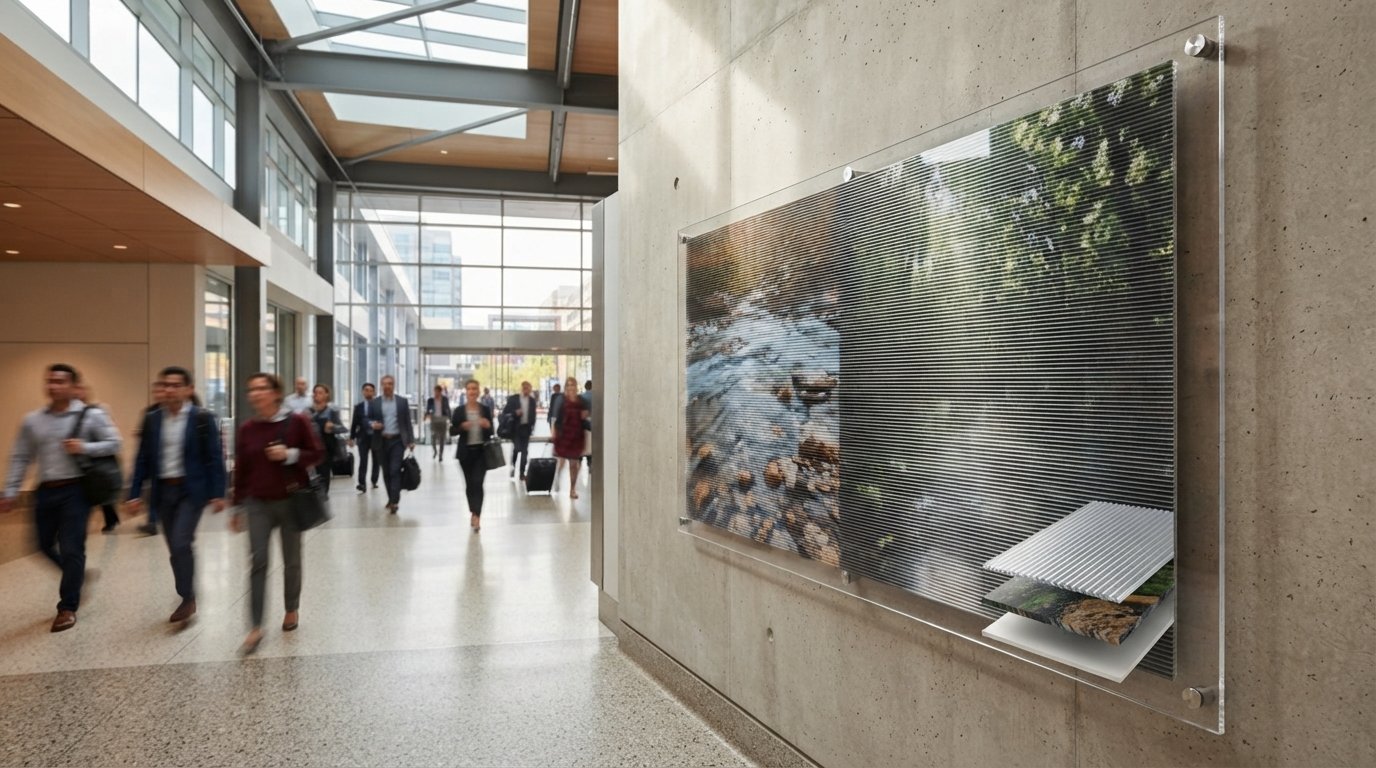
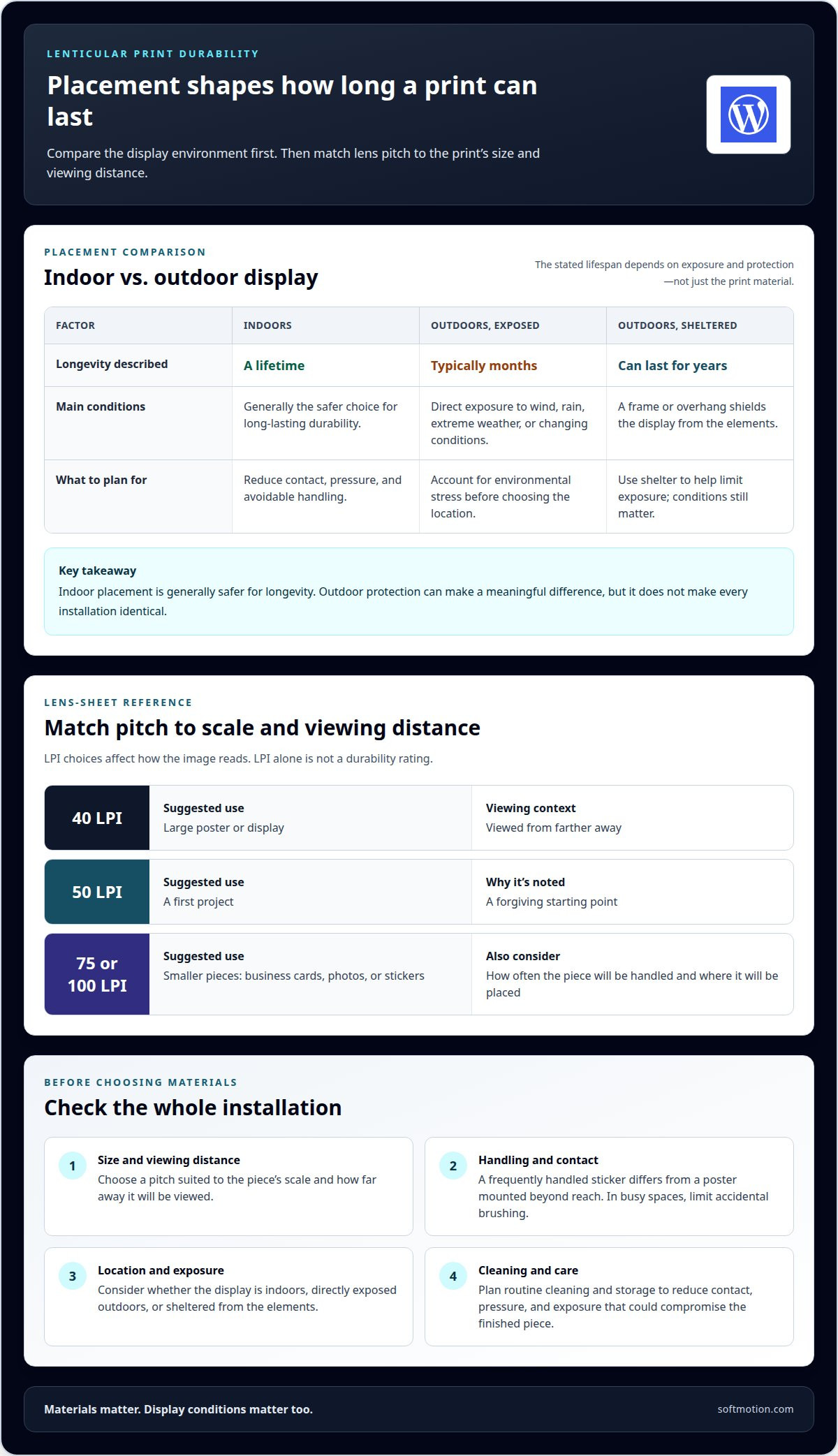
Indoor placement is generally the safer choice for long-lasting lenticular print durability. Indoor prints are described as lasting a lifetime, while prints directly exposed outdoors can typically last for months. Shielding an outdoor display from the elements with a frame or overhang can help it last for years. Both the materials and the conditions around the print matter.
High-traffic spaces bring different demands. A print may need to hold attention from several viewing angles while facing frequent handling, cleaning, or environmental exposure. This guide explains how lens-sheet choices, viewing distance, placement, and protection affect durability, helping you assess what suits your setting. It also considers how large-format displays, tradeshow graphics, and fine art prints may call for different approaches, and how material selection can help preserve the visual effect over time.
Key Takeaways
- Choose lens-sheet pitch with the print’s size and viewing distance in mind to support a clear, stable visual effect.
- Consider how handling, cleaning, and the display environment may affect the print, not just the material itself.
- When damage appears, identify whether it affects the lens surface, printed image, or alignment before deciding on next steps.
- Plan storage and display to reduce contact, pressure, and exposure that could compromise the finished piece.
What factors affect lenticular print durability?
- Match the lens pitch to the viewing distance. For a large poster viewed from farther away, a 40 LPI sheet is suggested. Smaller pieces, such as business cards, photos, or stickers, suit 75 or 100 LPI sheets. A 50 LPI sheet offers a forgiving starting point for a first project. These choices affect how the image reads, but LPI alone isn’t a durability rating. Treat scale, viewing distance, and placement as separate decisions when assessing lenticular print durability.
- Plan around the print’s size and use. A small item handled often faces different demands from a large display mounted beyond reach. For example, a lenticular sticker may be picked up repeatedly, while a poster may remain stationary. Decide whether viewers will touch, carry, or simply view the piece. That use helps determine where protection and careful installation matter most.
- Account for outdoor exposure. Extreme weather can damage outdoor lenticular prints. Before choosing an outdoor location, consider whether the print will face direct exposure or receive shelter. A display exposed to wind, rain, or changing conditions faces more environmental stress than one kept indoors. The setting is a central factor, not an afterthought.
- Reduce contact where viewers pass closely. In a busy corridor, entrance, or tradeshow space, people and objects may brush against a display. Position the print to limit accidental contact, and consider how it will be cleaned during routine care. Avoid treating lens pitch as a substitute for protection against handling or environmental exposure.
- Evaluate the full installation before selecting materials. Note the intended size, viewing distance, location, and likelihood of handling. A 40 LPI sheet may suit a distant large display, while 75 or 100 LPI may suit a smaller piece. For a first project, 50 LPI is a forgiving starting point. Use these distinctions to align the sheet with the application, then plan protection around the actual display conditions.
How does lenticular print durability compare with standard photo prints?
- Compare equivalent display conditions. A standard photo print and a lenticular piece should be judged in the same setting. Note whether each will sit indoors, face direct outdoor exposure, or receive frequent handling. Lenticular print longevity depends on whether it is displayed indoors or exposed to outdoor conditions. Conditions matter more than a simple format-to-format comparison.
- Assess the materials as a complete construction. Lenticular prints combine a tough plastic lens with high-quality inks. The materials alone don’t establish how long a print will last; display conditions also matter. That description doesn’t establish a guaranteed lifespan for every installation. For a useful comparison, consider the lens and ink together, then weigh how the print will be displayed and maintained.
- Use historical examples carefully. Lenticular prints from the 1950s can still be found on eBay and may still look great. They show that some examples retain their visual appeal over time. They don’t reveal each print’s storage, handling, or exposure history, so they can’t predict how a new piece will perform in a specific location.
- Separate longevity from resistance to wear. A print may remain visually effective while its surface experiences contact or environmental stress. Compare how frequently people might touch each format and whether sunlight or weather reaches the display. The relevant question for lenticular print durability is how the complete piece performs in its actual environment, not simply whether its image remains visible.
- Choose the format around its intended role. A protected indoor installation has different demands from a print placed outdoors. For the latter, weigh exposure and available shelter alongside the visual effect. Use the same criteria for a standard photo print, then compare the formats in context. This makes lenticular print durability a practical consideration in selecting a display, rather than an assumed advantage over photo prints.
Can a scratched or damaged lenticular print be repaired?
- Inspect the surface before attempting a repair. View the print under steady light and note where the mark appears. A scratch across the lens can interrupt the image’s motion or change its appearance from different angles. Record whether it affects the lens, printed image, or an edge. This distinction helps frame the next step and avoid treating different types of damage alike.
- Test whether the visual effect still functions. Slowly change your viewing angle and observe the affected area. If the image transition breaks at the scratch, the lens surface may be disrupting the effect. If the image remains continuous but shows a mark, the damage may be more localized. Describe what changes as you move, since that observation helps assess the print’s condition.
- Look for damage beyond a surface mark. Examine the edges and back for lifting, cracks, bends, or separation between layers. A surface scratch differs from a print whose lens and image no longer align. Note each defect’s location and extent. Don’t press a lifted area back into place, since pressure may worsen the damage and complicate later assessment.
- Avoid improvised polishing or cleaning. Abrasive cloths, sharp tools, and untested cleaners can add marks or alter the lens surface. Don’t assume the lens can be buffed like ordinary glass. For example, rubbing a scratched area may spread abrasion across nearby ridges. This can make the distortion more visible and further affect lenticular print durability.
- Decide based on which layer is affected. A surface blemish, damaged image, and separated lens call for different approaches. Photograph the print, record its size, and describe how the effect changes with viewing angle. These details clarify the damage without risking further handling. Assessing lenticular print durability means considering the lens and image together. That distinction can help determine whether restoration is practical or recreating the print makes more sense.
How should lenticular prints be stored and displayed to prevent damage
- Choose a protected display position. Place the print where visitors, bags, and equipment won’t brush against its surface. In a busy corridor, mounting it outside the main flow of foot traffic can reduce accidental contact. Consider the full viewing area too, so people can see the changing image without leaning on or touching the print.
- Shelter outdoor displays from the elements. Direct weather exposure can shorten a print’s useful life. An outdoor lenticular print can last for years when protected from the elements in a frame or beneath an overhang. Before installation, assess whether wind-driven rain or other exposure can reach the display. A sheltered position helps limit direct contact with weather.
- Store the print to prevent pressure and friction. Keep it away from objects that could rub against or press into the lens. For example, don’t place a loose print beneath stacked materials or slide it across a rough surface. Handle it carefully by its edges, and avoid setting tools or display hardware on the image during installation.
- Plan cleaning around the lens surface. Dust and fingerprints can distract from the image, but rough wiping can create additional marks. Use a clean, soft cloth and gentle movements rather than scrubbing. Avoid abrasive materials or untested cleaners. For a print in a public space, include careful surface inspection in routine display checks.
- Review the installation as conditions change. Check that the frame remains secure and that the print hasn’t shifted, bowed, or developed visible damage. In an outdoor setting, reassess whether the overhang or frame still shields it from the elements. Inside, look for new contact points near doors, queues, or display fixtures. These practical steps support lenticular print durability by reducing avoidable wear.
Softmotion: Advertising Lenticular Displays
Softmotion creates Advertising Lenticular Displays that bring motion and visual change into high-traffic spaces. If your display needs to engage viewers while fitting its installation environment, lenticular printing can turn a static image into a dynamic experience. The right choice depends on how people will encounter the work, where it will be placed, and how it will be protected.
For architectural settings, Softmotion creates Architectural Lenticular Installations. Tradeshow Lenticular Graphics bring the same shifting visual language to event displays, while Fine Art Lenticular Prints offer a more expressive application. Each format connects the lens, artwork, and viewing context in a distinct way.
Contact Softmotion to discuss an advertising display designed for your space and visual goals.
Shape a Display That Lasts
Let the setting guide your creative decisions. A high-traffic installation must work as both an image and an object in a real space, so consider how viewers encounter it and how it will be maintained. This makes lenticular print durability part of the design process, not just a concern to address after production.
Softmotion’s Advertising Lenticular Displays, Architectural Lenticular Installations, and Fine Art Lenticular Prints suit distinct visual contexts. Share the environment and experience you want to create, then explore an approach that brings the artwork and setting together.
Contact Softmotion about lenticular prints and take the next step toward a display designed for your space.
Frequently Asked Questions
How long do lenticular prints typically last?
No single lifespan applies to every lenticular print. For a realistic assessment, distinguish between the print remaining intact and its image staying clear and visually effective. Consider the intended location, how often people will handle it, and the appearance it needs to maintain. These criteria make lenticular print durability more useful to assess than a single expected lifespan.
Do lenticular prints fade in sunlight or UV exposure?
Yes, prolonged direct sunlight can contribute to fading or material deterioration. The effect depends on the inks, lens sheet, exposure time, and protection around the display. A print beside a sunlit window faces different conditions from one in an interior location away from direct sunlight. Assess the light at the installation site before choosing a position.
Are lenticular prints resistant to scratches, moisture, and heat?
A tough-plastic lens is not necessarily scratchproof or weatherproof. Handling or cleaning can create friction that marks the lens, while moisture and heat may affect a print depending on its construction and exposure. Do not assume a print is equally resistant to all three. Consider likely contact, nearby moisture, and heat sources when choosing where to display it.
How durable are different lenticular print materials and finishes?
Durability depends on how the lens, printed image, and protective framing work together. Compare materials against the demands of the setting: a frequently handled piece needs different protection from a wall display viewers do not touch. Consider, too, whether the finish makes marks more visible or routine cleaning more difficult. Match the complete construction to the display environment, not just its appearance.
What is the typical warranty or expected lifespan of commercial lenticular prints?
No single warranty term or lifespan applies to every commercial lenticular print. A warranty describes written coverage, while expected lifespan describes how long a print may remain suitable for display. Keep these concepts separate when planning a project. Review the applicable coverage terms and define the visual condition the installation needs to maintain for its intended use.