
High-End Lenticular Art Production: The Architect’s Guide to Kinetic Visuals
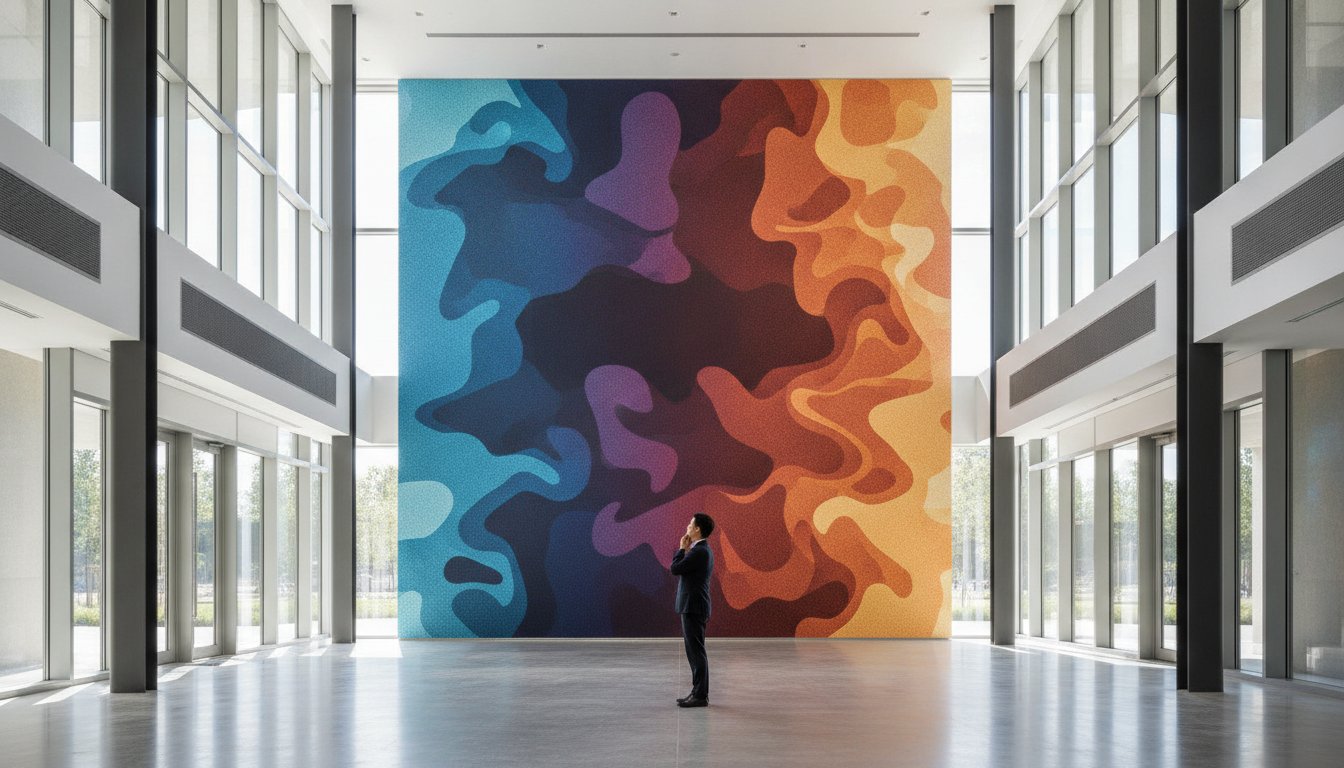
What if a structural surface could breathe, shift, and respond to the movement of every person who walked past it? In the realm of premium spatial design, a wall is no longer just a boundary; it’s a canvas for storytelling that evolves with the viewer. Achieving this level of immersion requires more than just a clever graphic. It demands high-end lenticular art production that merges the technical discipline of engineering with a refined fine-art sensibility. You likely understand the potential of kinetic visuals, but you also know the risks of a project feeling gimmicky or failing to maintain its integrity at a massive scale.
We recognize that for an architect, the leap from a digital concept to a forty-foot physical installation is often met with concerns about durability and visual precision. You need a partner who views fabrication as a collaborative journey rather than a simple transaction. This guide explores the rigorous standards required to transform static environments into multi-dimensional experiences. We will detail the specific technical considerations for large-scale fabrication, the importance of material selection for high-traffic durability, and the process of ensuring your creative vision remains intact from the first sample to the final on-site assembly.
Key Takeaways
- Learn how to distinguish between common commercial novelties and architectural-grade kinetic art to ensure your project meets museum-quality standards.
- Understand the technical precision behind high-end lenticular art production, specifically how lens pitch and resolution affect clarity across vast viewing distances.
- Discover why analog motion offers a sustainable, high-impact alternative to digital signage, delivering immersive visuals with zero electricity consumption.
- Identify the critical criteria for selecting a fabrication partner, focusing on their capacity for end-to-end logistics and installations at the 100-foot scale.
- Explore the collaborative journey of transforming a two-dimensional concept into a multi-dimensional environment through a proven, risk-free technical process.
Defining High-End Lenticular Art Production in 2026
In 2026, the design industry has reached a critical tipping point regarding screen fatigue. While digital displays offer flexibility, they often feel distant and disconnected from the architecture they inhabit. High-end lenticular art production offers a sophisticated alternative, grounding kinetic visuals in the physical world through tactile, analog motion. This isn’t the commercial novelty of a flickering postcard or a simple gift item. It’s a disciplined approach to architectural-grade kinetic art that serves the highest levels of experiential marketing and fine art. We define high-end lenticular production as the seamless fusion of optical engineering and artistic intent, where the physics of light and the vision of the creator meet to redefine a physical environment.
The Shift from Product to Spatial Experience
Traditional art usually asks the viewer to stand still, but kinetic architectural installations ask them to move. We’re witnessing a fundamental change where the wall itself becomes the medium, rather than just a surface to hang a frame. As people walk past a dynamic installation, the imagery evolves and shifts, creating a personalized experience for every passerby. This engagement creates a deep emotional resonance, particularly in public or corporate spaces where static decor often fades into the background. By leveraging the viewer’s physical movement, these installations turn a simple hallway into a journey of discovery, making the transition from a 2D surface to a multi-dimensional experience.
Why ‘High-End’ Matters: The Cost of Low-Quality Production
Technical flaws in large-scale projects are impossible to hide. When production quality slips, you see “ghosting” effects, where multiple images appear simultaneously, or poor color calibration that fails to meet the designer’s intent. Even worse, sub-par materials lead to delamination and yellowing, destroying the installation’s value over time. Since 1997, Softmotion has focused on the end-to-end reliability of every piece we produce. We rely on sophisticated Lenticular printing technology to guarantee optical perfection and structural longevity. With over 1,000 projects delivered, we understand that high-end lenticular art production isn’t just a marketing label. It’s a commitment to durability that protects your architectural investment and ensures the visual story remains clear for years to come.
The Anatomy of Precision: Technical Standards for Elite Fabrication
High-end lenticular art production is a discipline of microscopic tolerances. While a standard print might forgive a slight misalignment, a kinetic installation won’t. Every frame must be interleaved with mathematical certainty, ensuring that the final image remains sharp from every intended perspective. To achieve this, source files must meet a minimum standard of 300 DPI and be processed in CMYK color mode. This prevents the dulling or shifting of hues that occurs when light passes through the refractive lens material. Color management presents a unique challenge here; because the lens itself can cause a perceived loss of brightness, our production process involves compensating for this light-loss during the file preparation stage. We ensure that the vibrant tones of your original vision aren’t muted by the physical substrate.
Material Science and UV Stability
Durability is the hallmark of architectural-grade work. This is why high-end lenticular art production relies on rigorous material testing and specialized, non-yellowing polymers that resist the degradative effects of UV exposure. Safety is equally paramount. High-end fabrication ensures that all materials meet the ASTM E84 standard for flame spread and smoke development. These polymers must also remain structurally stable across variable climates, preventing the warping or delamination that can ruin an investment in a high-traffic lobby. In large-scale environments, the material must withstand humidity and temperature fluctuations without expanding. If the substrate shifts, the entire kinetic effect is lost. We prioritize materials that offer long-term clarity and dimensional stability.
Optical Engineering for Large-Scale Impact
Designing for a 40-foot wall is vastly different from creating a handheld postcard. The lens pitch, or Lenticules Per Inch (LPI), must be meticulously calibrated to the project’s specific viewing distance; for instance, lower LPI lenses between 20 and 40 are essential for large-format graphics viewed from a distance, while higher LPI lenses are reserved for intimate, close-range interactions. This technical choice dictates whether the viewer experiences deep 3D immersion or a clean, complex motion “flip.” By aligning these technical specs with the broader definition of kinetic art, we ensure the installation feels like a living part of the architecture. Precision alignment is the final, most critical step, where the margin for error is measured in microns to ensure the transition between images is seamless and ghost-free.
If you’re ready to see how these technical standards apply to your specific space, you can view our architectural lenticular installations to experience the material quality firsthand.
Lenticular Art vs. Digital Signage: The Case for Analog Motion
Digital screens demand attention through brightness, but high-end lenticular art production earns it through interaction. By 2026, audiences have developed a subconscious filter for glowing rectangles, often dismissing them as intrusive or overwhelming. This screen fatigue has led architects to seek more tactile, grounded alternatives. Unlike digital signage, which relies on a constant power source to project images, a lenticular surface uses the viewer’s own movement to trigger change. It’s a pure form of Kinetic art that lives and breathes without a power cord. This shift from digital to analog doesn’t just reduce visual noise; it creates a more profound connection between the person and the space they inhabit.
Sustainability is no longer a secondary consideration in modern design. A digital wall consumes significant wattage 24/7, requiring cooling systems and specialized maintenance. In contrast, high-end lenticular art production delivers high-impact visuals with zero electricity consumption. The longevity of these installations also far outlasts digital hardware. While screens often face pixel failure or software obsolescence within five years, a physical lenticular installation can maintain its integrity for two decades. It even responds to the shifting angles of natural light throughout the day, evolving its appearance in a way that static hardware simply can’t replicate.
A Comparison of Visual Engagement
Digital displays are passive; you stand still and watch a loop. Lenticular art is active; you move and discover. This physical engagement triggers stronger memory retention and a sense of wonder. The “reveal” of a hidden image as you step across a corridor creates a psychological reward that a video file lacks. When you consider the initial production fees against the long-term operational costs of digital power, content management, and hardware replacement, the analog approach offers a compelling cost-benefit ratio for permanent installations.
Architectural Seamlessness
One of the greatest challenges of digital signage is the “black box” aesthetic. When the power is off or the content isn’t playing, a screen is a dead, reflective void. A lenticular surface is always “on,” yet it never feels like an appliance. It integrates directly into the building’s skin, allowing for architectural motion art that wraps around curved walls and follows complex geometries. This flexibility allows the art to become part of the architecture itself, rather than an afterthought bolted onto a wall. It transforms the environment into a dynamic story that respects the structural intent of the space.

Evaluating a Production Partner for Large-Scale Projects
Selecting a partner for high-end lenticular art production is a decision that balances creative ambition with technical security. It’s about finding a collaborator who sees beyond the print and understands the structural demands of a 100-foot installation. Large-scale environments present unique challenges in material rigidity and optical consistency across dozens of joined panels. A seasoned partner must demonstrate a global reach, with the logistics and assembly expertise to deliver a flawless result in any city. We prioritize a human-first approach, acting as a visionary guide through the complexities of fabrication to ensure your transition from a 2D concept to a multi-dimensional reality is seamless.
The Sampling and Prototyping Phase
Digital proofs are a helpful starting point, but they cannot replicate the physical sensation of light moving through a refractive lens. High-end production requires custom lenticular prototypes to verify how the colors and transitions respond to the specific lighting of your environment. While miniature samples are useful for initial color checks, full-scale lens samples are essential for refining the “flip” speed. This physical iteration allows us to adjust the transition points, ensuring the kinetic effect feels intentional and smooth rather than jarring or accidental. It’s the only way to guarantee that the scale of the motion matches the scale of the space.
Project Management and Installation Logistics
The success of an architectural installation often rests on the final one percent of the process: the on-site alignment. Handling large-format sheets requires a deep understanding of weight distribution and thermal expansion. A production partner must coordinate closely with general contractors and architectural teams to ensure the substructure is prepared for the specific tolerances of lenticular art. Misalignment by even a few millimeters can break the optical illusion across a vast surface. We manage this risk through rigorous on-site assembly oversight, ensuring every panel is perfectly calibrated to the viewer’s path. This methodical approach eliminates the uncertainty often associated with complex, high-impact visuals.
If you’re ready to discuss the technical requirements of your next project, you can contact our fabrication experts to begin the collaborative process.
Softmotion: Orchestrating the Future of Kinetic Art
Since 1997, Softmotion has operated at the intersection of architectural discipline and artistic wonder. We don’t just print images; we transform static surfaces into dynamic stories that respond to the pulse of a building. Our 30-year legacy is built on the belief that high-end lenticular art production should be a risk-free, collaborative journey for every client. We act as a visionary guide for architects and artists, providing the technical security needed to realize ambitious concepts. In the landscape of 2026, where physical experiences are more valuable than ever, we help our partners move beyond the two-dimensional and into a world of immersive, multi-dimensional storytelling.
A Global Portfolio of Visionary Projects
Our impact is visible in transit hubs, Fortune-500 headquarters, and elite galleries across the globe. With over 1,000 successful installations delivered, we’ve mastered the nuances of different environments, from the high-traffic demands of an airport to the quiet sophistication of a corporate lobby. We understand that a project’s success isn’t just measured by its visual impact, but by its durability and structural integrity over decades. Softmotion serves as the visionary partner that bridges the gap between ambitious artistic concepts and the technical discipline required for high-stakes art production. Whether we’re managing a massive exterior facade or producing delicate fine art lenticular prints, our commitment to optical clarity remains absolute.
Begin Your Kinetic Journey
The transition from a digital vision to a physical landmark begins with a conversation. We believe in early-stage collaboration to ensure that every technical brief aligns with the creative intent. This is particularly vital for large format lenticular printing, where viewing angles and lighting conditions must be calculated long before the first panel is fabricated. Our team works alongside you to refine the motion, select the appropriate lens, and manage the logistics of a global installation. We take the complexity out of the process, allowing you to focus on the emotional resonance of the work while we handle the microscopic precision of the production. Your vision deserves a partner who values craftsmanship as much as you do.
Contact Softmotion to discuss your next high-end installation and explore how we can bring your space to life through the power of kinetic art.
Redefining the Boundaries of Spatial Storytelling
The transition from a static surface to a living environment requires more than just a creative spark; it demands a rigorous commitment to optical engineering and material science. We’ve explored how analog motion overcomes digital fatigue by inviting viewers to participate in the visual reveal. You now understand that high-end lenticular art production is a discipline where microns matter and where the durability of specialized polymers ensures that your vision remains vibrant for decades. This shift toward tactile, immersive experiences represents a return to craftsmanship in an increasingly screen-saturated world.
Choosing a fabrication partner means finding a guide who can navigate the complexities of large-format architectural integration. Since 1997, Softmotion has delivered over 1,000 global projects, providing a seamless journey from initial custom prototypes to final on-site installation. We specialize in the end-to-end management of these ambitious works, ensuring that every technical detail supports the emotional resonance of the art. The future of architecture is kinetic, sustainable, and deeply human. We invite you to partner with Softmotion for your next high-end lenticular project and discover the potential hidden within your own designs. Your next landmark installation is waiting to be realized.
Frequently Asked Questions
What is the difference between standard and high-end lenticular art production?
High-end lenticular art production focuses on architectural-grade durability and optical precision for large-scale environments. While standard production often results in small-format novelties like postcards, high-end fabrication uses specialized polymers and UV-stable materials. This ensures the kinetic effect remains sharp across 40-foot walls without ghosting or delamination. It’s the difference between a temporary graphic and a permanent structural installation designed to maintain its visual integrity for decades.
Can high-end lenticular art be installed outdoors in extreme climates?
Architectural installations can be engineered for outdoor environments by utilizing non-yellowing, UV-resistant polymers. These materials are selected for their dimensional stability, preventing the warping or shifting that occurs with standard plastics in extreme temperature fluctuations. We prioritize substrates that meet rigorous safety standards, including ASTM E84 fire ratings. This technical discipline ensures that the kinetic story survives humidity, direct sunlight, and freezing conditions without losing its refractive clarity.
What is the maximum size for a single lenticular art panel?
While individual lens sheets have physical manufacturing limits, high-end lenticular art production allows us to tile panels together to cover surfaces exceeding 100 feet. We manage the microscopic alignment between these panels so the motion appears seamless across the entire expanse. This tiling process is a specialized craft that prevents visible seams from breaking the optical illusion. It enables architects to treat entire building facades or massive transit corridors as a single, unified kinetic canvas.
How do I ensure the colors in my digital design match the physical lenticular print?
We ensure color accuracy by requiring source files in CMYK at a minimum of 300 DPI and producing physical lens samples before final fabrication. Because the refractive lens material naturally absorbs some light, digital proofs alone aren’t sufficient. We adjust the ink density and saturation during the interleaving process to compensate for this light loss. This methodical approach guarantees that the vibrant hues of your digital concept translate perfectly to the final physical installation.
Is lenticular art more durable than a standard digital LED screen?
Physical lenticular art is significantly more durable than digital hardware because it has no moving parts, pixels, or power requirements. While LED screens typically face software obsolescence or hardware failure within five to seven years, a high-end installation can last twenty years or more. It requires no electricity and generates no heat, eliminating the need for complex cooling systems. This makes it a sustainable, low-maintenance choice for permanent architectural environments.
What kind of lighting is required for a high-end lenticular installation?
The best results come from direct, point-source lighting, such as LED spots or track lighting, which enhances the clarity of the transitions. High-end installations also respond beautifully to natural light, which allows the artwork to evolve subtly throughout the day as the sun’s angle shifts. We avoid highly diffused or flat lighting, as it can soften the kinetic transitions. Proper light placement is a critical part of our collaborative design process.
How long does the production process take for a large-scale project?
A large-scale project typically involves a methodical timeline that includes initial visioning, technical sampling, full-scale prototyping, and final fabrication. While smaller pieces move quickly, architectural-grade installations often require several months to ensure every panel is perfectly aligned and material-tested. This deliberate pace reflects our commitment to a risk-free journey. We provide a detailed schedule at the start of the project to coordinate seamlessly with your construction or architectural milestones.
Does Softmotion provide on-site installation services globally?
Softmotion provides end-to-end installation and project management services globally, ensuring that our technical standards are met regardless of the project’s location. We don’t just ship the panels; we oversee the microscopic alignment on-site to guarantee a flawless kinetic effect. Our team coordinates directly with your general contractors and architectural teams. This global reach allows us to deliver high-impact visual environments for Fortune-500 companies and public spaces worldwide.