
2026 Large Scale Lenticular Printing Cost Guide
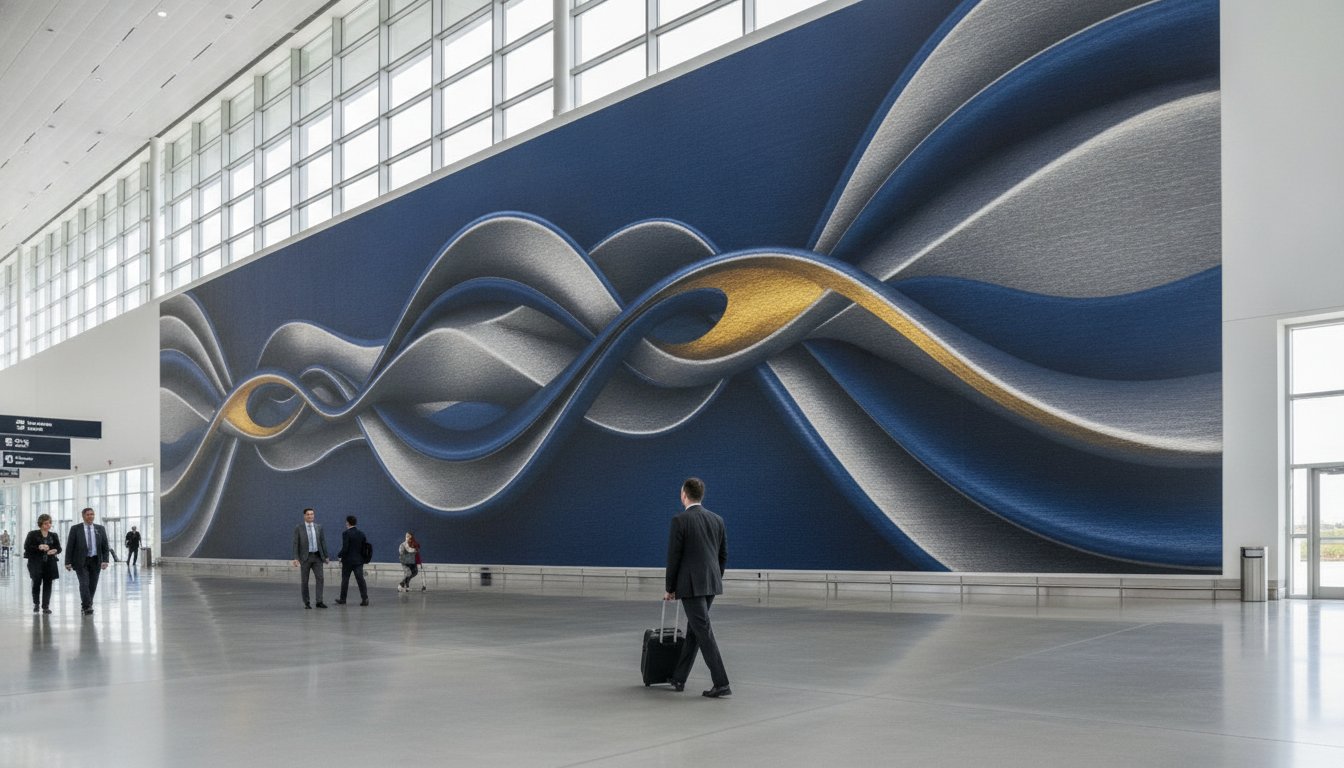
What if your most captivating architectural feature required no power source, no software updates, and zero recurring energy fees? In a landscape where digital screens are often seen as the default for engagement, they carry a hidden tail of maintenance that can quietly erode your long-term ROI. You likely understand that high-impact public spaces demand a visceral, multi-dimensional experience, yet the opaque nature of large scale lenticular printing cost structures often makes the budgeting process feel like navigating a fog. It’s difficult to justify an investment when you can’t easily compare the longevity of a specialty substrate against the fleeting life cycle of a LED panel.
This guide demystifies those complexities by providing a professional framework to master lenticular pricing from material science to installation logistics. We’ll explore how 2026 market shifts, including an 18.3% rise in plastic substrate indices and a 21.5% spike in freight, influence your total landed cost. You’ll gain the clarity needed to evaluate quotes with precision and the confidence to select a fabrication partner who treats your vision as a structural masterpiece rather than a simple print job. From analyzing technical drivers to comparing digital alternatives, we’re here to ensure your next installation is both a creative triumph and a sound financial decision.
Key Takeaways
- Identify how technical specifications like lens LPI and visual effect complexity directly influence your large scale lenticular printing cost and production timeline.
- Discover why physical prototypes and custom samples are the most effective tools for securing stakeholder approval and ensuring technical precision before full-scale fabrication.
- Evaluate the total cost of ownership by comparing the zero-energy requirements and decade-long durability of lenticular installations against the recurring maintenance of digital signage.
- Learn how to optimize your project budget by standardizing panel dimensions and refining artwork files to minimize material waste and labor-intensive corrections.
- Understand the role of professional project management in mitigating installation risks and coordinating seamless integration between architects and general contractors.
Key Factors Driving Large Scale Lenticular Printing Cost
Transforming a static environment into a dynamic narrative requires more than just ink and plastic; it demands a calculated orchestration of light and geometry. The large scale lenticular printing cost is rarely a flat rate. It’s a reflection of technical choices that balance visual impact with structural integrity. One of the primary drivers is the lens pitch, or Lines Per Inch (LPI). Thicker, lower-LPI lenses are designed for long-range viewing in architectural settings. These require significantly more raw resin than the thin, high-LPI sheets used for small-format retail displays, creating a direct link between viewing distance and material investment.
Scale also behaves non-linearly. While material costs scale with square footage, the labor required for file preparation and panel alignment often follows a different curve. A 100-square-foot wall isn’t just ten times the cost of a 10-square-foot prototype. Larger projects often benefit from production efficiencies, yet they introduce heightened risks in handling and freight that must be accounted for in the initial quote. When you move from a single display to a multi-panel installation, you’re transitioning from a printing project to a custom fabrication challenge.
The Interlacing and Design Complexity Fee
Interlacing is the digital alchemy that makes motion possible. It’s the process of slicing multiple images into microscopic strips and arranging them to align perfectly with the lens. A simple two-frame “flip” requires minimal labor, but a 30-frame fluid motion sequence demands specialized software and hours of expert calibration. Lenticular printing technology thrives on this precision. If the interlacing isn’t perfect, you’ll experience “ghosting,” where the frames bleed into one another. Investing in high-quality file preparation at the start prevents the expensive reality of reprints and ensures the final installation remains crisp from every angle.
Lens Material and Sheet Dimensions
The environment dictates the substrate. For short-term advertising displays, standard PETG is often sufficient. However, architectural installations in high-traffic or window-facing areas demand UV-stable, architectural-grade acrylic. This premium material resists yellowing and maintains its clarity under the stress of environmental heat. Beyond material type, sheet optimization plays a critical role. Most large-format lenses are manufactured in 48″x96″ sheets. Designing your panels to maximize the yield of these sheets reduces waste and keeps the large scale lenticular printing cost from inflating due to discarded off-cuts. When you align your vision with these industrial standards, you ensure that every dollar spent is visible on the wall.
Breaking Down the Quote: From Prototype to Production
A professional quote for a specialty installation is far more than a simple calculation of area and ink. It’s a comprehensive roadmap for a transformation. When evaluating the large scale lenticular printing cost, you’re investing in a multi-stage process that ensures your vision translates perfectly from a digital file to a physical environment. This journey begins with a commitment to technical precision and a refusal to leave the final result to chance. We view each quote as a partnership, grounding your ambitious creative goals in the practical realities of high-end fabrication.
The Role of Custom Lenticular Prototypes
Digital renderings only simulate so much. A physical prototype serves as a vital insurance policy, allowing you to witness how ambient light and foot traffic patterns interact with the lens. This stage identifies viewing angle conflicts before full production, eliminating the risk of costly mid-project corrections. For a deeper look at this process, explore our Architect’s Guide: Custom Lenticular Prototypes at Scale. Refine the depth now to ensure the final mural resonates with the intended emotional impact.
Panelization and Precision Mounting
Large-scale works are intricate puzzles of 4×8 foot panels. Aligning the “pitch” across these seams requires extraordinary technical discipline. Several key drivers behind printing costs involve the labor-intensive nature of dust-free lamination. This mounting process is a significant component of the large scale lenticular printing cost. If a panel is misaligned by a fraction of a millimeter, the visual sequence breaks down. We use rigid backing and specialized hardware to ensure each segment remains perfectly stable within a permanent architectural installation.
Quality control doesn’t end at the fabrication table. For multi-panel murals, we conduct exhaustive “dry fits” to verify that motion remains seamless across every transition. This stage is critical for maintaining the illusion of movement as viewers walk the length of the installation. Logistics also play a vital role; oversized, rigid panels require custom-built crates and specialized freight handling to prevent damage during transit. It’s a meticulous approach that guarantees your project arrives ready for its debut. To begin your own journey, consider how ordering a custom lenticular sample can clarify your project’s specific requirements and provide the tactile confidence your stakeholders need.
Lenticular vs. Digital Signage: A Total Cost of Ownership Analysis
Choosing between a high-brightness LED wall and a lenticular installation is a choice between a recurring expense and a permanent asset. While the initial large scale lenticular printing cost represents a significant capital expenditure (CapEx), it effectively eliminates the heavy operational expenditure (OpEx) that defines digital signage. Understanding the Total Cost of Ownership is essential for any facility manager balancing aesthetic impact with fiscal responsibility. A physical installation doesn’t just sit on a wall; it performs without a power cord, offering a 10-year lifespan that far outlasts the typical 3-to-5-year replacement cycle of digital hardware.
Comparing Energy and Maintenance Fees
Digital screens are energy-hungry entities. They demand 24/7 power consumption and specialized cooling systems to prevent thermal failure in high-traffic public spaces. Beyond the electricity bill, digital signage requires constant software patches, content management subscriptions, and the inevitable replacement of dead pixels. Lenticular displays provide a “set and forget” solution. They aren’t prone to hardware obsolescence or blue-screen errors. This reliability makes them the preferred choice for transit hubs and airports where technical downtime isn’t just an eyesore; it’s a liability. You’re investing in a medium that remains as vibrant on day 3,000 as it was on day one.
The Value of “Analog Interactivity”
There’s a visceral, psychological difference between watching a screen and participating in a physical transformation. Lenticular technology relies on “analog interactivity,” where the viewer’s own movement acts as the engine for the visual change. This kinetic engagement creates a lasting “Aha!” moment that digital screens, which often blend into the background noise of modern life, struggle to replicate. Because the interaction happens in the viewer’s mind and body rather than on a circuit board, retention rates are naturally higher. For those seeking technical depth on integrating these features, our Architect’s Guide to Large Format Lenticular Printing provides a roadmap for permanent structural planning.
Sustainability is no longer a luxury; it’s a 2026 mandate. Non-digital interactive walls represent the “green” choice for modern architecture. By opting for a medium that requires zero electricity and produces zero light pollution, you’re aligning your brand with environmental stewardship without sacrificing visual drama. It’s a sophisticated way to achieve high-impact advertising or architectural beauty while maintaining a minimal carbon footprint. As you refine your budget, remember that you aren’t just buying a print; you’re securing a decade of maintenance-free engagement.

Budget Optimization Strategies for Large Scale Projects
Achieving a high-impact installation requires a strategic alignment of creative ambition and industrial pragmatism. Optimizing the large scale lenticular printing cost isn’t about compromising on quality; it’s about making informed technical choices that maximize every square foot of your material. When you design with the specific physics of the lens in mind, you eliminate the friction that often leads to expensive reprints and production delays. This proactive approach transforms a complex fabrication into a streamlined, predictable journey.
Viewing Distance and Lens Pitch Selection
Choosing the right lens is the most critical decision in the budgeting process. For architectural murals, a 40 LPI (Lines Per Inch) lens is often more effective and cost-efficient than the 75 LPI sheets used for small retail displays. The lower LPI allows for greater depth and more fluid motion at the distances typical of public corridors or transit hubs. Pitch is the mathematical alignment between lens and print. By calculating the “sweet spot” for motion based on the average walking speed of commuters, we can reduce the number of frames required. This simplifies file preparation and ensures a crisp visual transition without the need for expensive, high-gain lenses.
Logistics and Sheet Yield Efficiencies
Material waste is a silent budget killer. Most large-format lenticular sheets are manufactured in 48″x96″ dimensions. By standardizing your panel sizes to fit these yields, you minimize the amount of discarded substrate and lower your overall large scale lenticular printing cost. Involving our team during the initial design phase allows us to identify these efficiencies before the first file is interlaced, saving you from costly revisions later in the timeline. Strategic lighting placement also plays a role; by illuminating the installation correctly, you can achieve brilliant results with standard materials rather than specialized, premium-priced substrates.
Shipping logistics also demand early consideration, especially as freight costs for long-distance truckloads have seen a 21.5% increase as of June 2026. Flat-packing panels for on-site assembly can significantly reduce international shipping rates compared to shipping fully crated, rigid assemblies. As a global partner with over 1,000 completed projects, we coordinate production timelines to avoid rush fees and ensure seamless installation coverage across the world. To ensure your project is both visionary and cost-effective, contact our team for a project consultation and let us guide you through the technical specifications.
The Value of End-to-End Installation and Project Management
The final phase of a project is where a visionary concept transforms into a permanent architectural reality. While many providers focus solely on the production of the lens, the true large scale lenticular printing cost must account for the precision required during the final assembly. A masterfully printed panel remains a liability until it’s securely integrated into its environment. Professional project management bridges the gap between a high-end fabrication and a flawless public debut, ensuring that every technical specification is met with structural discipline.
Risk mitigation is the cornerstone of our approach. Large-scale installations often involve heavy architectural-grade acrylic panels that demand specific site-specific engineering. We coordinate directly with architects and general contractors to verify wall load-bearing capacities and ensure that the substrate can support the weight of a multi-panel mural. This level of oversight prevents the expensive structural failures that occur when specialized materials are treated like standard signage. By managing the project lifecycle from the first interlaced file to the final bolt, we eliminate the hidden costs of trial and error.
On-Site Assembly and Logistical Management
Seamless lenticular wall cladding requires more than standard hardware. It demands specialized adhesives and tools designed to maintain the “Interlace Alignment” across multiple panels. If a single sheet is slightly out of vertical plumb, the entire visual sequence can break down for the viewer. Our installation teams manage these tolerances on-site, calibrating the viewing angles to ensure the motion effect remains crisp from every perspective. For corporate clients, this professional execution is a risk-free investment that guarantees the longevity of the work in high-traffic environments.
The Softmotion Methodology
We’ve delivered over 1,000 projects since 1997, a track record that provides our partners with a unique sense of security. This experience allows us to anticipate challenges before they appear on the job site, from environmental expansion in window-facing installs to the nuances of local lighting conditions. Our collaborative journey is designed to be reassuring and composed, providing a single point of contact for complex global installations. We believe that the most successful projects are those where the technical production and the final installation are treated as a unified narrative. To ensure your vision is executed with this level of precision, Partner with Softmotion for your next large-scale installation and experience the clarity of a guided, professional process.
Realizing Your Vision with Technical Precision
Elevating a space from static to kinetic requires a partner who understands both the art of the image and the science of the substrate. You’ve seen how lens selection and panel optimization can transform your budget into a high-impact architectural asset. By prioritizing durability and zero-energy interactivity, you’re choosing a medium that resonates long after the initial installation. Mastering the variables of large scale lenticular printing cost isn’t just about managing a spreadsheet; it’s about securing a legacy of engagement through expert fabrication.
Since 1997, we’ve delivered over 1,000 projects for Fortune-500 brands and complex architectural environments worldwide. We provide global end-to-end fabrication and installation to ensure your project arrives with the same precision it was designed with. Request a custom quote for your large-scale lenticular project and let us guide you through the collaborative journey. Your vision deserves an execution as bold as the concept itself. We’re ready to build it with you.
Frequently Asked Questions
Why is large scale lenticular printing more expensive than standard vinyl murals?
Lenticular printing is a sophisticated fabrication process that requires high-precision optical lenses and specialized interlacing software. Unlike standard vinyl murals or the high-impact 2D graphics provided by Yeahgor Commercial Wraps & Decals, lenticular installations involve laminating high-resolution prints to a rigid lens. This complexity, combined with the material cost of architectural-grade acrylic, drives the investment. You aren’t just purchasing a print; you’re securing a multi-dimensional experience that remains vibrant without the recurring maintenance of digital alternatives.
ROI is best calculated through a Total Cost of Ownership analysis. While the initial large scale lenticular printing cost might be higher than traditional graphics, it requires zero electricity and zero software subscriptions. The “analog interactivity” of the medium creates a visceral “Aha!” moment that drives higher brand retention than a standard screen. Over a ten-year lifespan, the absence of energy bills and hardware failures makes it a superior long-term architectural investment.
Does the number of frames in a motion sequence affect the total cost?
The number of frames directly impacts the labor required for file preparation and interlacing. A simple two-frame “flip” is relatively straightforward to align, whereas a complex 30-frame motion sequence demands extensive calibration to prevent ghosting. Each additional frame increases the technical precision needed during the design phase. By selecting the right number of frames for the viewer’s walking speed, you can optimize the visual effect while managing the overall production timeline effectively.
What are the typical project management fees for a large-scale mural?
Project management fees are integrated into our end-to-end fabrication and installation services. These fees cover the critical coordination between our team, your architects, and general contractors to ensure structural integrity. We manage everything from site-specific engineering to final on-site assembly. This oversight mitigates the risk of panel damage and ensures that the finished mural meets the high standards required for Fortune-500 corporate environments and permanent architectural spaces.
Can lenticular prints be installed outdoors, and does it cost more for UV protection?
Lenticular installations can certainly thrive outdoors when specified with UV-stable, architectural-grade acrylic. Standard PETG lenses are prone to yellowing and warping under direct sunlight, so a premium UV-resistant substrate is necessary for environmental longevity. While these specialized materials carry a higher initial cost, they protect your investment from the elements. This ensures that the motion effects and color saturation remain crisp and professional even in window-facing or exterior high-traffic public areas.
How much does a custom lenticular prototype cost?
Prototype costs depend on the size of the sample and the complexity of the desired motion effect. We view these custom samples as a vital insurance policy for any large-scale project. A prototype allows stakeholders to verify the viewing angles and lighting conditions before full production begins. By identifying potential technical challenges early in the collaborative journey, a prototype significantly reduces the risk of expensive errors during the final fabrication and installation phases.
What is the lifespan of a large-format lenticular display in a high-traffic lobby?
A large-format lenticular display typically has a lifespan of 10 years or more in a high-traffic lobby. Unlike digital signage, which suffers from pixel failure and hardware obsolescence, a physical lenticular installation is a permanent structural feature. It remains interactive as long as viewers continue to move past it. This durability is a primary factor in the large scale lenticular printing cost, as it provides a decade of maintenance-free engagement without recurring power fees.
How do shipping and logistics impact the final quote for international projects?
Logistics are a significant component of the total landed cost, especially for international installations. Rigid, oversized panels require custom-built crates and specialized freight handling to prevent damage during transit. With truckload freight costs increasing by 21.5% as of June 2026, strategic packing is essential. We leverage our global project management experience to coordinate production timelines and shipping methods, helping you navigate the complexities of international delivery while maintaining the integrity of your installation.