
Ways to Invite Play and Participation in Museum Visits
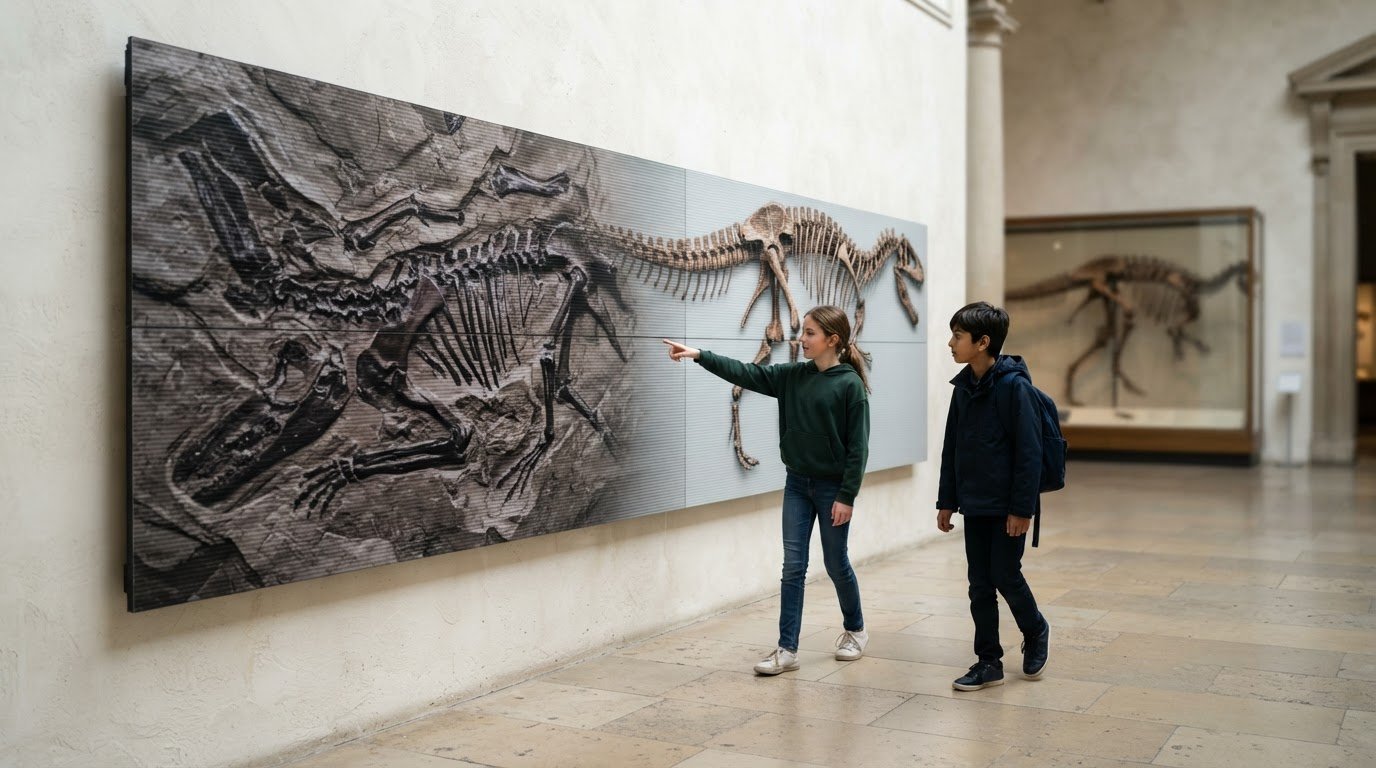
A museum visit becomes participatory when visitors can do more than look and read. Overcoming passive viewer experiences in museums starts by connecting an artwork to what people already know, then inviting them to notice, interpret, create, and respond. A Van Gogh painting, for example, can prompt a conversation about color and a creative activity, rather than asking visitors only to absorb facts from a label.
It’s natural to want visitors to leave with a clearer sense of what they’ve seen. That connection is easier to build when information meets curiosity and leaves room for personal observations. Participation doesn’t need to feel like a lesson or a test. A thoughtful prompt, a small creative activity, or a change in how visitors experience an artwork can invite a more personal encounter.
This article explores practical ways to make that shift: connect exhibits to visitors’ existing knowledge, use creative activities and open questions to encourage discovery, and draw on immersive, multisensory experiences to bring ideas to life. Together, these approaches can turn a museum visit from a sequence of displays into an experience visitors actively shape.
Key Takeaways
- Connect exhibits to what visitors already know, using focused prompts and clear storytelling to help ideas resonate.
- Invite people to learn by making, choosing, and responding rather than relying on passive reading alone.
- Use questions to guide discovery, giving visitors room to observe and shape their own interpretations.
- Consider how movement, projections, audio, and other sensory elements can make an exhibition feel more immediate and engaging.
1. Connecting content to visitors’ existing knowledge
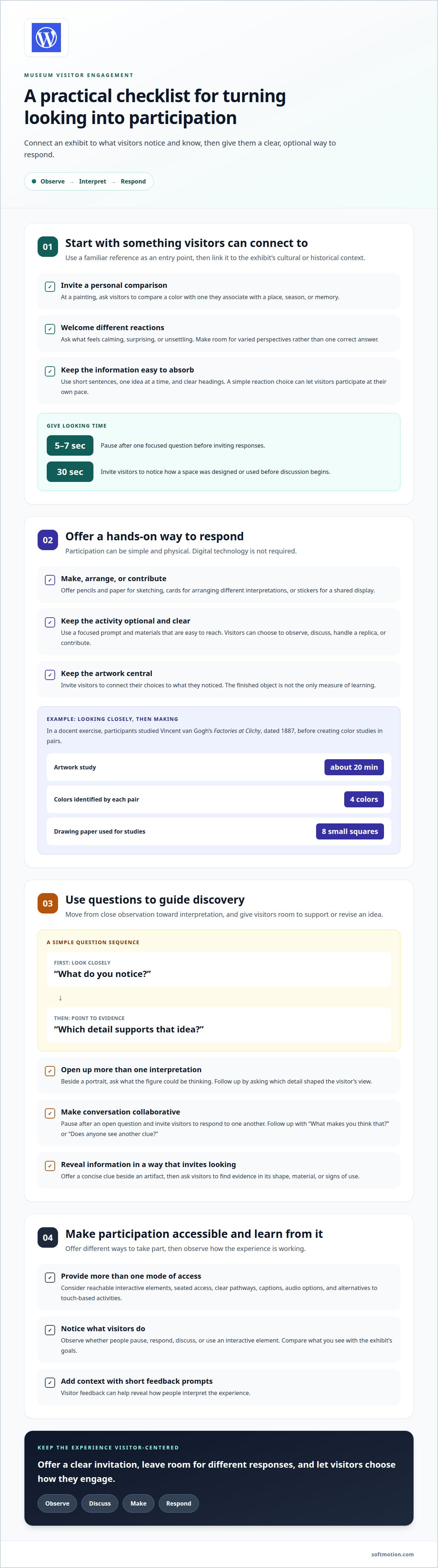
Start with a familiar reference, then connect it to the exhibition’s cultural or historical context. At a painting, invite visitors to compare a color with one they associate with a place, season, or memory. This gives each person a point of entry, instead of presenting isolated facts without a clear connection.
Emotional responses can deepen that connection. Ask visitors what detail feels calming, surprising, or unsettling, and welcome different perspectives without requiring a single correct answer. To encourage reflection, pose one focused question and allow 5-7 seconds of silence before inviting responses. A 30-second invitation to notice how a space was designed or used gives visitors time to look closely before discussion begins.
Passive viewing can signal that visitors aren’t sure what to do next. They may spend only a few seconds at a section, skim the panels, or seem confused and disengaged. Short sentences, one idea at a time, and clear headings make information easier to absorb. A simple choice, such as leaving a reaction beside an artwork, lets visitors participate at their own pace.
Interactive exhibit costs vary with design complexity, materials, installation, and upkeep; a project-specific price is provided after a quote request. These factors shape the difference between a traditional display and one built for visitor interaction.
To support visitors with disabilities, pair reachable interactive elements with seated access, clear pathways, captions, audio options, and alternatives to touch-based activities. Offering more than one way to engage helps visitors participate through different senses and modes.
Assess engagement by observing whether visitors pause, respond, discuss, or use an interactive element, then compare what you see with the exhibit’s goals. Short feedback prompts can add context and reveal how visitors interpret the experience.
An observed interactive Leonardo da Vinci exhibition in Delhi offers one example. It began with an introductory video about the artist and guidance on interacting with the space, followed by game segments. This format shows how orientation and active choices can move an exhibition beyond viewing alone.
2. Experimenting with creative, learner-centered activities
Creative activities move visitors along a spectrum from observation to active participation. A visitor might first study an artwork, then choose a detail, compare colors, or make something in response. In a docent exercise, participants examined Vincent van Gogh’s Factories at Clichy, dated 1887, for about 20 minutes. Then each pair identified four colors and created studies using eight small squares of drawing paper. The historical artwork became a prompt for looking closely and making personal choices.
Participation doesn’t require digital technology. Offer pencils and paper for sketching, invite visitors to arrange cards with different interpretations, or ask them to add a sticker to a shared display. Some contemporary installations invite children to place thousands of stickers on gallery walls. Simple physical activities can give visitors agency while keeping the collection central. Make the activity optional, with a clear prompt and materials that are easy to reach.
Visitor-centered design recognizes that people engage in different ways. One person may prefer to observe quietly; another may discuss an idea, handle a replica, or contribute to a group creation. A well-designed exhibition offers more than one way to take part, so visitors can choose an active role without feeling obliged to participate. Invite them to connect their choices to what they noticed, rather than treating the finished object as the only measure of learning.
Close with reflection, not just a farewell. Look Back, Step Forward, and 321 Reflection Questioning Practices can help visitors name an insight, consider what changed, or choose an idea to carry forward. For example, ask what detail they’ll remember and what they’d like to explore next. Where visual movement suits an exhibition, lenticular displays can prompt visitors to shift position and look again.
3. Facilitating discovery rather than simply conveying information
A label can present an interpretation, but a well-sequenced question lets visitors build meaning from what they see. Museum facilitators can use 10 Questioning Practices to shape discussions, moving from close observation toward interpretation. Begin with “What do you notice?” Then ask, “Which detail supports that idea?” This sequence invites evidence-based responses without requiring visitors to know specialist terminology before engaging with artworks.
Questions work best when they allow more than one response. Beside a portrait, a facilitator might ask, “What could the figure be thinking?” and invite visitors to point to a detail that shaped their view. The first question opens up imaginative possibilities; the follow-up grounds the discussion in the artwork. Visitors can agree, offer another interpretation, or revise their first impression as they notice new details.
To encourage conversation, staff can ask an open question, pause, and invite visitors to respond to one another’s observations. For example, after asking what an object might have been used for, a facilitator can follow up with, “What makes you think that?” and “Does anyone see another clue?” This approach makes visitors’ reasoning part of the learning, rather than turning discussion into a test with one expected answer.
Discovery also depends on how information is revealed. Present a concise clue beside an artifact, then ask visitors to find evidence in its shape, material, or signs of use. A simple prompt, such as choosing which of two interpretations best fits the evidence, turns reading into a decision. Facilitators can then ask what changed in visitors’ understanding and which clue influenced them. Their responses show how people interpret the exhibition and where another question could open up a richer discussion.
4. Immersive and multisensory museum experiences
An immersive gallery can bring an idea to life through more than text. Traditional displays often ask visitors to look and read; projections, animation, guided audio, and changing visuals offer other ways to encounter the same subject. For galleries planning custom visual backdrops, AV system integrators like etavisual.com provide LED display solutions that help showcase dynamic digital media. For example, an exhibition about migration might pair an artifact with a projected map and recorded personal accounts. Each element can add context while keeping the object central.
Strong exhibition design connects sensory choices to the subject instead of adding effects for novelty. A soundscape can suggest the acoustic character of a historical setting, while a projection can reveal how details in an artwork relate. Educators can ask visitors to notice a change, then discuss how it shapes their interpretation. When the sensory cue clearly connects to the content, the experience feels purposeful.
Hands-on and immersive exhibits can support learning by giving visitors something to observe, choose, or manipulate. A visitor who moves a model to test how its parts fit, for example, encounters an idea through action as well as explanation. A concise prompt can connect that action to a memorable association. Learning and later recall still depend on the content, the visitor, and whether the experience invites reflection.
For museums focused on overcoming passive viewer experiences in museums, multisensory design should offer more than stimulation. Give visitors a clear route through the central idea and different ways to take part. They might watch an animation without sound, listen to guided audio, or follow a short written explanation. Clear instructions and uncluttered transitions help everyone understand what to do next.
A practical strategy for overcoming passive viewer experiences in museums is to define the challenge before adding a sensory element: clarify scale, reveal movement, or create emotional context. Then connect that element to a question educators can use in discussion. To explore how shifting visuals can invite a closer look, consider dynamic visual experiences for an exhibition.
Softmotion
Softmotion helps museums turn static surfaces into motion-driven visual experiences that invite visitors to look again. When an exhibition needs a stronger visual connection between its story and its audience, lenticular printing can make imagery shift as viewers move, bringing movement and perspective into the gallery.
Depending on the project, this approach can take shape as an Advertising Lenticular Display, an Architectural Lenticular Installation, a Fine Art Lenticular Print, or Tradeshow Lenticular Graphics. The subject and setting guide the design of each visual point of engagement. Lenticular work is most relevant when changing imagery can strengthen the exhibition’s concept; it does not replace every hands-on, facilitated, or multisensory activity.
If you’re exploring a motion-driven visual experience for a museum or exhibition, contact Softmotion to discuss your project.
Shape the next museum encounter
Overcoming passive viewer experiences in museums isn’t about adding interaction everywhere. It’s about choosing moments when a visitor’s movement, attention, or response can deepen the encounter. For your next exhibition, consider a surface that could invite a second look, and connect that visual shift to the story you want visitors to explore.
Softmotion’s Advertising Lenticular Displays, Architectural Lenticular Installations, and Fine Art Lenticular Prints bring changing imagery into museum environments. The right direction depends on the exhibition’s concept and the role a dynamic visual can play. A clear creative brief helps turn that intention into a considered visual experience.
Ready to explore an idea for your space? Contact Softmotion to discuss your project. A carefully designed visual can give visitors a fresh perspective and help make their next museum encounter more engaging.
Frequently Asked Questions
Is this truly participatory practice?
An experience is participatory when visitors can make a meaningful choice or contribute an interpretation, rather than simply activate a feature with a predetermined response. For example, a gallery activity might let visitors choose which object to investigate next, then share their reason in a group discussion. The key is agency: visitors help shape how they encounter or understand the exhibition.
Why Do Visitors Lose Interest When There’s Too Much Information?
Visitors can lose interest when labels, timelines, and supporting details compete for attention without showing which ideas matter most. Imagine an exhibition that introduces an unfamiliar invention through dense technical language before explaining the problem it addressed. Visitors may struggle to find a starting point. Grouping information by importance and using a clear interpretive thread helps them decide where to focus.
What makes museum visitors passive viewers rather than active participants?
Visitors are more likely to remain observers when an exhibition offers no clear invitation to respond, explore, or choose a direction. A fixed route with identical labels at every stop can make a visit feel like information delivery. Unfamiliar terminology or the impression that only expert interpretations count can also discourage contributions. A visible invitation to compare viewpoints signals that visitors’ perspectives belong.
What interactive exhibit strategies increase visitor engagement in museums?
Offer visitors meaningful choices that change how they approach a subject. A history gallery could let people follow a theme, such as work, home, or travel, then compare what each path reveals. A shared interpretation board can invite visitors to leave a short observation for others to consider. Connect each interaction to an exhibit idea so the activity serves a purpose beyond novelty.
What risks or drawbacks can interactive exhibits create for museums?
Interactive features can distract from the collection if visitors focus on operating an activity instead of its subject. A popular station may create congestion, while components that need frequent attention can add to staff demands. An activity that relies on a single mode of interaction can also exclude some visitors. Keep it purposeful, offer alternative ways to engage, and observe how it works in the gallery to reduce these drawbacks.