
Tradeshow Lenticular Backdrops: Design for Movement, Sightlines, and Impact

What if the backdrop that draws people in also makes your message harder to read? Tradeshow lenticular backdrops can transform a booth into a moving visual experience, but the effect works best when it’s designed around how attendees approach, pass, and pause in the space. A striking image alone isn’t enough. Sightlines, viewing distance, and message all need to work together.
If you’re unsure whether visitors will notice the motion or how to balance visual impact with clear brand communication, thoughtful planning can make the difference. This guide explains how to choose a lenticular concept that supports your booth goals and audience movement rather than competing with them.
You’ll also learn which design and production decisions to consider early, from booth dimensions and traffic flow to sampling and prototyping. By the end, you’ll have a clearer sense of what makes a backdrop effective in a real tradeshow environment and what details to share when discussing a custom project.
Key Takeaways
- Understand how a lenticular image can shift or reveal depth as viewers move, and how that differs from a static graphic or digital screen.
- Plan tradeshow lenticular backdrops around booth goals, sightlines, traffic flow, and the message attendees need to absorb.
- Compare visual concepts by the movement they invite and the amount of information they need to communicate.
- Use samples and prototypes to assess the intended effect before production decisions are finalized.
- Prepare key project details, including booth layout and audience approach, to guide a custom concept from brief through installation.
What Are Tradeshow Lenticular Backdrops and What Can They Do?
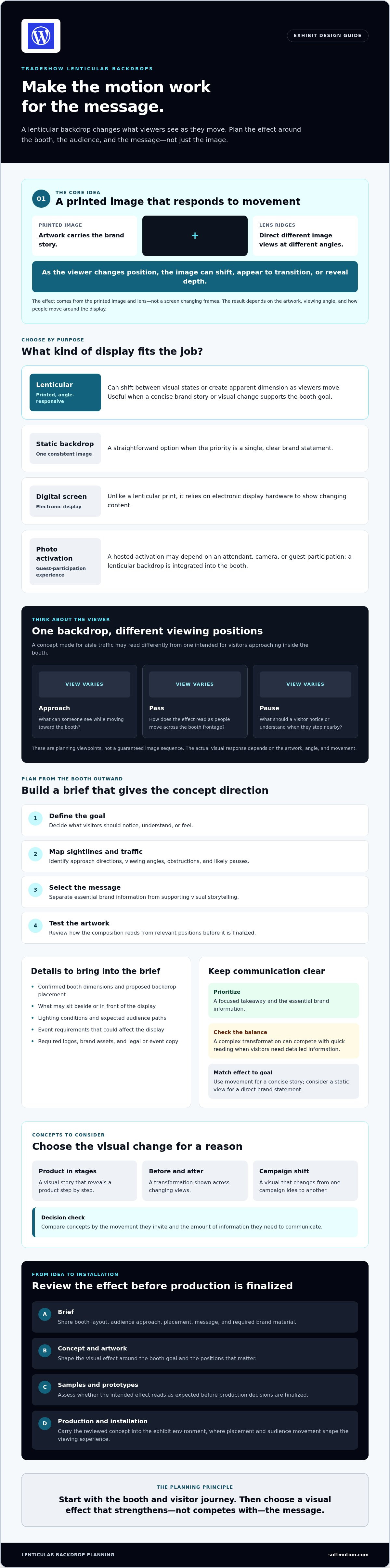
Tradeshow lenticular backdrops are printed displays that change images or reveal an illusion of depth as a viewer moves. A lens-covered print directs different views toward the viewer at different angles, creating a physical visual effect without a screen, animation, or augmented reality. The result can invite a second look while carrying a brand message through the exhibit space.
Unlike a static backdrop, which presents one consistent image, a lenticular graphic can shift between visual states or create apparent dimension. Unlike a digital screen, it doesn’t rely on electronic display hardware to produce the effect. And unlike a hosted photo activation, it isn’t an event experience that depends on an attendant, camera, or guest participation. It’s a printed element integrated into the booth itself. For a foundational explanation of the process and effects, see Lenticular printing technology.
How a lenticular image responds to attendee movement
A lenticular lens is made up of fine optical ridges that direct different parts of the printed image toward the viewer. As someone changes position, the visible image can appear to transition, animate, or gain depth. The exact experience depends on the artwork, viewing angle, and how people move in relation to the display. A concept designed for visitors walking across the booth frontage may read differently from one intended for people approaching from the aisle.
The motion comes from the interaction between the printed image and the lens, not from a screen changing frames. That distinction makes placement and audience movement part of the design, not details to leave until installation.
When a lenticular backdrop fits a tradeshow objective
Movement can help tell a concise brand story, such as a product shown in stages, a before-and-after transformation, or a visual that shifts from one campaign idea to another. An apparent-depth effect can add dimension to an image, while a single static view may be more suitable when the priority is a straightforward brand statement. The right approach depends on what visitors should notice and understand.
Consider the backdrop’s role in the visitor experience. Is it meant to draw attention toward the booth, reveal a visual sequence as attendees pass, or reinforce a message they’ll encounter elsewhere in the exhibit? If visitors need to read detailed information quickly, a complex transformation may compete with that task. Keep the message focused, then assess whether the visual effect supports it. Well-planned tradeshow lenticular backdrops pair a clear communication goal with an effect suited to the booth and its audience.
Start with the Booth: Map Sightlines, Traffic, and the Brand Message
A lenticular concept begins with the exhibit, not the artwork. Booth dimensions, neighboring displays, lighting, and attendee flow all influence what visitors can see and how the image may change as they move. A graphic meant to catch attention from an aisle has a different job from one visitors encounter close up inside the booth.
Use this planning sequence to shape the brief:
- Define the goal: Decide what visitors should notice, understand, or feel.
- Map sightlines: Identify approach directions, viewing angles, obstructions, and likely pauses. Poretta & Orr offers useful guidance on how to map sightlines and traffic flow.
- Select the message: Separate essential brand information from supporting visual storytelling.
- Test the artwork: Review how the composition reads from relevant positions before finalizing it.
For broader exhibit-format considerations, consult the interactive lenticular tradeshow displays buyer’s guide.
Which booth details belong in the creative brief?
Share confirmed booth dimensions and the proposed backdrop placement, along with what may sit beside or in front of it. Note lighting conditions, expected audience paths, and any event requirements that could affect the display. Distinguish between close viewing and aisle viewing rather than assuming one viewing distance will suit every position. These details help the creative team consider which views matter most and how the artwork should respond to movement.
Be specific about the visitor takeaway. If the priority is immediate brand recognition, that should guide the concept differently than a goal of unfolding a product story. List required logos, brand assets, and any legal or event copy early, then identify which visual elements are secondary.
How to keep the message readable as the image changes
Give the composition one dominant communication goal. A changing image can create a compelling moment, but several competing messages may make the overall idea harder to absorb. Establish a clear hierarchy, use contrast thoughtfully, and keep supporting copy restrained. Test these design choices against the actual artwork and booth conditions rather than assuming they guarantee readability.
Review the logo, brand colors, image rights, and required copy before artwork development moves too far. Then evaluate the design from both the aisle and closer booth positions. If you’re shaping a custom concept, explore custom tradeshow lenticular graphics as a way to connect the booth brief with the visual effect.
Choose the Right Lenticular Backdrop Concept for Your Exhibit
The right effect serves the exhibit’s primary communication goal, fits how visitors move through the booth, and can be developed from the creative brief. There’s no universal ranking of motion versus depth. An image transition may help tell a short story, while a steady graphic may be clearer when the message needs to register immediately.
These approaches offer different experiences. The best fit depends on the message, expected viewer movement, and booth setting. Lenticular effects rely on an optical lens structure; SPIE’s overview of lenticular lens array technology provides additional technical context.
| Creative approach | Communication goal | Movement and message considerations | Booth context |
|---|---|---|---|
| Image transition | Reveal a change, product feature, or brief brand story. | Works with viewers changing position. Keep the sequence focused so the main idea stays clear. | Consider it where visitors pass the display and can encounter the image from different angles. |
| Apparent depth | Add a sense of dimension to a product or scene. | The effect depends on the artwork and viewing angle. Avoid relying on an untested depth impression to carry essential information. | Assess whether the intended view suits the approach paths and available sightlines. |
| Single static image | Present a consistent brand or campaign message. | Offers a stable visual. A conventional static backdrop may be preferable when immediate, uninterrupted readability is the priority. | Useful when visitors need to grasp a simple message quickly or viewing positions are limited. |
Image transitions, depth, and layered visual storytelling
An image transition changes what the viewer sees as their position shifts. Apparent depth gives a printed scene a dimensional quality, while layered storytelling can pair a visual effect with a simple narrative. The effect should support the brand story, not become a puzzle visitors have to solve. Don’t assume a fixed number of views or a particular depth effect; those details depend on the artwork and production assessment.
Lenticular artwork or a conventional tradeshow backdrop?
Choose a conventional static backdrop if the booth needs one message to remain consistently visible, especially where visitors may only glance at it. Consider lenticular artwork when a position-responsive visual experience adds meaning, encourages discovery, or helps express a product or brand transformation. Choose the effect that best advances the exhibit’s primary communication goal, then test whether the message remains clear in the booth’s real viewing conditions.
That balance is central to effective tradeshow lenticular backdrops: the visual transformation earns its place when it reinforces what visitors need to take away.
Plan Lenticular Backdrop Design, Samples, and Production in Sequence
A clear production path helps turn a creative idea into a backdrop that fits the booth and the event. For tradeshow lenticular backdrops, plan creative and practical decisions together, since artwork, dimensions, viewing conditions, and installation all shape the finished display.
A useful sequence is:
- Build the brief: Define the audience, communication goal, booth layout, and intended viewing positions.
- Develop the artwork: Share the visual concept and brand materials, then confirm project-specific file and production requirements with the production partner.
- Review a sample or prototype: Use a physical review to assess how the effect reads from relevant angles and whether the image supports the message.
- Approve and produce: Gather stakeholder approval of the concept and sample before authorizing full production.
- Coordinate installation: Confirm the display’s mounting approach, site conditions, access, venue requirements, and event schedule.
Prepare artwork and approvals for large-format production
Bring useful source material together early: logos and brand assets, image sources, booth plans, confirmed dimensions, and a ranked list of content priorities. If the backdrop needs legal or other required copy, identify it before artwork development so it can be considered alongside the visual effect.
Ask the production partner to confirm the file specifications and technical requirements for the specific project instead of assuming a standard format will apply. A sample or prototype can help stakeholders judge the actual visual transition, image clarity, and relationship between the effect and the message. Resolve feedback at this stage, then document approval before full production begins.
Coordinate samples, installation, and event logistics
Samples and prototyping are among the stages Softmotion can provide, but discuss them for the individual project rather than assuming they are automatic inclusions. Clarify what will be reviewed, who needs to approve it, and how feedback will inform the final artwork.
Installation planning also needs project-specific confirmation. Check the mounting surface, access to the booth, site conditions, and any venue requirements that may affect setup. Share event deadlines early, then confirm production and installation arrangements with the project team. Don’t rely on a generic schedule for a custom display.
For a custom project, discuss a custom lenticular project with Softmotion and share your artwork, booth dimensions, site details, and event timeline as a starting point.
Bring Your Tradeshow Lenticular Backdrop from Concept to Installation
A strong project starts with a clear purpose and enough information to assess what’s practical. Once the exhibit goal, sightlines, and creative direction are defined, discuss how the concept could translate into a custom graphic and what the project will require from development through installation.
Softmotion creates custom tradeshow lenticular graphics as part of its large-format lenticular work. Founded in 1997, the company has delivered more than 1,000 projects worldwide. That broader experience provides context for its specialized work, but doesn’t mean every project follows the same path or that those figures represent tradeshow-specific results.
What to include when requesting a project conversation
Bring a concise project brief. Even if some details are still taking shape, sharing what you know helps make the initial discussion more specific. Useful information includes:
- Booth and event details: Confirmed dimensions, proposed backdrop location, event dates, and any known venue requirements.
- Brand materials: Logos, brand guidelines, image sources, and existing campaign assets you may want to incorporate.
- Project objective: The essential message and what you want visitors to notice, understand, or experience.
- Available references: Booth plans, sketches, draft artwork, or examples that help communicate the visual direction.
Describe the audience experience you have in mind, too. Should visitors discover a change as they walk past, or should the backdrop communicate a consistent brand message from its main approach? These details help frame a conversation, but don’t establish feasibility on their own. Specifications, production requirements, scope, and installation arrangements need to be discussed for the individual project.
Why specialized lenticular experience matters at large scale
Large-format lenticular work brings creative intent and production considerations together. Image design, viewing conditions, scale, and installation all need attention, so the project benefits from a partner familiar with lenticular graphics rather than a general display assumption. Softmotion’s work includes large-format lenticular visuals, with capabilities that can span samples and prototyping through production and on-site assembly. Which steps apply depends on the project.
The goal isn’t to add complexity for its own sake. It’s to shape tradeshow lenticular backdrops around a clear message, a considered visitor experience, and a workable project scope. To explore the possibilities, share your tradeshow backdrop concept with Softmotion.
Shape a Backdrop That Works with Your Booth
A compelling lenticular backdrop begins with a clear exhibit goal, then takes shape around sightlines, attendee movement, and the message visitors need to remember. Choose an effect that strengthens that message, and review the artwork or sample before production so the intended visual experience can be assessed in context. That’s how tradeshow lenticular backdrops move from striking idea to purposeful part of the booth.
Softmotion creates custom tradeshow lenticular graphics and brings experience from a business founded in 1997, with more than 1,000 projects delivered worldwide. Depending on the project, its capabilities can span samples and prototyping through production and on-site assembly, connecting creative planning with practical considerations for the final installation.
Have a booth layout, a campaign idea, or a question about what might be feasible? Start a conversation and share the details you have so far. Share your tradeshow backdrop concept with Softmotion, and take the next step toward a display designed for your message and space.
Frequently Asked Questions
What is a lenticular tradeshow backdrop?
A lenticular tradeshow backdrop is a printed display that can appear to change or reveal depth as a viewer moves. A lens layer directs different image views toward the viewer from different angles, creating a position-responsive effect. Unlike digital signage, it doesn’t use a screen or electronic playback to create motion. It’s a physical graphic, so the artwork and the audience’s viewing positions shape the experience.
How does a lenticular backdrop work?
A lenticular backdrop combines printed imagery with a surface made of fine optical lenses. The artwork is prepared so different visual information aligns with different viewing angles. As a person moves, the lenses direct a different part of the image toward their eyes, which can create an apparent transition or sense of depth. The effect comes from the printed image and lens working together, not from a screen playing an animation.
Can a lenticular backdrop display more than one image?
Yes, a lenticular design can be created to show different image views as someone changes position. The intended result might be a transition between product visuals, a shift in a brand image, or an apparent depth effect. What’s possible depends on the creative concept, artwork, viewing angles, and production assessment. Confirm the intended effect for each project rather than assuming a fixed number of views or a particular transition.
How do I design a lenticular tradeshow backdrop?
Start by defining what visitors should notice or understand, then map the booth’s layout, approach paths, and viewing angles. Distinguish between people seeing the backdrop from the aisle and those viewing it close up. Next, develop artwork around one clear communication goal and share the concept with the production partner. Review a sample or prototype to assess how the effect and message read before approving full production.
What artwork files are needed for a custom lenticular backdrop?
The required files depend on the artwork and production approach, so confirm specifications directly with the production partner before preparing final files. Start by gathering brand assets, logos, image sources, and any existing campaign artwork. Include the confirmed backdrop dimensions, booth plan, content priorities, and required copy. Ask which file formats, image resolutions, color settings, and other technical details apply to your specific project.
Are lenticular backdrops suitable for every tradeshow booth?
No. Lenticular artwork is an option when a position-responsive visual effect supports the exhibit’s message and visitor experience. A conventional static graphic may be better if the priority is one simple message that remains immediately readable from different positions. Consider booth layout, sightlines, lighting, expected audience movement, and how much information the graphic must communicate. The right format depends on those conditions and project-specific production requirements.
How early should I plan a custom lenticular tradeshow backdrop?
Plan early enough to discuss the concept, artwork requirements, sample or prototype review, approvals, production, shipping, and installation logistics. The time needed depends on the project’s scope and event arrangements, so there isn’t one schedule that fits every backdrop. Share the event date, venue details, and known deadlines with the production partner as soon as possible, then confirm a project-specific timeline directly.