
Lenticular Print Production, from Design to Finished Print

A print can move without a screen. A lenticular print production company combines images beneath a clear lens sheet so the picture changes with the viewing angle. Depending on the artwork, the effect can create animation, a transition between images, or a sense of three-dimensional depth.
A lenticular print may look effortless, but its impact depends on decisions made before production. Image selection, interlacing, lens alignment, and proofing all influence how clearly the effect reads.
This article explains how lenticular printing works and how design and proofing shape the final image. It also covers marketing applications and custom production, from the creative concept to the finished print.
Key Takeaways
- Discover how viewing angle transforms a still image into depth, motion, or a changing visual effect, and consider which best suits your message.
- See why image preparation, lens alignment, and digital proofing influence how clearly the finished piece reads.
- Explore how lenticular visuals can bring added movement and dimension to advertising, exhibitions, and other marketing formats.
- Understand the production choices behind a custom print and when Fine Art Lenticular Prints can help realize an artistic vision.
What is Lenticular Printing?
Lenticular printing uses a clear plastic sheet with fine ridges, called lenticules, to reveal different parts of an image from different viewing angles. Beneath the lenses, two or more images are interlaced, with narrow segments from each arranged into one composite print. As the viewer moves, the lenses direct different image segments to the eyes, creating motion without a screen or powered display.
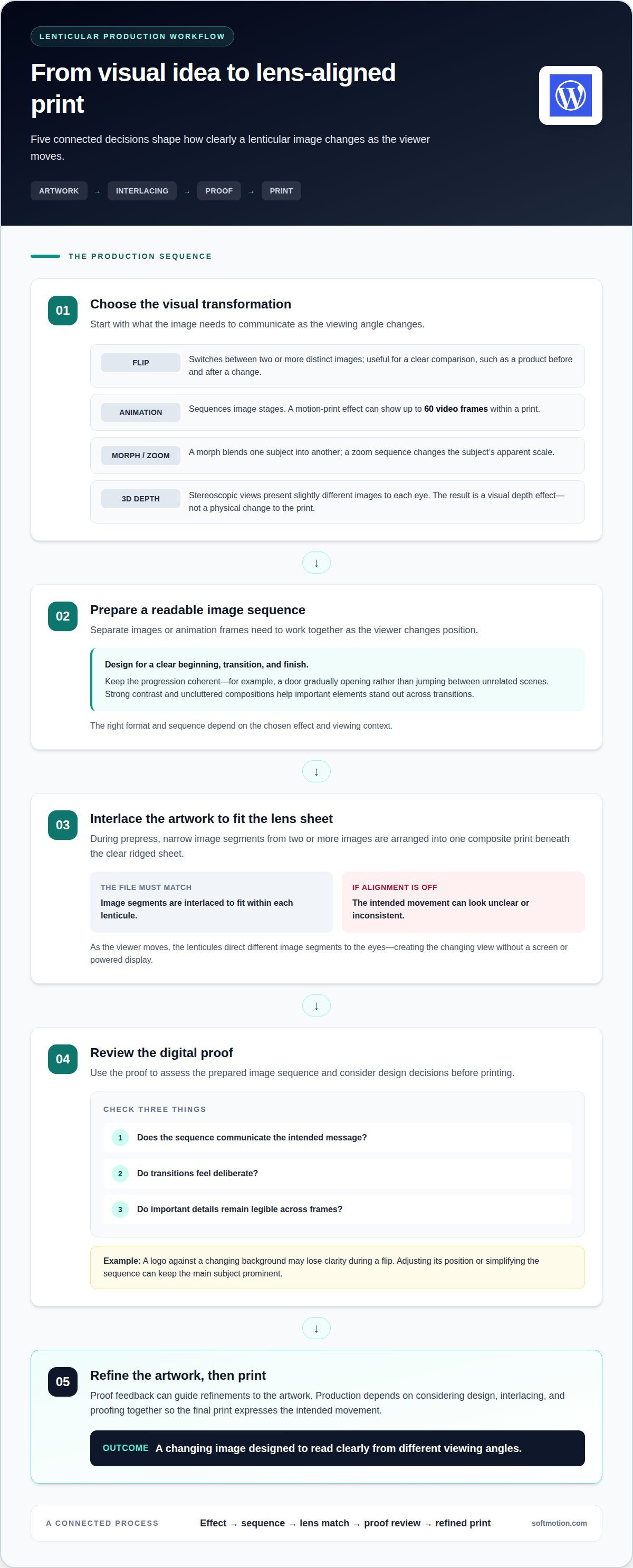
The effect depends on what the artwork is designed to do. A flip switches between two or more distinct images, such as a product before and after a change. An animated effect sequences image stages, while a motion-print effect can show up to 60 video frames within a print. A morph blends one subject into another across the viewing angle. Zoom can make a subject appear to change scale, using a sequence of images composed to suggest movement closer or farther away.
Stereoscopic lenticular printing creates the impression of 3D depth by presenting slightly different views to each eye. Those views may depict a foreground object against a more distant background, such as a flower in front of a landscape. The lenticules separate the images according to viewing position, so the scene appears to extend beyond the print’s surface. This is a visual depth effect, not a physical change in the printed object.
Choose an effect based on the intended visual transformation. A two-image flip suits a clear comparison; a smooth sequence works better for animation or morphing. Depth calls for images that convey different viewpoints, while a zoom needs frames that shift the subject’s apparent scale coherently. These effects work best when the sequence has a readable beginning, transition, and finish. Because the viewing angle determines what appears, the print can reveal a different moment as someone moves past it.
Lenticular design, technical expertise, and digital proofing
When choosing a lenticular print production company, look for a clear explanation of artwork preparation, interlacing, and proof review. The design and interlaced file must match the lens sheet and the print’s intended use.
Artwork Preparation and Design
Artwork preparation turns separate images or frames into a sequence designed for lenticular viewing. Each segment needs to contribute to a clear message as the viewer changes position.
For a flip effect, the design might shift between a product’s closed and open forms. For animation, the frames need a coherent progression, such as a door gradually opening rather than jumping between unrelated scenes. Strong contrast and uncluttered compositions help important elements stand out across transitions. The right format and sequence depend on the effect and viewing context.
During prepress, image segments are interlaced to fit within each lenticule. The resulting file must match the lenses on the sheet. If the image sequence and lens pattern do not align, the intended movement can look unclear or inconsistent. Technical preparation connects the creative idea to the physical print.
Digital Proofing and Technical Expertise
Digital proofing reviews prepared artwork before printing, helping assess how the image sequence is arranged. It gives the team a chance to consider design decisions before they become part of the finished piece.
A useful proof review checks whether the sequence communicates the intended message, transitions feel deliberate, and important details remain legible across frames. For example, a logo placed against a changing background may lose clarity during a flip. Adjusting its position or simplifying the sequence can keep the main subject prominent.
Technical expertise connects design decisions to the lens format and production file. The interlaced image must align with the sheet’s lenticules, and proof feedback can guide refinements to the artwork. Assessing production means considering design, interlacing, and proofing together, since each affects how faithfully the final print expresses the intended movement.
Marketing applications and product examples
A lenticular print production company creates prints and displays that change with the viewing angle, including advertising graphics, architectural installations, and fine art. For marketers, this format can turn a static message into a visual transition that encourages people to pause and engage.
Advertising and Marketing Uses
Lenticular advertising uses motion, image changes, or an illusion of depth to make a campaign more visually active. Posters, billboards, point-of-sale displays, and direct mail can use different effects suited to their settings.
A retail poster, for example, might flip between a product image and a short promotional message, while a tradeshow graphic could use movement to draw attention to a featured product. Match the effect to the message: a clear image change can show a comparison, while depth can give a brand image a dimensional presence. This format is useful when a printed piece needs to communicate at a glance.
Lenticular Products and Applications
Lenticular products range from compact promotional pieces to large-format prints and architectural installations. Scale and setting shape the viewing experience, whether someone holds a small piece or sees a graphic across a room. For businesses looking to complement dynamic visuals with branded items, Corporate Gift Printing provides custom-designed options that help engage clients and event attendees.
Architectural lenticular installations bring changing imagery into a built environment, such as a wall that reveals different images as visitors move past. The illusion of depth or motion becomes part of the space rather than a separate screen. Matching the image sequence to the viewing path helps keep the transformation legible as people approach, pass, or view the piece from another position.
Different applications serve different goals: direct mail can deliver a changing message in hand, a retail display can distinguish a product, and an architectural piece can transform a static surface. Start with the audience, setting, and intended response, then choose an effect and format that support that purpose.
Custom lenticular printing and production
Custom production connects the visual effect to the print’s format, lens sheet, and intended use. A tabletop display and a wall installation call for different decisions about scale, viewing position, and how people encounter the piece.
Custom Services and Available Formats
Custom lenticular printing adapts the artwork and finished format to a specific application. A piece viewed in hand has a different visual role from an advertising display seen across a room.
Formats include advertising displays, tradeshow graphics, fine art prints, and architectural installations. Production planning begins with the setting and the effect the images should create. The interlaced file is printed on the back of the lenticular lens sheet, aligning each image with its corresponding lenticule. A backing, such as paper or cardboard, may be laminated or adhered to the sheet. Finishing may include trimming or a protective coating.
Order Quantities and Turnaround
Order quantity and production timing depend on the project’s format, scale, artwork readiness, and proof revisions. A custom wall installation and a set of compact displays, for instance, involve different production requirements.
There is no single minimum quantity or typical turnaround for every lenticular print. A lenticular print production company plans around the selected format, image preparation, proof approval, and finishing. For example, artwork revisions need to be resolved before printing can proceed. Sharing the intended application and artwork early helps shape a practical production plan without assuming every project follows the same schedule.
Quote Requests and Sample Evaluation
A quote request should describe the application, format, approximate dimensions, quantity, and artwork status. These details connect the creative concept with production requirements and clarify what the finished piece needs to achieve.
Evaluate a lenticular sample from different angles, noting whether the image changes read clearly. Look for legible details, a coherent transition, and an effect suited to the intended setting. Working with a lenticular print production company, you can use a sample to assess how the lenses and printed images work together before applying those choices to an advertising or architectural piece.
To discuss a custom format or request lenticular samples, share the intended application and the effect you want the finished print to achieve.
Softmotion: Fine Art Lenticular Prints
Softmotion is a natural partner when an artistic concept depends on movement, depth, or a changing image. Its Fine Art Lenticular Prints help artists transform a static composition into a piece that reveals different visual moments as viewers move. The design and production choices can be shaped around the artwork’s intended effect, from a subtle shift in perspective to a distinct image transition.
For projects beyond fine art, Softmotion also produces Advertising Lenticular Displays, Architectural Lenticular Installations, and Tradeshow Lenticular Graphics. These formats suit different settings, whether the goal is to bring dimension to an exhibition piece, create a changing visual feature within a space, or draw attention at a tradeshow.
If your project calls for a lenticular print or installation, contact Softmotion to discuss your concept.
Shape the Next Step for Your Project
Start with a clear creative intention: what should viewers notice, feel, or discover as they move past the piece? That decision can guide the format, image sequence, and setting, giving production a focused direction from the outset.
A lenticular print production company can help turn that intention into a finished visual experience. Softmotion’s Fine Art Lenticular Prints suit image-led creative work, while Advertising Lenticular Displays and Architectural Lenticular Installations bring changing visuals into public-facing settings. Each offers a distinct way to connect artwork with its audience.
Consider where the piece will be seen and what role it should play. A gallery work, advertising display, and architectural installation each call for a different relationship between image and space. With that purpose in mind, you can move from an initial concept toward a considered production direction.
Contact Softmotion about your project and take the next step toward bringing your visual idea to life.
Frequently Asked Questions
What are the most common mistakes to avoid in lenticular projects?
Common mistakes include choosing an effect before defining the message, using unrelated images, and placing essential details where transitions obscure them. A product name, for example, should remain easy to read as the image changes. Plan the viewing experience rather than treating a lenticular piece like a conventional flat graphic. Keep the sequence coherent and consider where people will stand or move.
What resolution and file format should I use for a lenticular project?
There is no single resolution or file format for every lenticular project. Requirements depend on the finished dimensions, artwork, lens, and production workflow. Start with high-quality source images and preserve the originals so they can be adjusted without unnecessary loss. A small screen preview cannot show every print detail, so assess artwork at its intended output size and prepare files for the production format.
What artwork and file specifications do lenticular printers require?
Specifications vary by project, so prepare artwork for the selected format and lens rather than treating it as a universal print file. A useful handoff includes the intended dimensions, desired visual effect, and source images or frames in their planned sequence. Keep text and logos distinct from changing backgrounds. This gives the production team clear context for preparing the artwork.
What is the lenticular print production process, from design to delivery?
Production typically moves from concept and artwork preparation through technical prepress, proof review, printing, finishing, and delivery. For a multi-image piece, the visual sequence is organized for the intended effect before preparing the production file. Proof feedback can address design choices before printing proceeds. Depending on the format and intended use, finishing may include applying a backing or trimming the print.
What are common lenticular printing defects and production risks?
Potential issues include image ghosting, noticeable shifts between transitions, and details that are unclear from the intended viewing position. These can relate to the artwork, interlacing, lens alignment, or viewing conditions. Fine text, for example, may be difficult to follow if it changes with the background. Reviewing the proof for legibility and coherent transitions helps identify visual concerns before production.