
Lenticular Museum Displays: Designing Exhibits That Move With Visitors
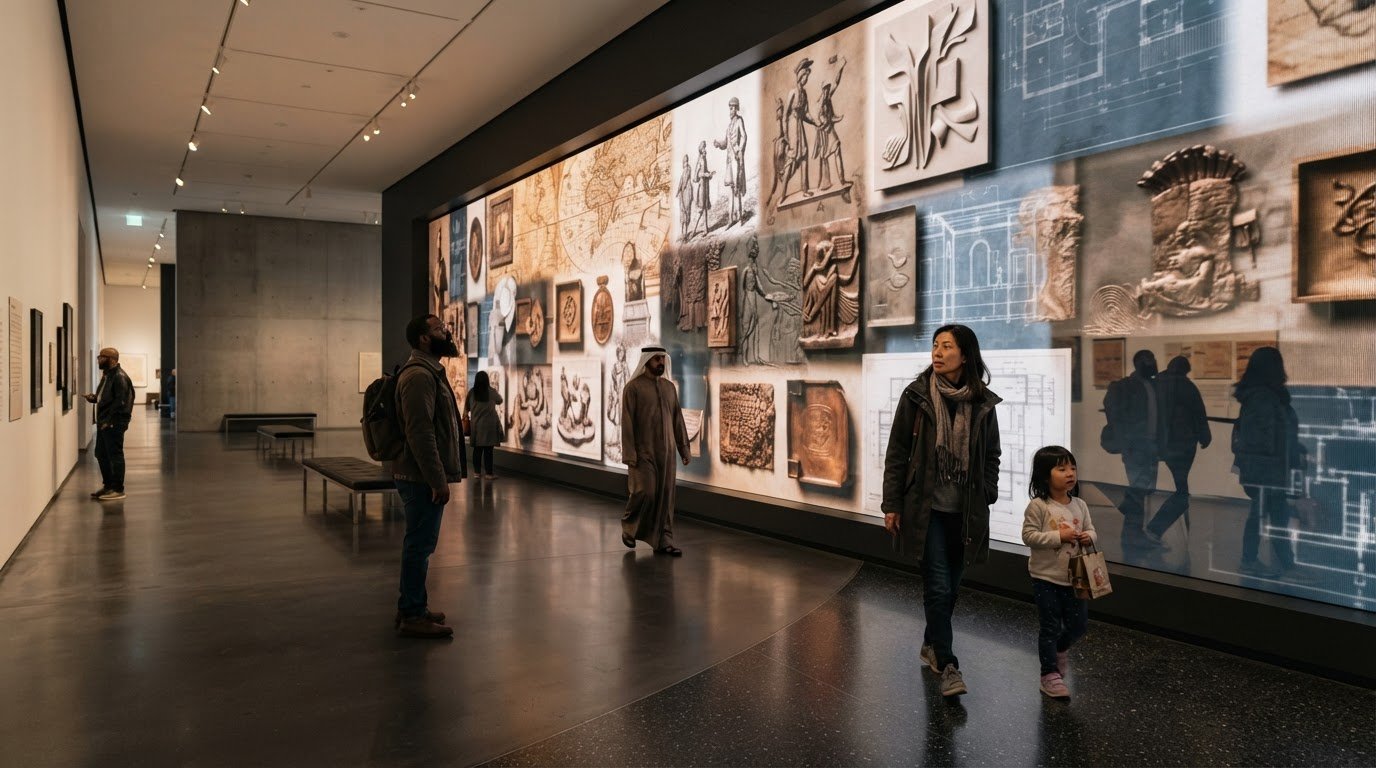
What if movement in an exhibit came from the visitor, not a screen? Lenticular museum displays can reveal a change in image, depth, or sequence as people shift their viewpoint, making movement part of the interpretation. The effect earns its place when it clarifies the story. If it competes with key objects or text, visual novelty can become a distraction. The goal is not simply to make an image move, but to make the visitor’s movement meaningful.
That balance comes from design decisions. This article explores how lenticular imagery can support a curatorial idea and guide attention while fitting the conditions of a gallery. You’ll learn how to assess the intended effect, viewing distance, lighting, accessibility, and installation needs, and how sampling or prototyping can help evaluate a concept before full-scale production. You’ll also see how to turn an interpretive goal into a clear, testable project brief, moving from an evocative idea to a display planned for its space and visitors.
Key Takeaways
- Use lenticular museum displays when a shift in viewpoint can reveal a sequence, change, or sense of depth that strengthens the exhibit’s interpretation.
- Plan the visitor’s path through the display, including where they first see it and the distance needed to notice its visual transition.
- Compare lenticular, static, and digital formats based on the story they need to tell and the conditions of the gallery.
- Build a useful project brief around the audience, intended takeaway, location, viewing conditions, and relevant content.
- Review samples or prototypes before full-scale production, then coordinate production and installation needs with the project team.
What Can Lenticular Museum Displays Add to an Exhibit?
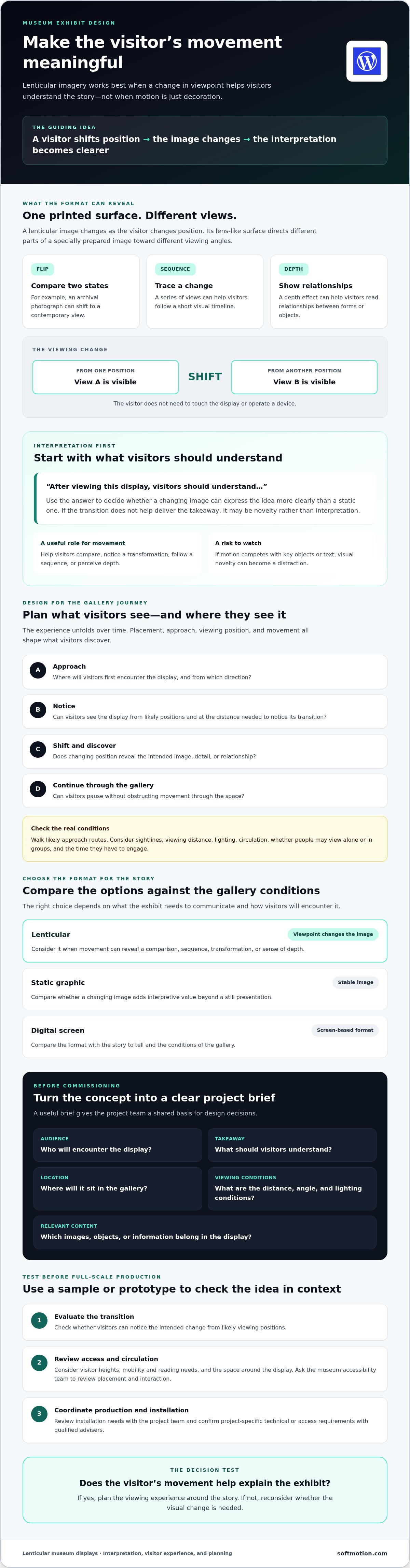
A lenticular museum display is a printed image that changes appearance as a visitor changes position. In a lenticular image, viewing angle determines which image, sequence, or visual layer the visitor sees. This shift can make a static surface reveal a comparison, suggest movement, or create an impression of depth. The effect has a physical basis: as the Lenticular printing reference explains, a lens-like surface directs different parts of a specially prepared image toward different viewing angles.
That change can become part of an exhibit’s meaning. A flip effect might contrast an archival photograph with a contemporary view. A sequence might trace a change over time, while a depth effect might help visitors read the relationships between forms in an artwork or object. The design question is not just what can change, but what that change helps people understand.
How does a lenticular display change as visitors move?
Think of the printed image as several views arranged in fine strips beneath a surface of tiny lenses. From one position, the lenses direct one set of image strips toward the eye; from another, a different set becomes visible. Visitors do not need to touch the display or operate a device. A shift in viewpoint can trigger the visual transition, which is designed to work within a particular viewing zone.
Illustrative example, not a Softmotion case study: A natural history exhibit could use two views of a landscape, one showing an earlier shoreline and the other its present-day form. As visitors move across the display, the shoreline appears to shift. If the transition supports a discussion of environmental change, the motion helps convey the interpretation rather than simply decorating the wall.
When does the effect serve museum interpretation?
Start with the curatorial question or takeaway, then decide whether a changing image can express it more clearly than a static one. Lenticular imagery may be useful when visitors need to compare two states, follow a short visual timeline, notice a transformation, or perceive depth between elements. It can make looking an active part of learning: visitors move, observe, and connect the change to the story.
Motion used only to attract attention may draw visitors without giving them a meaningful reason to stay. Before choosing imagery, try completing this sentence: “After viewing this display, visitors should understand…” If the visual transition does not help deliver that takeaway, it may be novelty rather than interpretation. This test gives the curatorial and design teams a shared basis for shaping the concept.
How Lenticular Museum Displays Shape the Visitor Experience
A lenticular image is experienced over time, even when printed on a still surface. Visitors approach, catch an initial impression, shift position to see the image change, discover a detail, then continue through the gallery. Designing for that journey helps the transition feel intentional rather than accidental.
Designed movement, viewing position, and image change work together: where visitors stand shapes what they see, and how they move shapes what they discover. For lenticular museum displays, placement is part of the interpretation. If visitors pass too quickly, approach from an unexpected direction, or cannot find a useful viewing position, they may miss the transition the design is meant to reveal.
How should viewing angle and placement inform exhibit design?
Assess the actual space before finalizing the image. Walk the likely approach routes and note where visitors may pause, view from farther away, or encounter the display from the side. Consider whether people will see it alone, in groups, or while moving through a busy gallery. These patterns affect sightlines, circulation, and the time visitors have to engage with the work.
A sample or mock-up can help the team assess the transition in context before confirming the final design. Check whether visitors can notice the intended change from likely positions, and whether the display invites a pause without obstructing movement through the space. Softmotion’s lenticular samples and prototyping can help evaluate how a concept behaves as a physical image.
How can the display remain accessible and easy to understand?
Plan for more than one ideal viewing position. Consider different visitor heights, mobility needs, reading needs, and the circulation space around the display. Ask the museum accessibility team to review the proposed placement and interaction, and confirm project-specific technical or access requirements with qualified advisers.
If the visual change may be ambiguous without context, pair it with concise interpretive text. A short prompt can orient visitors to what is changing or what to look for, while leaving the image room to reward closer attention. Keep the text legible from likely stopping points, and make sure it does not compete with the transition.
Consider dwell time as a site-specific design factor, not a fixed visitor behavior. A display on a main route may receive a brief glance, while one near a natural stopping point may invite a longer look. Testing the placement helps the team judge whether visitors can approach, understand how to engage, and move on without disrupting the gallery experience.
Lenticular Displays vs. Static Graphics and Digital Screens in Museums
No exhibit format is automatically the right choice. Lenticular museum displays, static graphics, and digital screens each support different kinds of interpretation. The best fit depends on the story, artwork, gallery conditions, and visitor needs. A changing image can be compelling, but if its movement does not clarify the content, it may compete for attention.
| Format | General characteristics | Project-dependent requirements |
|---|---|---|
| Lenticular | A printed image shifts between views or creates a sense of depth as visitors change position. Interaction comes from looking and moving. | Assess viewing positions, sightlines, artwork suitability, installation conditions, and whether visitors can recognize the intended transition. |
| Static graphics | A fixed image and text remain consistent from different viewing angles. This can suit detailed reading or imagery that should not change. | Consider text hierarchy, reading distance, placement, and how the graphic fits with nearby objects and interpretation. |
| Digital screens | Screen-based content can present changing material or functionality that a printed image cannot provide. | Evaluate the project’s content needs, screen placement, operation, and technical requirements with the appropriate team. |
When is a physical lenticular display a stronger fit?
A lenticular image may suit an exhibit when a physical transition or shift in perspective is part of the story, such as revealing a second view or suggesting a change. It offers a non-screen way to invite visitors to explore an image through movement. That does not make it a universal substitute for screens or static graphics. Suitability depends on the artwork, installation conditions, and visitor context, so assess the effect in the space before settling on a direction.
When might static graphics or digital signage work better?
Choose static graphics when interpretation relies on a fixed image, precise details, or extended reading that should remain visually stable. Consider digital signage when content needs to change or the project calls for screen-based functionality. Lenticular printing is a physical print format, not digital-signage hardware or augmented reality app development.
If the team is concerned that a changing image could distract from the exhibit, test the concept instead of relying on assumption. Review a sample or mock-up alongside the proposed interpretive content. Ask visitors or reviewers what they notice first, whether they understand the transition, and whether it supports the intended takeaway. If the movement attracts attention without adding meaning, revise the concept or choose a format better suited to the story.
How to Plan a Lenticular Museum Display Before Commissioning
A clear brief helps turn a curatorial idea into a display that can be evaluated in the gallery, not just imagined on a screen. Before requesting concepts for lenticular museum displays, align the museum team on what visitors should understand, where the work will sit, and what needs to be tested before production.
What should a museum include in the project brief?
Use this sequence to bring the interpretive and practical decisions into focus:
- 1. Define the objective. State the curatorial question or takeaway, and explain why a changing image might help communicate it.
- 2. Describe the audience. Note who the exhibit is for and any relevant reading, access, or engagement considerations.
- 3. Document the site. Identify the intended location, approximate dimensions, likely viewing positions, and available information about the space.
- 4. Gather the content. Provide approved images, sequence ideas, captions, and information about content rights. Include relevant design, conservation, or other project constraints.
- 5. Name the decision-makers. Identify the curatorial, design, accessibility, facilities, and other stakeholders involved, along with who will review samples and approve final artwork.
For related exhibition artwork context, see the fine art lenticular prints curator’s guide. It can inform a discussion about how a physical image may contribute to an exhibition’s visual language.
What should teams assess during sampling and site review?
A sample or prototype makes the image transition tangible before the team commits to full-scale production. Review whether the intended views read clearly, whether the change is visible from expected positions, and whether important details and accompanying text remain legible. Consider the sample in relation to the intended scale and surrounding exhibit, since an image viewed in isolation may behave differently in the gallery.
Site coordination matters just as much. Confirm installation access, the proposed mounting approach, and relevant surface conditions with the appropriate project teams. Discuss scheduling in relation to the museum’s installation plan. Do not assume standard material, lighting, cleaning, or conservation specifications will suit the project. Confirm requirements with qualified advisers and the museum team.
A useful brief makes these questions reviewable before production. To explore how a concept might move from samples toward a site-specific installation, review lenticular project support with Softmotion.
From Museum Concept to Installed Lenticular Display with Softmotion
A museum concept becomes a physical lenticular display through a series of shared decisions. The interpretive brief sets the direction; a design discussion explores whether a lenticular or agamograph effect can serve it; samples help the team assess the image in physical form; and production and installation planning bring the approved direction into the space.
Softmotion designs and produces custom large-format lenticular and agamograph projects, with support from samples and prototyping through full-scale production and on-site assembly. Founded in 1997, the company has delivered more than 1,000 projects worldwide across architectural, fine-art, advertising, tradeshow, and corporate environments. This is company-wide experience, not a claim of specific museum projects or outcomes.
What can a specialist production partner contribute?
Early discussion can connect the curatorial idea to practical questions that shape a physical installation. The team can consider the intended visual effect, artwork, scale, sample review, and production approach together. A sample or prototype gives museum stakeholders something tangible to assess before full-scale production, while early technical conversations can surface questions for the museum’s design, facilities, accessibility, or installation teams to review.
This collaboration is focused on lenticular and agamograph work. It does not include digital-signage hardware, general commercial printing, or augmented reality app development. Clear boundaries help the museum match each project need with the appropriate specialist.
What should happen before a museum requests a proposal?
Prepare a concise project overview so the initial conversation can focus on fit and next steps. Include:
- The exhibit objective and intended visitor takeaway
- The project location, approximate scale, and relevant viewing conditions
- The available artwork and any content or rights considerations
- The museum’s schedule and known installation requirements
- The key decision-makers and staff responsible for interpretation, facilities, and installation
These details help frame a conversation about feasibility, sampling, and production planning. They do not predetermine a result; the proposed approach depends on the artwork and project conditions. For teams exploring lenticular museum displays, a focused discussion with the production partner can help identify what to test and which site questions need answers before moving forward.
Turn a Curatorial Idea Into a Visitor Experience
Lenticular museum displays work best when the visual shift has a clear interpretive purpose and fits the way visitors move through the gallery. The right format depends on the story: a changing image may invite comparison or reveal, while static graphics or digital screens may better serve other content. A focused brief, site review, and sample assessment help museum teams evaluate the concept before full-scale production.
Softmotion, founded in 1997, has delivered more than 1,000 projects worldwide across multiple environments. Its end-to-end project support includes samples and prototyping through full-scale production and on-site assembly, helping teams explore how a concept could translate into a physical installation.
Bring your exhibit objective, location, approximate scale, and available artwork to an initial discussion. Discuss your museum display concept with Softmotion and explore the questions that can shape a considered next step. With a clear purpose and collaborative planning, your idea can move toward an exhibit experience designed to connect with visitors.
Frequently Asked Questions
What is a lenticular museum display?
A lenticular museum display is a printed image that changes appearance as the viewer changes position. A lens-like surface directs different parts of the image toward different viewing angles, allowing the artwork to shift between views or suggest depth. In an exhibit, that change can support a comparison, reveal, or visual sequence. Its value depends on whether the shift helps visitors understand the curatorial idea.
How do lenticular displays work in a museum exhibit?
Lenticular displays combine an image prepared for multiple views with a surface of small lenses. From one position, visitors see one view; as they move, another becomes visible. The effect is designed for a viewing zone, so distance and approach direction matter. A project-specific sample reviewed in the intended space can help museums assess whether visitors can see the transition and interpret it as planned.
Are lenticular displays interactive?
Yes, in a passive, movement-based way. Visitors do not operate a control or need a screen; they change what they see by shifting their viewpoint. This can make observation feel active, but it is not the same as touch interaction or digital functionality. For the interaction to serve the exhibit, the changing image should guide attention or support an intended takeaway rather than simply move to attract notice.
How do museums choose between lenticular displays and digital screens?
Choose based on the interpretive purpose and the needs of the site. Lenticular imagery may suit a physical image transition or perspective shift, while digital screens can serve projects that require changeable, screen-based content. Static graphics may be a better fit for fixed imagery or detailed reading. Compare the options against the artwork, visitor context, installation conditions, and the experience the museum wants to create.
Can lenticular museum displays be made at large scale?
Yes. Lenticular museum displays can be considered for large-format applications, though the appropriate scale and approach depend on the artwork and installation conditions. Softmotion designs and produces custom large-format lenticular and agamograph projects, with support from samples and prototyping through full-scale production and on-site assembly. A project discussion can help identify the information needed to assess scale, viewing conditions, and installation planning.
What should a museum prepare before commissioning a lenticular display?
Prepare the interpretive objective, audience, proposed location, approximate dimensions, and viewing conditions. Gather available artwork, content rights information, and relevant design or conservation constraints. Identify who will review samples and approve the final artwork, including staff responsible for interpretation, facilities, and installation. This gives the project team a practical starting point for discussing the visual concept, sampling, and site coordination.
How can a museum make a lenticular display accessible?
Consider whether visitors of different heights and mobility needs can approach and view the display, and whether circulation space remains usable. Check that accompanying text is legible and provides context for the visual change. Ask the museum’s accessibility team to review the planned placement and interaction. Confirm project-specific technical, accessibility, conservation, or building requirements with the museum and qualified advisers rather than assuming one setup suits every site.
Discuss your lenticular museum display concept with Softmotion. Share the exhibit objective, project location, approximate scale, schedule, and available artwork to start the conversation.