
Lenticular Backdrops for Events: Artwork and Pricing
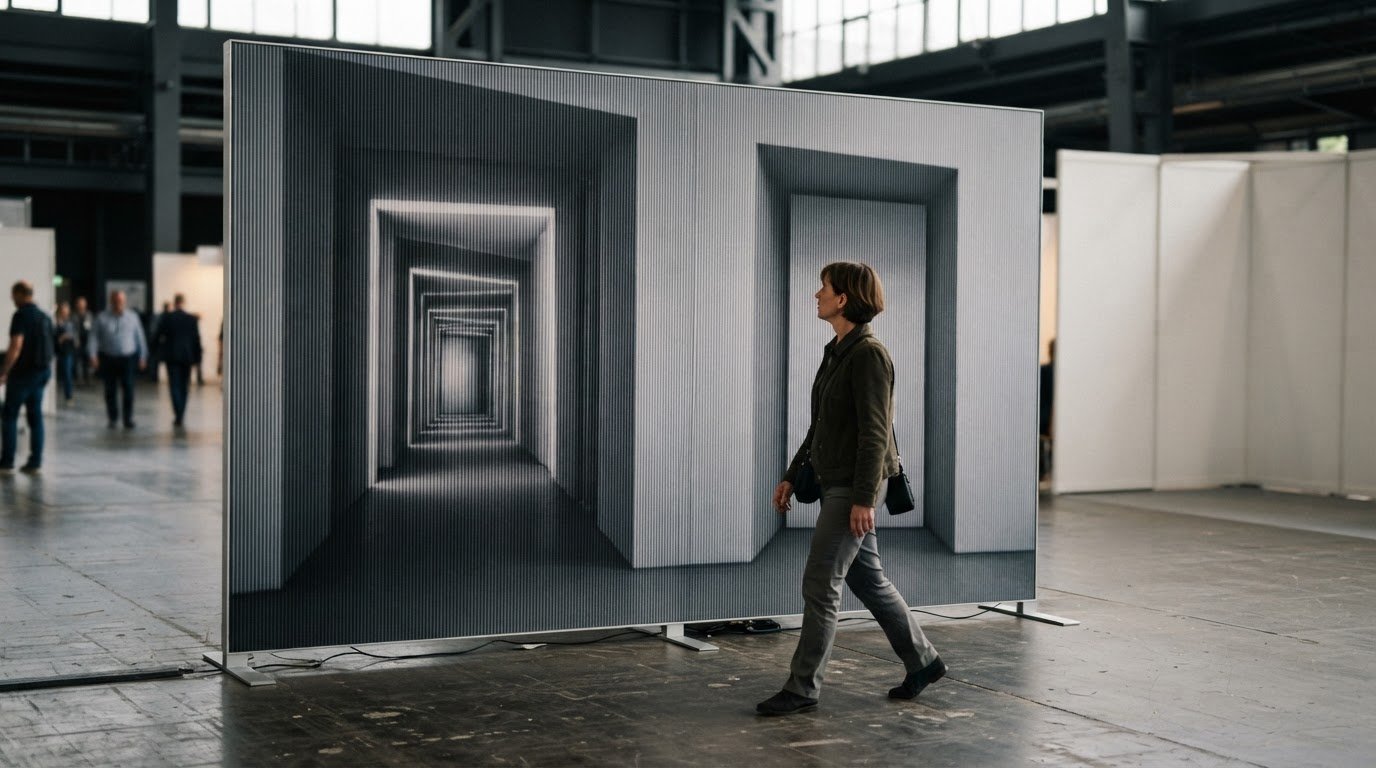
A backdrop can do more than hold a scene still. Lenticular backdrops for events combine layered images with a ridged lens surface to create motion, depth, or a changing image in one print. As guests move or shift their viewpoint, the artwork can reveal another frame or a dimensional effect.
That visual change makes a lenticular backdrop a distinctive choice for a trade show, launch, or photo setting. The result depends on preparing the artwork for the intended effect, scale, and viewing distance. This guide explains how lenticular prints work, what source files can help shape the image, where these displays fit at an event, and which choices influence project scope. You’ll also learn how professional design and production bring the artwork and venue together, so the display feels intentional from the first glance.
Key Takeaways
- Choose whether the artwork should create depth, shift between images, or animate, then shape the source files around that effect.
- Place the display where guests can encounter it naturally, such as an event hall, trade show, or photo area.
- Plan project scope around the artwork, display format, event setting, and the production work needed to bring them together.
- Match the display’s scale and lens choice to how far away guests will view it for a clear, engaging effect.
What Are Lenticular Prints?
A lenticular print combines interlaced images with a ridged lens surface, changing what viewers see as they move. For an event backdrop, that shift can turn a fixed brand image into a visual experience.
Branding and Depth Effects
Custom branding can bring a logo, product image, or campaign visual to life through a flip, animation, or depth effect. A single panel can contain two to three images, for example, showing a product alongside its packaging or moving a campaign from its opening frame to its final message.
To create depth, artwork is arranged across visual planes, with foreground and background elements suggesting space. The source images need to suit the effect: a layered scene calls for depth information, while a two-image reveal needs clear contrast between frames. Unlike a step-and-repeat banner or standard backdrop, which shows a fixed image, a lenticular print changes with the viewer’s angle. An LED wall displays changing digital content, while lenticular printing builds the change into the printed surface.
In the United States, an event organizer seeking a custom display can commission or purchase a printed backdrop; rental and purchase are different project arrangements. Branding templates can help align the artwork with campaign visuals, including logo placement and the order in which images appear.
Materials and Printing Methods
A plastic lens sheet with tiny cylindrical ridges sits over interlaced images. The ridges direct different image strips toward viewers at different angles, producing a flip or depth effect without screens, cables, or electricity.
Printing begins with artwork prepared for the selected effect, then aligns the interlaced image with the lens sheet. The key production risk is misalignment: if the image strips and ridges do not register correctly, the transition can look unclear or the intended depth can weaken. Viewing angle also matters. Distant displays commonly use a 10-20 LPI lens pitch, while smaller panels viewed up close commonly use 40-75 LPI. Matching the artwork, lens pitch, and viewing position helps reduce blur, competing image changes, and lost detail.
Event placement and use cases
Placement shapes how guests encounter the changing artwork. Lenticular backdrops for events can work along a natural route between registration, exhibits, and gathering areas in a convention hall, trade show, or hotel lobby. A high-traffic position can invite attendees to pause, while a quieter corner may suit a focused brand story or informative display.
At a product launch, a backdrop can frame a photo opportunity and bring campaign visuals into the room. At a convention, it can draw attention to a featured product or serve as interactive signage. For a wedding or luxury VIP gathering, such as the premium race weekend hospitality experiences organized by AIOKA, a photo installation creates a memorable personal moment that attendees take with them. The best placement depends on the event flow and the role the display needs to play.
A lenticular photo booth setup requires approximately 8ft x 8ft of space, though the required area varies by setup. That footprint matters near entrances and walkways, where queues could affect circulation. Event planners can map the booth area alongside nearby seating and activities before finalizing the floor plan. This helps make the experience easy to approach without crowding the room.
Professional installation is planned around the venue and display format. The team positions and secures the backdrop for its intended use, while transport and storage plans protect the ridged lens surface. Consider how the display will move between the event location and storage.
Displays can be reused across events, giving campaign artwork a continuing role beyond one show. For example, a lenticular backdrop might appear first at a trade show, then in a lobby or another event setting. This can extend the visual connection between a campaign and its audience.
For event-display planning around these placements, explore large-format lenticular display options.
Factors affecting booking scope and price
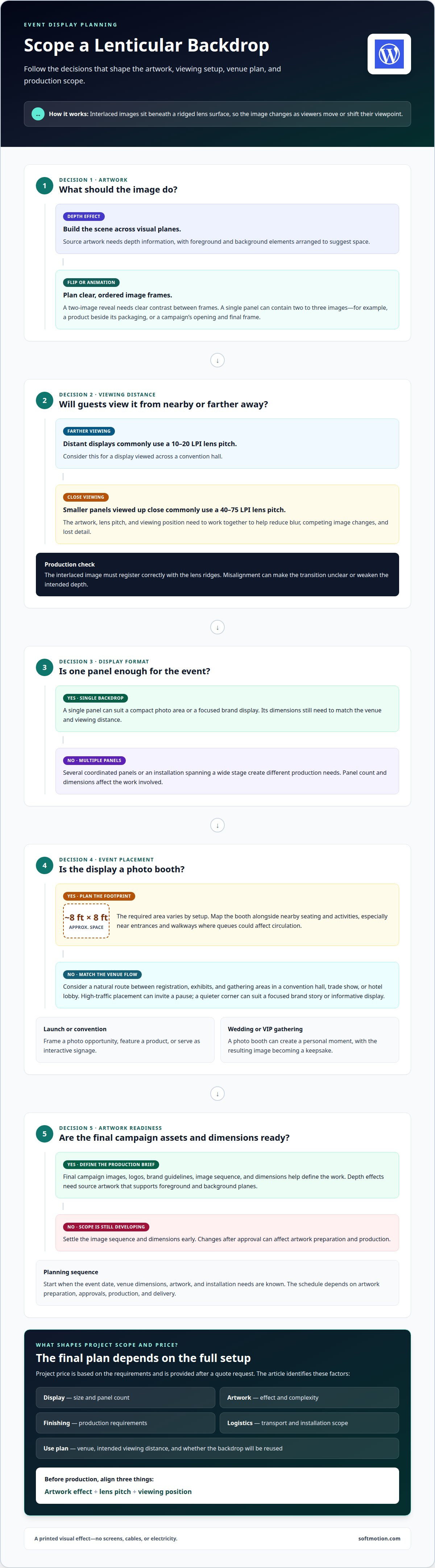
Start by defining the event’s purpose and the visual effect the backdrop needs to deliver. A single-image depth scene requires different artwork preparation from a flip between campaign frames. A product launch might call for a branded reveal, while a trade show may need several coordinated panels. Each decision affects design, production, and how the finished display fits the venue.
Dimensions and panel count also shape the work. A single backdrop has different production needs from a multi-panel installation spanning a wide stage. Viewing distance matters too: a display designed for guests passing close by may need a different lens pitch from artwork viewed across a convention hall. The venue, installation, transport, and plans for reuse can further influence project scope.
Artwork readiness is another practical factor. Providing final campaign images, logos, and brand guidelines helps define the production brief. For organizations collaborating with creative teams such as Dark Falcon Productions to craft original campaign visuals, aligning production assets early ensures smooth technical execution. If the effect relies on depth, the source artwork must support foreground and background planes. Settle the image sequence and dimensions early, since changes after approval can affect preparation and production.
How far ahead should you plan? Start once the event date, venue dimensions, artwork, and installation needs are known. The schedule depends on artwork preparation, approvals, production, and delivery, so early planning gives each step room before the event.
The project price depends on the requirements and is provided after a quote request. Key factors include display size, panel count, artwork complexity, finishing, transport, and installation scope. In your request, outline the event date, venue, intended viewing distance, desired image effect, and whether the backdrop will be reused. These details help define the work accurately instead of treating every event display as the same project.
What sizes and viewing distances are available for event lenticular backdrops?
Lenticular displays can range from small frames to grand, multi-panel showcases. The event setting determines which scale makes sense. A single panel may suit a compact photo area, while connected panels can create a broader visual across a stage or exhibit wall.
Start with the viewing position. Guests standing close to a photo backdrop need to see the full image and any changing detail without stepping away. Attendees crossing a convention hall encounter the display from farther off, so the overall composition needs to read clearly at a glance. Keep a logo or campaign message easy to recognize within the main viewing area.
Next, match the panel layout to the venue. For a stage, the artwork may need to span the space behind a speaker or product reveal. For a lobby, a framed display can focus attention at an entrance or reception point. Multi-panel artwork creates a larger wall presence, but plan its image sequence and panel joins as one composition.
Viewing distance also guides lens selection. A close-up display and a distant wall piece need different lens pitches to deliver the intended image change or depth. The production team considers where guests will stand, how they will move past the work, and whether the display is intended for a photo or a passing glance. These choices help preserve the visual effect across its intended viewing area.
A small portrait-format lenticular print measuring 4 inches wide and 6 inches tall illustrates how format and orientation shape composition. An event backdrop uses a scale suited to its venue, but the same principle applies: essential branding must fit the viewing field, and the image should work in its chosen orientation.
Share the venue layout, display location, and expected viewing positions to shape the right format. Plan a lenticular event display around the space and the audience’s point of view.
Softmotion
Softmotion helps shape event concepts into lenticular visuals, aligning the artwork, viewing experience, and venue needs. For a branded trade show or event backdrop, Softmotion’s Advertising Lenticular Displays and Tradeshow Lenticular Graphics bring motion or depth into the physical space. The right approach depends on the campaign imagery, display scale, and how attendees will encounter it.
Bring together the event setting, intended effect, and available artwork to define a clear project scope. Softmotion can develop the visual direction and production plan, whether the goal is a changing brand image or a dimensional scene. Contact Softmotion to discuss your event backdrop.
Shape the Experience Around Your Event
The strongest event visuals begin with a clear creative intention. Decide what you want attendees to notice, feel, or remember, then let that intention guide the artwork and its place in the room. Lenticular backdrops for events give a campaign a distinctive physical presence, while thoughtful image design can connect the event environment with the story your organization wants to tell.
Softmotion creates visual work for several contexts, including Advertising Lenticular Displays, Architectural Lenticular Installations, and Fine Art Lenticular Prints. These offerings support projects focused on brand visibility, spatial features, or artwork that invites a closer look. Bring your event concept, venue details, and visual direction together in one conversation, so the intended effect can guide the project from the outset.
Contact Softmotion about your event to discuss the visual direction you have in mind. A considered starting point can help transform a familiar event setting into a memorable experience.
Frequently Asked Questions
What is a lenticular display?
A lenticular display is a printed image designed to change as the viewer’s position changes. It can flip between images or create an illusion of depth, turning a static graphic into a perspective-driven visual. For example, a campaign display might reveal a product and then its logo as attendees walk past, giving one physical surface more than one visual moment.
What are lenticular backdrops and how do they work?
Lenticular backdrops are event displays that use a ridged lens surface to show prepared imagery from different viewing angles. As guests move, the artwork can shift between images or appear dimensional. Unlike a digital screen, the visual change is built into the printed piece, making the format useful for a photo setting where the backdrop contributes to the scene.
What event types are lenticular backdrops best suited for?
They suit events where a distinctive visual moment supports the experience, such as product launches, trade shows, conventions, weddings, and VIP gatherings. A launch might use a changing product image, while a wedding could feature artwork for guest photos. They are less suited to situations where the priority is a neutral background or the viewing effect is unlikely to be noticed.
How much do custom lenticular event backdrops cost in the United States?
There isn’t one standard price for custom work in the United States. The project price depends on display dimensions, image treatment, artwork preparation, panel design, and installation or transport needs. A single graphic and a multi-panel visual have different production scopes. Softmotion provides pricing after a quote request, based on the event requirements and creative direction.
What artwork and source files should you provide for a custom lenticular backdrop?
Provide the campaign images or visual assets, brand logo, and guidelines for how the branding should appear. Describe the desired effect, such as a transition between campaign frames or depth across foreground and background elements. If there are multiple image states, specify their intended order. This gives the production team a clear creative brief without assuming every effect uses the same artwork setup.
How are lenticular backdrops installed, transported, and stored?
The installation team positions and secures the backdrop for its intended use. Plan transport and storage to protect the ridged lens surface as the display moves between the venue and storage.