
Lenticular Art for Retail: Designing for Movement
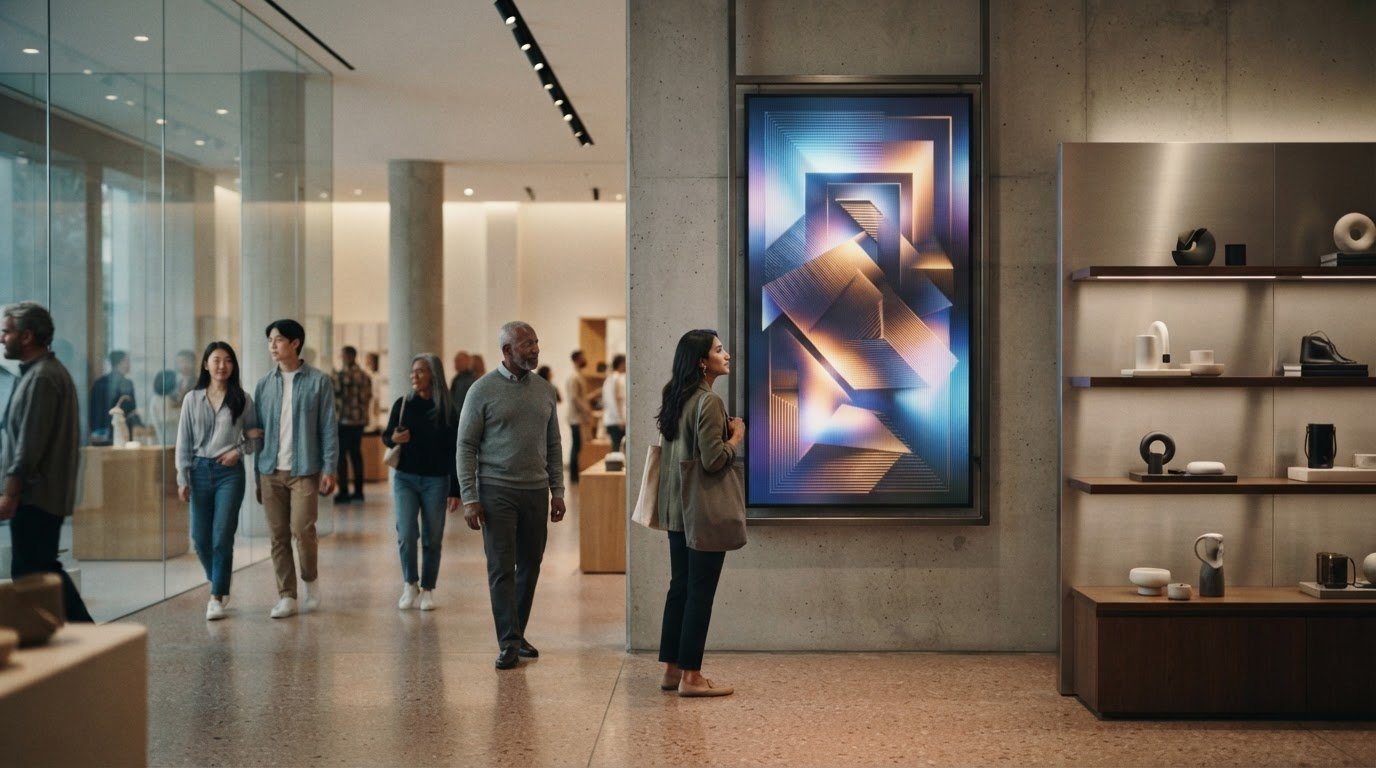
What if a retail display could catch a shopper’s eye without pulling attention away from the product? Movement can invite a second look, but a bold visual still needs to serve the brand and the moment. Thoughtfully planned lenticular art for retail environments turns a passing glance into a purposeful experience, with motion and depth designed around how shoppers move through a space.
The difference lies in the details. A subtle shift may suit a product display, while a more dramatic transformation can help define a feature wall or store entrance. The key is to choose an effect and placement that reinforce a clear message, suit the retail setting, and hold attention without overwhelming the merchandise.
This article explains how a custom project moves from creative concept to sampling, production, and installation. Softmotion brings experience across advertising and architectural environments to this process. Founded in 1997, the company has delivered more than 1,000 projects worldwide, connecting creative intent with practical execution to make retail spaces feel more alive.
Key Takeaways
- Use lenticular art for retail environments to capture attention while keeping the product and message central.
- Match motion, image transitions, or depth to the communication goal, rather than choosing an effect for impact alone.
- Compare storefront, point-of-purchase, and interior placements based on how shoppers approach and view the display.
- Build a project brief around the audience, message, viewing direction, placement, and surrounding design.
- Use sampling, production, and installation to turn a retail concept into a cohesive physical experience.
Why Lenticular Art Belongs in a Retail Environment
Retail has a demanding visual rhythm. Shoppers pass windows, displays, signs, and merchandise while deciding where to look next, so a message often has only a moment to register. Lenticular art for retail environments gives a static surface a changing quality: as the viewing angle shifts, an image can appear to move, transition to another image, or reveal simulated depth. It can invite a closer look without a screen or an immediate stop.
That moment of discovery works best when it has a clear purpose. A changing image might reveal a product detail, show two stages of a design, or make a brand story feel spatial. The technique, explained in Lenticular printing, uses an image and a lens surface to create changes with the viewer’s angle. In a store, the question is not simply whether to add movement, but what that movement should help a shopper notice.
What can lenticular art contribute to a store?
Different effects support different communication goals. Motion can suggest energy or demonstrate a product in use. An image transition can compare details, reveal a new color or configuration, or shift from an invitation to a supporting message. Simulated depth can give a hero image presence, making a product or brand scene feel layered rather than flat.
Keep the visual hierarchy deliberate. The lenticular element should lead the eye toward the merchandise or message, not compete with it. A single, legible transformation is often more useful than several details shifting at once, especially where shoppers are moving quickly. Treat the effect as part of the communication, not decoration added after the message is settled.
Where can lenticular visuals fit along the shopper journey?
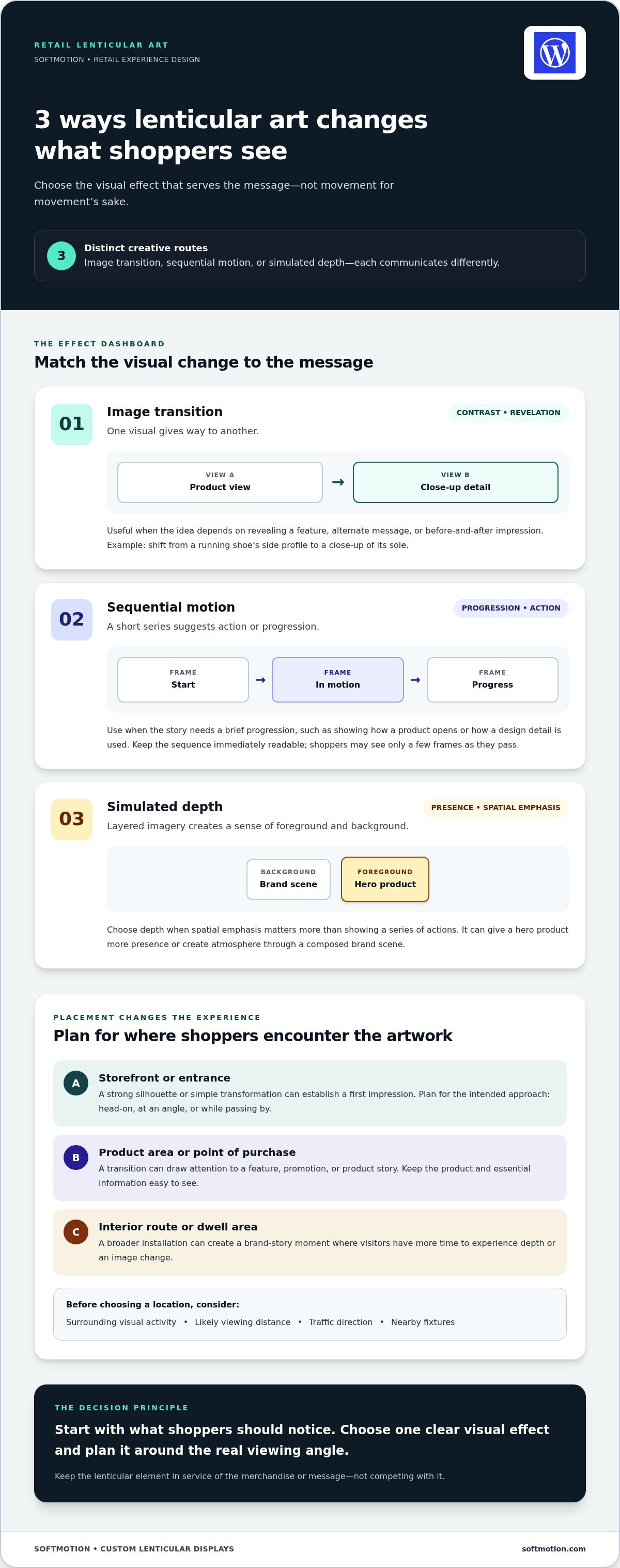
At a storefront or near an entrance, a strong silhouette or simple transformation can establish a first impression for people approaching from a particular direction. Plan around the actual sightline: will shoppers see the work head-on, at an angle, or while passing by? A window-facing installation may be viewed from outside as well as inside, so design its message for the intended approach.
Further into the store, product areas and point-of-purchase displays can use a transition to draw attention to a specific feature, promotion, or product story. Place the visual where shoppers naturally pause or compare items, while keeping the product and essential information easy to see. A broader interior installation can create a brand-story moment along a main route or in a dwell area, where visitors have more time to experience depth or an image change.
Before choosing a location, consider surrounding visual activity, likely viewing distance, traffic direction, and nearby fixtures. The right placement depends on the store layout and the role the artwork needs to play. Anchored to a clear message, lenticular art can add movement to the shopper journey while keeping the retail experience coherent.
How Lenticular Effects Turn Retail Images into Motion and Depth
A lenticular effect creates a visual change or illusion of depth as the viewer’s angle shifts across a printed image. As shoppers move past the artwork or view it from different positions, the image they see can change. That relationship between angle and movement makes it important to plan for how people approach a display, not just how it looks straight on.
Three outcomes are useful to distinguish. An image transition switches between visuals, such as a package view and a close-up detail. Sequential motion presents a short series of images that suggests an action or progression. Simulated depth uses layered imagery to create a sense of foreground and background, while the artwork remains a printed surface. Each communicates differently, so choose the effect for the message rather than the novelty.
Consider a new running shoe. A transition could shift from a side profile to a close-up of its sole, drawing attention to a feature. A short sequence might show the shoe moving through a stride. For a campaign built around the shoe’s design, simulated depth could set it against a layered backdrop. These are distinct creative routes, not effects to pile onto one visual. A clear focal point helps shoppers understand what to notice.
When should a retail concept use image changes or motion?
Choose an image change when the idea depends on contrast or revelation: one view gives way to another to uncover a product feature, alternate message, or before-and-after impression. Use sequential imagery when the story needs a brief progression, such as showing how a product opens or how a design detail is used. Keep the sequence immediately readable. Shoppers may see only a few frames as they pass, so the central message should not depend on following a long visual narrative.
When is simulated 3D depth the better creative choice?
Depth can give a hero product more presence by separating it from background layers, or create atmosphere through a composed brand scene. It suits concepts where spatial emphasis matters more than showing a series of actions. The effect depends on the artwork, viewing angle, and intended scale, so large-format production brings its own design considerations. Softmotion’s large-format lenticular printing guide offers broader context for those decisions.
For lenticular art for retail environments, start with the sentence shoppers should take away, then select the effect that makes that message visible. Softmotion’s lenticular display team can develop a custom display concept that connects the creative intent to the finished work.
Choosing Retail Lenticular Art by Goal, Placement, and Viewing Distance
The right effect depends on what a shopper needs to understand, where they’ll encounter the artwork, and how much time they have to look. Start with the intended takeaway, then shape the visual around the store’s sightlines and pace. This keeps lenticular art for retail environments purposeful: the display can attract attention while giving priority to the product or message.
Which lenticular effect fits the message?
Define the shopper takeaway before selecting an effect. Choose motion when a sequence helps explain a process or change; choose an image transition to reveal a contrast or alternate view; choose simulated depth when spatial emphasis gives the subject greater presence. The best fit is the one that makes the intended message easier to grasp, not simply the one with the most noticeable transformation.
| Effect | Communication goal | Retail example |
|---|---|---|
| Motion | Suggest a brief action or progression | Show a product detail unfolding across a short sequence |
| Image transition | Reveal a contrast, feature, or alternate view | Shift between a product’s exterior and a close-up detail |
| Simulated depth | Give a subject spatial emphasis | Set a featured item apart from layered background imagery |
Placement changes how shoppers receive the message. A storefront-facing display may be seen from a distance and while approaching, so a strong central form and simple transformation can read more clearly than fine detail. At point of purchase, shoppers may be closer and already considering an item; the visual can focus on one supporting feature, as long as it doesn’t obscure the product or nearby information. A broader interior installation may tell a brand story, with room for layered imagery and a deliberate viewing position.
Consider the approach direction, too. A work viewed head-on offers a different experience from one people pass alongside or see from several directions. Think about viewing distance, available sightlines, and how quickly shoppers move through the area. Larger forms and clear contrast can hold their structure across a wider view, while small details call for a closer, less hurried encounter.
How should placement shape the design?
Assess the visual field around the installation before finalizing the artwork. Adjacent products, bright or uneven lighting, promotional graphics, and fixture edges can affect what stands out. Establish a hierarchy: one focal image, a legible supporting message, and enough visual space to distinguish the lenticular transformation from its surroundings. The kinetic advertising display guide offers a wider perspective on matching motion to display context.
Review the design from a shopper’s point of view. Approach from the main direction, note where the work first becomes visible, then check how it reads up close and from the side. This simple exercise helps align effect, scale, and placement with the experience the store is meant to create.
Planning a Retail Lenticular Installation from Concept to Site
A successful installation begins before artwork is prepared. The campaign objective, store environment, and way shoppers encounter the display all shape the creative and production decisions that follow. A clear sequence keeps the visual idea connected to its final setting, from the first brief through installation.
What should a retail lenticular project brief include?
Build the brief around the shopper and the message. Describe who the display should reach, what they should understand, and what response the concept should invite. Add the proposed location, approximate dimensions, likely viewing paths, and surrounding fixtures, products, lighting, and graphics. Include campaign imagery, product photography, brand guidance, and essential copy. This gives the creative team a shared foundation for developing lenticular art for retail environments.
Then move through the project in order:
- Set the campaign objective. Define the core message and the role the installation should play in the shopper experience.
- Document the site. Record the intended position, viewing direction, nearby visual activity, and how shoppers approach or pass the display.
- Develop the creative direction. Select the image, effect, and visual hierarchy that support the message and suit the setting.
- Review a sample or prototype. Assess how the imagery changes from different angles and whether the effect reads as intended.
- Prepare for production. Align the approved design with the project’s scale and the requirements of its final location.
- Coordinate installation. Plan how the finished work will be assembled and positioned so its viewing experience reflects the approved concept.
How do samples and installation planning reduce uncertainty?
A sample or prototype helps assess the visual direction before moving to larger production. Review it from the angles shoppers are likely to see, and consider whether the message remains clear as the image changes. This is also a useful point to refine the composition, simplify details, or adjust how the artwork relates to nearby brand elements.
Planning for the site early connects creative decisions to final assembly. The scale and position of the work, its viewing direction, and the surrounding space all inform how it should be prepared and installed. Treat these as connected steps, not separate handoffs.
Softmotion brings sampling, prototyping, production, and on-site installation together in a project pathway shaped around the concept and its setting. Founded in 1997, the company has delivered more than 1,000 projects worldwide across advertising and architectural environments. Plan a custom retail lenticular project with a team that can carry the creative direction through to the site.
Creating Custom Lenticular Art for Retail with Softmotion
A retail concept has to work in a real space, not just on a screen or in a presentation. The artwork, viewing angle, scale, and surrounding store design all shape how shoppers encounter it. Softmotion develops custom lenticular and agamograph work around a retail brief, carrying the idea from creative direction through production and installation.
Founded in 1997, Softmotion has delivered more than 1,000 projects worldwide for clients across advertising, architecture, fine art, and other fields. That experience informs a collaborative approach: clarify what the visual needs to communicate, then develop a form that belongs in its setting. The goal is a considered installation, not a striking effect without a clear role.
From retail concept to custom visual installation
Begin with the brief: the intended audience, campaign message, store location, shopper approach, and the response the work should invite. Brand assets and guidance help shape the design, while details about the space give the creative direction a practical foundation. A storefront-facing piece, for example, may need to read from an approach path, while an interior installation can be composed for a closer encounter.
Once the creative direction is established, samples and prototypes bring the concept into view before full production. They let the team assess the image and effect, consider how the work reads from relevant angles, and refine the artwork. Production and on-site installation then bring the developed direction into its intended environment. Connecting these stages helps keep the original creative purpose in view from concept to site.
Softmotion manages projects from sampling and prototyping through production and on-site installation. For retail teams, that means the project can address both the visual idea and the practical realities of placing it within the store, rather than treating the artwork as an isolated graphic.
Turn a static retail surface into a visual moment
The effect should serve the message, and the placement should suit the shopper’s path. A transition can reveal a second view, motion can support a short sequence, and simulated depth can give a subject spatial emphasis. The right choice depends on the intended takeaway, viewing direction, and how the piece relates to nearby products and graphics. Each project can be shaped around its creative brief and spatial requirements.
That is the promise of lenticular art for retail environments: a familiar surface can become an engaging visual encounter designed with the store and its audience in mind. Share your retail concept, space, and communication goal with Softmotion to discuss a retail lenticular project.
Shape the Next Moment in Your Retail Space
Start with one opportunity in the store: a threshold that needs a stronger first impression, a product area that could benefit from a fresh perspective, or a brand story that deserves a more immersive setting. Choosing a single moment gives the creative process direction. From there, shape the visual around the shopper’s path and the experience you want the space to offer.
The best lenticular art for retail environments feels intentional, not added for movement alone. Consider what shoppers should notice, how they’ll encounter the artwork, and how it can sit alongside the products and design already in place. A focused starting point makes it easier to explore a custom concept that feels distinctive while remaining true to the retail environment.
Bring your idea, space, and communication goal into the conversation to explore how they might come together in a custom installation. Discuss a custom lenticular project for your retail environment.
Frequently Asked Questions
What is lenticular art for retail environments?
Lenticular art for retail environments is custom imagery designed to change appearance or suggest depth as a viewer sees it from different angles. In a store, it can be created around a brand, product, campaign, or architectural feature. For example, a display might shift between a product’s package and a close-up of its texture. Its role is to strengthen a specific visual message, not replace essential product information.
How does lenticular art work when shoppers move past it?
As shoppers change position, the angle from which they see the image changes, revealing different visual elements. Someone walking along an aisle might see one view first, then another as they pass the piece. The experience depends on the artwork and viewing path, so a design for a corridor should account for the directions people actually travel, rather than being judged only from directly in front.
Can lenticular art be used in a retail window?
Yes, a lenticular piece can be designed for a retail window with the intended viewing side and approach in mind. A window viewed by people outside may call for a bold, quickly understood image, while a piece experienced from inside can support a closer look. Consider reflections, nearby window graphics, and whether the message needs to read from one main direction or several. These factors help guide the composition.
Which is better for retail, motion or 3D lenticular art?
Neither is universally better. Motion is useful when the message benefits from a sequence, such as showing a product opening or revealing a change. Simulated 3D depth suits an image that needs foreground emphasis or a stronger sense of space, such as a featured item against a layered scene. Start with the shopper’s takeaway, then choose the effect that communicates it clearly within the available viewing time.
How do you plan a lenticular installation for a store?
Start by deciding what the installation should communicate and where shoppers will encounter it. Map the location, approach directions, approximate viewing distance, nearby fixtures, and competing graphics. Then align the artwork’s scale and visual detail with those conditions, and plan how it will be assembled in the space. Reviewing the concept from likely shopper viewpoints can reveal whether the image reads clearly before the design advances.
Can lenticular art be customized to a retail brand?
Yes. Custom artwork can be developed around a brand’s visual identity and the role the display needs to play. A retailer might use approved product photography, recognizable packaging, brand colors, or a campaign theme as creative inputs. The effect and composition can then support that material, whether the aim is to emphasize a product feature, create a visual transition, or bring a brand story into the physical store.
What should a retailer prepare before starting a lenticular art project?
Prepare a concise project brief with the target audience, main message, proposed location, and the response you want the artwork to invite. Gather brand guidelines, approved images, product details, and any required copy. Photos or a simple plan of the space can help describe sightlines, surrounding design, and shopper routes. Even an early concept is useful: it gives the creative discussion a clear starting point and keeps decisions grounded in the store.