
Large Format Lenticular for Commercial Buildings: From Static Surface to Spatial Experience
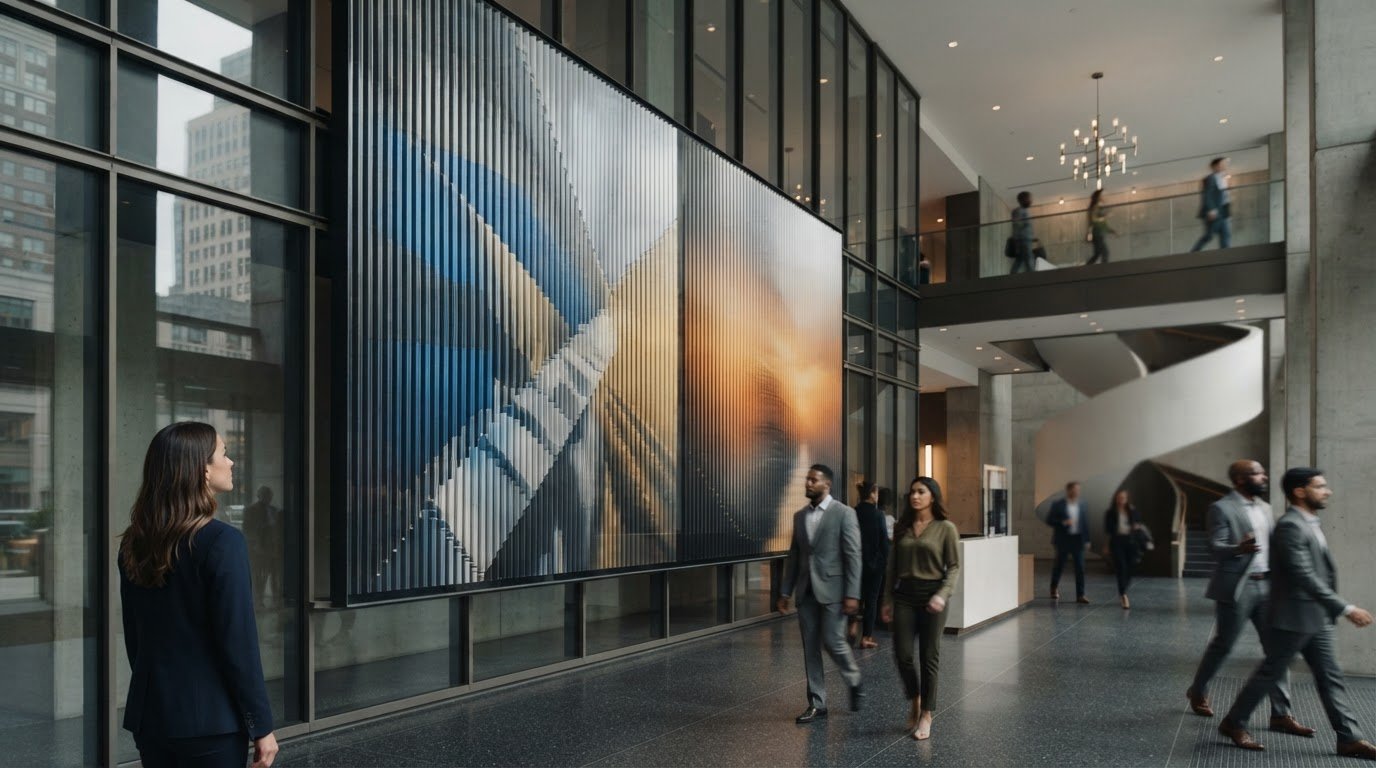
What if a building’s most memorable visual feature changed as people moved past it? Large format lenticular for commercial buildings turns a static surface into a spatial experience, shifting image or perspective with the viewer’s position. But scale alone doesn’t make the effect work. The design needs to account for how people approach, pass, and pause in the space.
A successful installation starts with a creative idea and a clear understanding of its setting. Viewing distance, sightlines, lighting, and audience movement help determine which visual effect will read well in the real environment. The concept should fit the architecture, and the production and installation plan should account for the site.
This article explains how lenticular imagery changes with viewpoint, which site and audience factors guide the design, and how a custom project can move from brief and samples to fabrication and on-site assembly. Founded in 1997, Softmotion has delivered more than 1,000 projects worldwide, bringing artistic vision and practical project guidance to work that transforms a surface into an experience.
Key Takeaways
- Discover how large format lenticular for commercial buildings can turn a fixed surface into an image that shifts with the viewer’s position.
- Match the visual approach to the space’s purpose, audience, and typical viewing pattern.
- Use viewer routes, viewing distance, and image orientation to shape an effect that reads clearly in the environment.
- Prepare a focused project brief with the location, dimensions, audience, concept, viewing routes, and relevant site images.
- See how collaboration across concept development, samples, production, and installation brings an architectural lenticular artwork from idea to site.
What Large Format Lenticular Adds to a Commercial Building
A wall can do more than carry a fixed image. With large format lenticular for commercial buildings, a surface can shift visually as people move through the space, inviting them to notice, look again, or discover another part of a story.
Definition: Large format lenticular is a printed visual designed so the image or perspective perceived by a viewer changes according to their position. A lens structure over interlaced imagery creates the effect. This overview of lenticular printing technology explains how the approach can create image changes and simulated depth.
What makes a building-scale lenticular installation different?
At building scale, the image is part of an environment, not an isolated artwork. Its proportions relate to the architecture, while entrances, corridors, and open areas shape where people encounter it and what they can see. A concept that works at close range may read differently across a lobby, so the setting and audience need to inform the design.
What can a lenticular visual communicate?
Different visual approaches support different storytelling goals. Choose based on the idea and how people will encounter the work at the site.
- Image transition: Shift between two or more views to reveal a change, contrast, or transformation.
- Sequential storytelling: Present visual stages that suggest a progression, such as a process or a narrative unfolding as someone moves.
- Simulated depth: Create a sense of dimension within the printed image, adding visual depth without changing the physical space.
Each approach can contribute to the character of a commercial setting, but motion alone isn’t the goal. A considered visual gives viewers a reason to engage. The building’s layout and viewing conditions shape how that experience unfolds.
How Viewer Movement Shapes Commercial-Building Lenticular
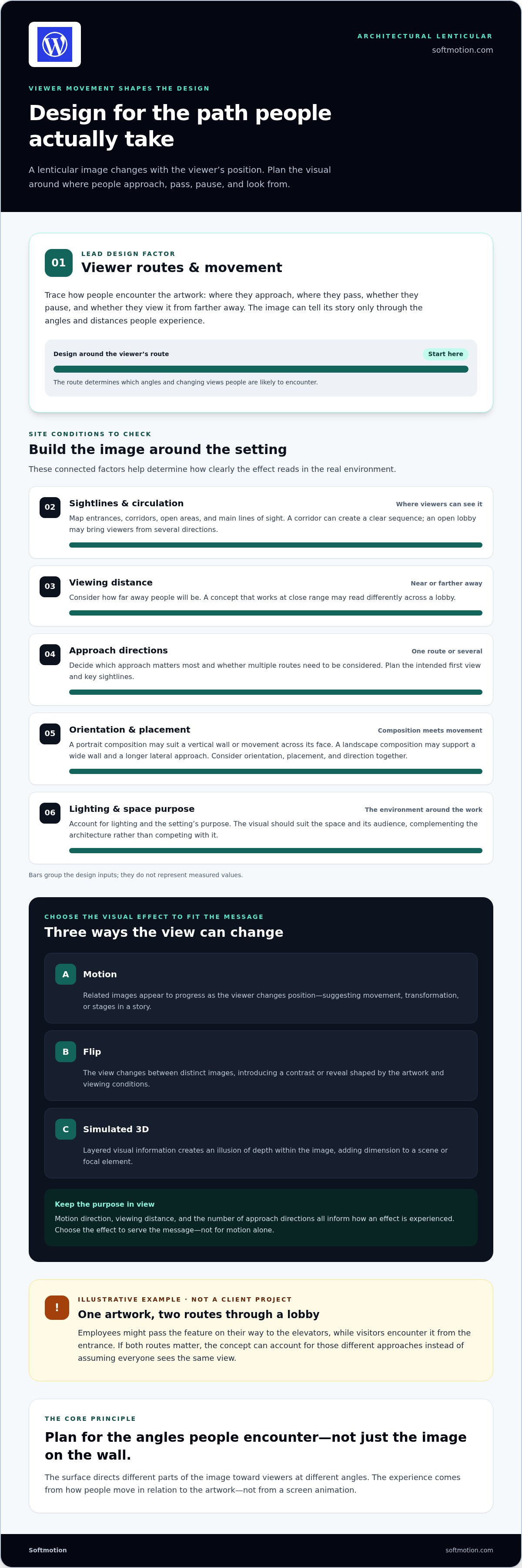
A lenticular image doesn’t change because it’s powered or animated on a screen. Its surface directs different parts of the image toward viewers at different angles, so a person walking past may see one view give way to another. The experience depends on how people move in relation to the artwork, not simply on the image itself.
Design the visual around likely viewing paths. The image can tell its story only through the angles and distances people encounter as they move.
How do sightlines and circulation affect the image?
Trace the audience’s likely route: where people approach, where they pass, and whether they’re likely to pause or view the artwork from farther away. A straight corridor may create a clear sequence of changing views as people walk by. In an open lobby, viewers might approach from several directions, making the intended first view and the main sightlines important parts of the creative brief.
Orientation matters, too. A portrait composition may suit a vertical wall or a route where viewers move across its face. A landscape composition may better support a wide wall and a longer lateral approach. These are design considerations, not fixed rules. Consider image orientation, placement, and direction of movement together so the change reads as intended from the positions that matter most.
Illustrative example, not a client project: Imagine a lenticular feature beside the main path through a workplace lobby. Employees might see it while walking toward the elevators, while visitors encounter it from the entrance. If both routes matter, the concept can account for those different approaches rather than assuming everyone sees the artwork from the same spot.
How do motion, flip, and 3D effects differ in a building?
Choose an effect to serve the message. Each creates a different kind of visual encounter:
- Motion: A sequence of related images appears to progress as the viewer changes position. It can suggest movement, transformation, or stages in a story.
- Flip: The view changes between distinct images. This can introduce a contrast or reveal, with the transition shaped by the artwork and viewing conditions.
- Simulated 3D: Layered visual information creates an illusion of depth within the image. It can lend a sense of dimension to a scene or focal element.
Movement direction, viewing distance, and the number of approach directions all inform how these effects are experienced. For large format lenticular for commercial buildings, planning for those conditions connects the visual idea to the building’s circulation. See how architectural lenticular installations can bring the relationship between image and space into a project.
Choosing a Lenticular Approach for Different Commercial Building Spaces
The right lenticular concept depends on what a space needs to do and how people use it. A reception area may invite visitors to pause, while a corridor is experienced in motion. Consider the audience, approach routes, viewing distance, and architectural context together. Then choose an effect that supports the building’s purpose rather than competing with it.
Which building spaces suit a changing visual story?
Lobbies and reception areas often have several approach directions and moments when visitors can stop to look. Workplace interiors may be seen repeatedly by employees moving between destinations. Visitor environments can use a visual to introduce a place or its story, while public-facing commercial spaces need to connect their message with passersby and the surrounding architecture. Each setting calls for a different viewing experience.
| Setting | Likely viewing pattern | Communication goal | Potential effect |
|---|---|---|---|
| Corporate lobby or reception | Visitors approach from different directions and may pause | Welcome people or express the organization’s identity | A transition between complementary views or a depth effect that rewards a closer look |
| Workplace corridor | Employees encounter the visual while walking past | Share a short message or create a moment of discovery along a routine route | A sequence that unfolds as viewers move through the space |
| Visitor environment | People may gather, pause, and view from varied positions | Introduce a story, place, or idea | A considered image change or sequence connected to the narrative |
| Public-facing commercial space | Viewers may pass at different distances and angles | Make a visual statement that relates to the building and its audience | A transition or simulated depth, shaped around the main sightlines |
How should the effect serve the building’s purpose?
Start with the message. A sequential visual can support a story with stages or a clear progression. A changing image can create a reveal, contrast, or transition. Simulated depth can add dimensionality when it strengthens the concept and fits the intended viewing conditions. None is automatically the best choice; the right approach depends on the space, audience, and desired experience.
For exterior applications, the architectural context adds another layer to the design decision. This architectural lenticular installation guide provides façade-specific context. For large format lenticular for commercial buildings, aligning purpose, circulation, and effect helps the visual feel integrated with the place, not simply added to it.
Planning a Commercial-Building Lenticular Project from Brief to Site
A building-scale installation is a coordinated project, not simply an image enlarged for a wall. For large format lenticular for commercial buildings, the design intent, site conditions, production decisions, and installation plan need to connect from the start. A clear brief gives architects, clients, and other stakeholders a shared basis for those decisions.
What information helps shape the initial brief?
Begin with the installation’s purpose and location. Gather the details that help the creative and production teams understand both the intended experience and the physical setting:
- Location and dimensions: Identify the intended surface and its approximate width and height.
- Audience and goal: Describe who will encounter the work and what it should communicate or contribute to the space.
- Viewing routes: Note how people approach, pass, pause, and view the surface, including likely directions and distances.
- Concept: Share the core story, imagery, or visual idea, along with any preferred type of change or depth effect.
- Site references: Provide available plans, photographs, and relevant context about the surrounding environment.
These inputs make early creative discussions more specific. They can also identify where stakeholders need to align on the audience experience, the surface’s relationship to the architecture, and practical conditions at the site.
How do samples and prototypes support project decisions?
Once the direction is defined, samples let stakeholders review the visual approach before full-scale production. They make the lenticular effect tangible, helping the team assess how the imagery shifts and whether the concept supports the intended experience. Prototyping can further develop the idea and inform project-specific choices before production.
Technical, material, finishing, and fixing requirements depend on the project and its site conditions. Addressing them during planning connects the creative concept with fabrication and on-site assembly, rather than treating installation as an afterthought. For more on this development stage, see the custom lenticular prototyping guide.
A practical sequence is to define the purpose and site, gather the brief inputs, develop the visual concept, review samples and prototypes, finalize production decisions, and coordinate production and installation. Tailor each decision to the project.
Learn how Softmotion supports projects from early development through installation through its lenticular project capabilities.
From Commercial-Building Concept to Installed Lenticular Artwork with Softmotion
A successful building installation brings two perspectives together: the story the artwork should tell and the realities of the place where people will experience it. Softmotion creates custom lenticular installations for architectural and corporate environments, working with architects, corporate clients, and building stakeholders. The process connects early visual direction with the artwork’s on-site assembly.
What does end-to-end project collaboration involve?
The building context informs the creative concept from the beginning. Location, dimensions, audience, viewing routes, and available site information help shape the approach, while the intended story guides the choice of imagery and visual effect. These decisions develop together, rather than treating the artwork as an image to fit into a space later.
Project work can progress through a considered sequence:
- Samples: Review the visual direction and experience the lenticular effect.
- Prototyping: Develop the concept and inform project-specific decisions.
- Custom production: Bring the agreed visual direction into full production, with details tailored to the project.
- On-site assembly: Coordinate the final stage in relation to the installation setting.
Throughout the process, the creative intent and site requirements remain connected. Technical, material, finishing, and fixing decisions are specific to the project, so coordination among the people involved helps carry the concept through each stage. One approach does not fit every building.
Why does experience matter for a custom installation?
Architectural work asks a visual idea to do more than attract attention. It must relate to the building and to the people moving through it. Founded in 1997, Softmotion has delivered more than 1,000 projects worldwide, with experience across architectural and corporate work, as well as projects for artists, advertisers, and Fortune 500 corporations. That experience supports a collaborative approach grounded in visual storytelling and production.
For large format lenticular for commercial buildings, the result is more than a graphic on a surface. It’s a custom artwork whose perceived image responds to the viewer’s movement, bringing a static area of the building into a changing visual experience.
To discuss a project for your building, start a conversation about a building project.
Bring Your Building’s Visual Story to Life
A successful lenticular installation starts with how people experience the space. Viewer routes, sightlines, audience, and building purpose help determine whether a shifting image, visual sequence, or illusion of depth best serves the idea. For large format lenticular for commercial buildings, thoughtful planning connects that creative choice to the realities of the site.
From samples and prototyping through custom production and on-site assembly, Softmotion brings the stages of a building project together. Founded in 1997, the company has delivered more than 1,000 projects worldwide, working with clients to transform a visual concept into an installation shaped by its environment and audience.
Bring a changing visual experience to your commercial space. Start a conversation about your commercial-building lenticular project.
Frequently Asked Questions
What is large format lenticular printing for commercial buildings?
Large format lenticular printing for commercial buildings creates a custom visual whose perceived image changes as viewers move or view it from different angles. A lens structure over specially prepared imagery reveals different views across the surface, allowing the artwork to shift, present a sequence, or suggest depth. In a building, the design is planned around the installation’s location, architecture, audience, and intended viewing experience.
How does a lenticular wall installation change as people move past it?
A lenticular wall installation presents different parts of its image to viewers at different viewing angles. As someone walks past, their changing position can make one image transition to another or reveal stages of a visual sequence. The experience depends on the artwork and the viewer’s route, so designers consider approach direction and sightlines when developing a concept for a specific wall or space.
Can large format lenticular be used in a commercial building interior?
Yes. Architectural lenticular installations can be created for commercial interiors such as lobbies, reception areas, workplaces, and visitor environments. The concept should reflect how the space is used and how people encounter the artwork, whether they pause in front of it or see it while moving through the building. Dimensions, materials, finishing, and fixing requirements are tailored to the project and site conditions.
What is the difference between motion, flip, and 3D lenticular effects?
Motion presents a sequence that appears to progress as the viewer changes position. A flip effect shifts between distinct images, creating a visual change or reveal. Simulated 3D uses visual depth cues to make elements appear dimensional within the printed image. Each effect supports a different creative intention, so the choice depends on the message, the installation setting, and how people are expected to view it.
How do you plan viewing distance for a large lenticular installation?
Start by identifying where people will first see the installation, how close they’re likely to get, and whether they’ll view it while walking or from a standing position. Consider the main approach routes, sightlines, and any locations where viewers may pause. These site observations help shape the artwork and technical decisions. Samples and prototyping can help stakeholders assess the visual direction before full-scale production.
What information is needed to plan a commercial-building lenticular project?
A useful starting brief includes the installation location, approximate dimensions, intended audience, and main communication goal. Add a description of how people approach and pass the surface, including likely viewing directions. Available architectural plans, site photographs, and information about the surrounding environment can help connect the visual concept to the building. A clear description of the context gives early project decisions a practical foundation.
How does a custom lenticular installation go from concept to installation?
A custom lenticular installation typically moves from defining the concept and site context to reviewing samples, developing prototypes, producing the artwork, and coordinating on-site assembly. The sequence connects creative choices with project-specific production and installation requirements. Founded in 1997, Softmotion has delivered more than 1,000 projects worldwide and provides end-to-end project work from samples and prototyping through production and on-site installation.