
Large Format Lenticular Design for Art and Displays
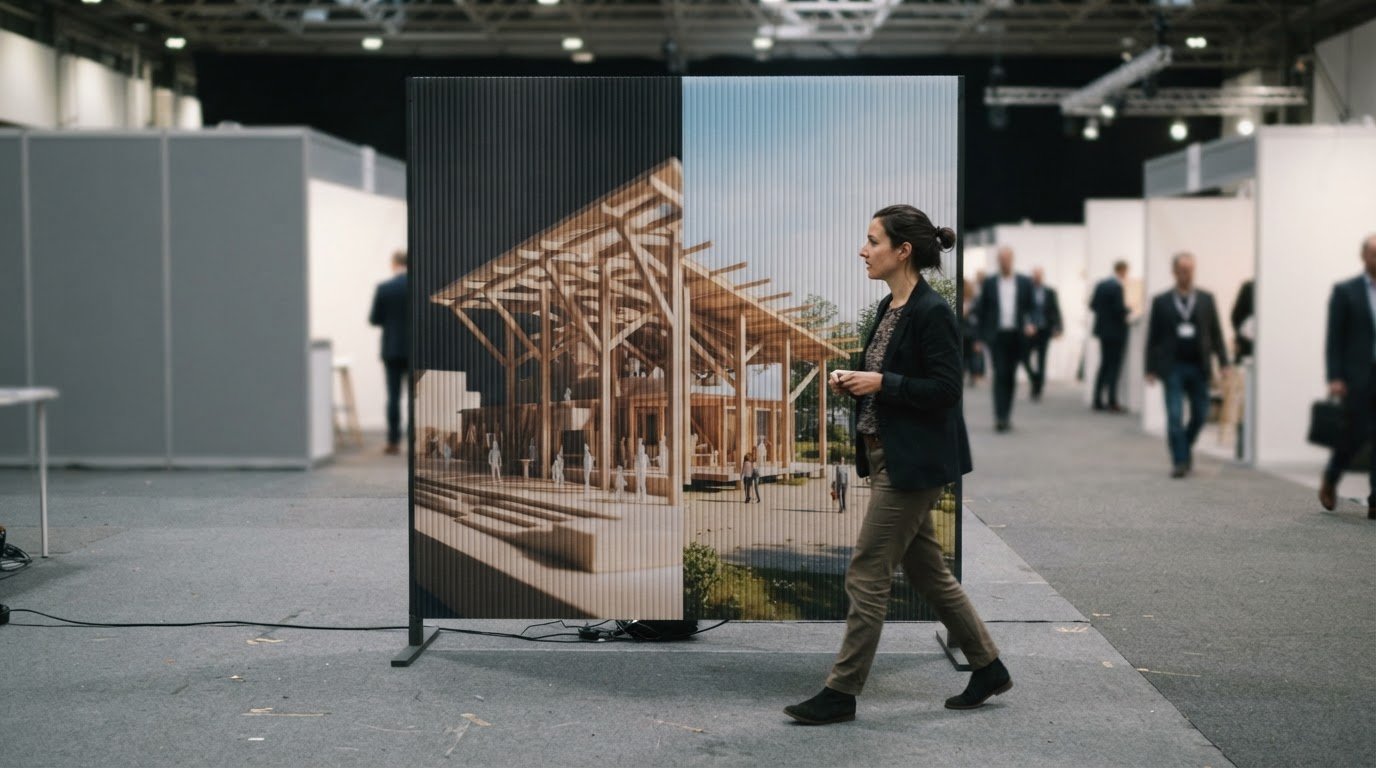
A lenticular artwork doesn’t just occupy a wall; it changes as viewers move. Large format lenticular design services combine two or more interlaced images beneath a lens sheet to create depth, motion, or image changes across a printed surface. In an art or architectural display, that effect can make a static space feel more dimensional and alive.
The transformation depends on more than scale. Viewing distance, image resolution, lens alignment, and the intended movement all affect how clearly the effect reads, particularly in a gallery, building interior, or public-facing display.
This article explains how lenticular printing works, what affects large-format dimensions and image quality, and how design choices shape fine-art and architectural installations. It also connects production decisions to the experience of seeing a work from different angles.
Key Takeaways
- Understand how lenticular lenses create depth and motion, and why the viewing angle shapes the effect.
- See how installation scale and production constraints influence the dimensions of a finished piece.
- Learn why resolution, lens pitch, and image alignment need to work together for a crisp result.
- Explore how lenticular artwork can transform gallery spaces and architectural environments into more dynamic visual experiences.
What Is Lenticular Printing?
Lenticular printing places a clear lens sheet over interlaced images, creating effects that change with the viewer’s angle. Depending on the artwork, the print can show depth, motion, or a complete image flip.
Three-Dimensional Depth Effects
A 3D lenticular effect uses a lens sheet to direct slightly different image views to each eye, suggesting depth in a flat print. The image frames are interlaced into narrow strips, then aligned with the lens ridges. As a viewer shifts position, the eyes receive changing visual information, making foreground and background appear separated. A single 2D photograph can often be processed to create a 3D lenticular print. This approach gives posters and artworks a spatial quality without changing the printed surface.
Motion and Image-Flip Effects
Motion effects show a sequence of frames as the viewer moves, while an image flip switches between distinct pictures at different viewing angles. Each lenticule bends light so that viewers see one image frame at a time. Lenticular animation commonly uses 8 to 15 frames to simulate movement; more frames can create smoother transitions, while the chosen sequence shapes the visual rhythm. A flip might shift from a product’s closed form to its open form, making the change clear in a single glance.
Zoom, Morph, and Full-Motion Effects
Zoom effects create the impression that a subject moves closer or farther away; morph effects transform one image into another through intermediate frames. Lenticular morphs can use 10 to 20 in-between frames to bridge the images. Motion sequences can also suggest fuller animation when several frames are interlaced, though the finished effect depends on the artwork and viewing movement. These options let a designer choose whether an image should change gradually, shift dramatically, or draw attention to a particular detail.
Signage and Poster Applications
Lenticular signage and posters use angle-dependent effects to make a message or image change as people pass. For displays viewed from a few feet away, lenses with 40 to 60 lenses per inch suit signage and posters. A storefront window, for example, could reveal one visual from one approach and another from a different angle. The viewing path, message, and effect should work together: a simple flip can communicate a direct change, while motion can make a campaign feel more active.
Large-format print dimensions and production challenges
Large lenticular artworks can span a gallery wall or become a focused display. Common formats include 36 by 48 inches and 48 by 96 inches, while a print can reach 4 feet by 8 feet. The right dimension depends on the viewing distance, artwork, and space available. Extra-wide designs can use tiled panels to form one cohesive image.
A lenticular print uses a clear, rigid plastic lens sheet with curved ridges over prepared artwork. For extra-wide displays, panels can be tiled; UV printing is used for large-format prints intended for outdoor use. The mounting method and finish should suit the installation surface and panel arrangement.
Conventional large-format printing presents a static image, while lenticular printing adds an angle-dependent illusion, such as apparent depth or a changing image. This can make a display more engaging, but the effect depends on coordinated artwork, lens alignment, and viewing conditions. For example, a poster designed to change as someone walks past needs a clear visual transition.
Large-format lenticular design services can bring together concept development, content gathering, storyboarding, image preparation, and proofing. Each stage links the intended effect to the final dimensions. For artists, the process can turn a sequence or layered composition into a wall-scale work; for signage, it can organize a changing message within a defined display area.
When assessing lenticular design and production, look at examples of completed work and ask how the artwork and lens alignment are reviewed before final production. Misaligned lenses or poorly prepared files can weaken the effect, so a review stage helps catch issues before the final print.
Turnaround follows the project’s production stages: concept development, artwork preparation, proofing, and fabrication. A custom 48-by-96-inch installation with tiled panels involves different preparation from a single-panel print, so those requirements shape the schedule.
For a project where artwork, scale, and installation need to work as one, explore large-format lenticular project planning.
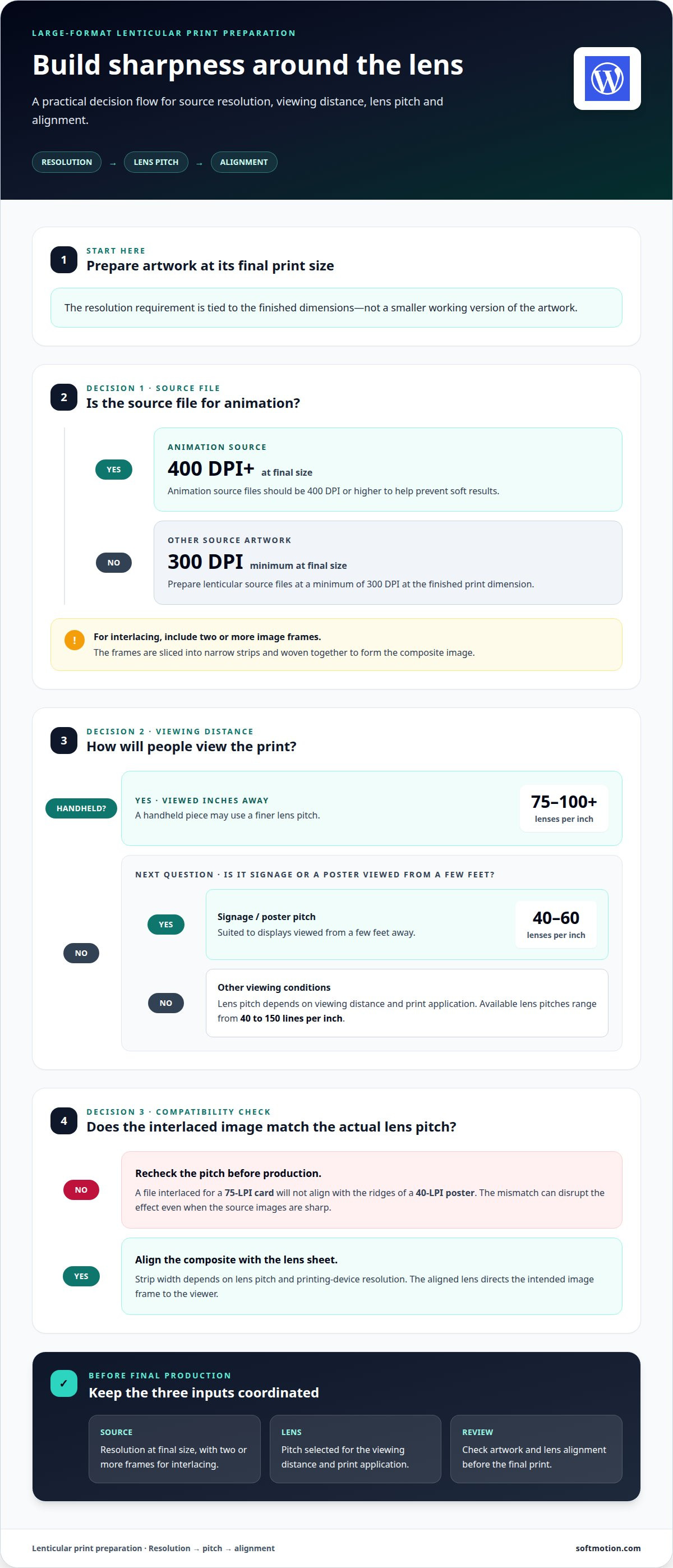
Image resolution and DPI requirements
Image quality starts with resolution at the final print dimension. Prepare lenticular source files at a minimum of 300 DPI at final size; animation source files should be 400 DPI or higher to help prevent soft results. Artwork should contain two or more image frames for interlacing. These specifications answer the essential file-preparation question; no particular file extension is needed to explain the resolution and frame requirements.
Lens pitch must match the interlaced image. Lenses can range from 40 to 150 lines per inch, and the right pitch depends on viewing distance and print application. A handheld piece viewed inches away may use 75 to 100 or more lenses per inch. A poster intended for viewing from a few feet suits a different pitch, so the image must be prepared for its intended lens.
Alignment is just as important as resolution. A file interlaced for a 75-LPI card won’t align with the ridges of a 40-LPI poster. That mismatch can disrupt the visual effect even if the source images are sharp. For large lenticular panels, production therefore has to coordinate lens pitch, output resolution, and the installation’s viewing conditions.
To prepare an interlaced image, software slices each artwork frame into narrow strips and weaves them together. Strip width depends on lens pitch and printing-device resolution. The composite image is aligned with the lens sheet, which directs the intended frame to the viewer. This turns separate images into a dynamic visual that changes with movement.
For example, a sequence intended to animate a subject across a large print needs clear source images and consistent composition across its frames. A still 3D effect also needs images prepared for the selected lens pitch. With either approach, artwork resolution, frame content, and alignment work together; increasing DPI alone can’t correct a file interlaced for the wrong lens.
Lenticular art and architectural installations
Lenticular artwork can transform a static image into a piece that changes as viewers move through a space. An artist might use one viewing angle to reveal a figure and another to uncover a contrasting pattern. The finished work invites movement around the surface, making the act of viewing part of the composition. In a gallery, placement and sightlines shape how viewers encounter each change.
In fine art, the effect should serve the idea rather than distract from it. A portrait sequence might shift expression across viewing angles, while a layered landscape can suggest distance. The choice of images, transitions, and visual rhythm determines whether a piece feels contemplative or animated. A clear concept gives each frame a role and helps the lenticular effect support the artwork’s meaning.
Architectural installations bring this visual exchange into spaces people use and pass through. A lenticular surface in a corridor, lobby, or public interior can reveal different imagery along a viewer’s route. Position, viewing direction, and surrounding architecture all influence how clearly the effects read. A display facing an approach path, for example, can reveal its image as visitors move closer instead of showing every detail at once.
Planning starts with the experience the space should create. Decide what viewers see on approach, what changes as they move, and how the imagery relates to nearby surfaces. A piece for a long passage may need a different sequence from artwork viewed mainly from one position. These decisions connect the concept to the environment and help the finished installation feel integrated, not simply attached to a wall.
Shape a visual concept for a gallery or built environment with architectural lenticular installation planning.
Softmotion
Softmotion turns lenticular concepts into large-format artworks and installations, bringing creative direction together with production. For a gallery piece, architectural environment, or display, the image sequence is shaped around the intended viewing experience, dimensions, resolution, and lens alignment.
Softmotion creates fine art lenticular prints, architectural lenticular installations, advertising displays, and tradeshow graphics. If you have a visual concept that needs to become a lenticular piece suited to its setting, Softmotion can help develop it. Start with the artwork, the space, and the effect you want viewers to experience.
Contact Softmotion to discuss your lenticular project.
Give Your Concept a Place to Move
Begin by defining the experience you want people to take away. Consider the setting, the path viewers follow, and the moment an image should shift. These choices turn a creative idea into a clear production direction, whether the work is for a gallery, architectural space, or public display.
Softmotion’s large format lenticular design services support projects ranging from Advertising Lenticular Displays to Architectural Lenticular Installations and Fine Art Lenticular Prints. Each offers a different way to bring movement and visual depth into a space. The strongest starting point is a concept shaped around its audience and environment, with the desired effect guiding the design.
Share the setting and creative direction you have in mind, and contact Softmotion about your project. A distinctive lenticular work can begin with one considered idea.
Frequently Asked Questions
How Does It Work?
Lenticular printing uses a lens sheet to show different parts of a prepared image as the viewer changes position. The artwork is designed for a specific viewing experience, such as revealing a second image as someone walks past. Production aligns the image with the lens so the intended change appears from the planned viewing angles.
Which U.S. companies offer large-format lenticular design and printing?
Softmotion provides large-format lenticular printing and visual installations for projects worldwide. Its offerings include Advertising Lenticular Displays, Architectural Lenticular Installations, and Fine Art Lenticular Prints. For a project in the United States, the right fit depends on whether the need is an artwork, an architectural feature, or a display. Softmotion can help shape the concept around its setting and intended audience.
What are typical prices for large-format lenticular printing by size and quantity?
Price depends on the project and is given after a quote request. Size, quantity, artwork preparation, effect complexity, and installation requirements can all influence the scope. A single art piece and a set of coordinated display panels involve different production needs. Defining the intended dimensions, quantity, and visual effect gives a clearer basis for estimating the work.
What lenticular effects are available, such as flip, animation, and 3D?
Available effects include image flips, motion animation, and apparent 3D depth. A flip can alternate between two distinct visuals, while animation sequences suggest movement across the surface. A depth effect gives a flat image a layered appearance. For example, an advertising display might reveal a product transformation, while an artwork could use depth to create a more spatial impression.
How do lenticular lens pitch, viewing distance, and image resolution affect results?
Lens pitch and viewing distance need to work together: close-viewed pieces generally require a finer lens than displays viewed from farther away. Image resolution affects sharpness at the finished dimensions, while alignment determines whether the image changes cleanly. A pitch chosen for one installation may not suit a different viewing position or print size.
How should a designer prepare images and separate frames for a lenticular project?
Organize the visuals into a deliberate sequence, with each frame contributing a clear change or perspective. Keep the subject’s position and composition consistent when smooth movement matters; for an image flip, make the contrast between frames intentional. A storyboard can clarify the transition before production. The frames are then prepared to match the chosen lens and final dimensions.