
Global Lenticular Display Fabrication: A Buyer’s Guide to International Projects
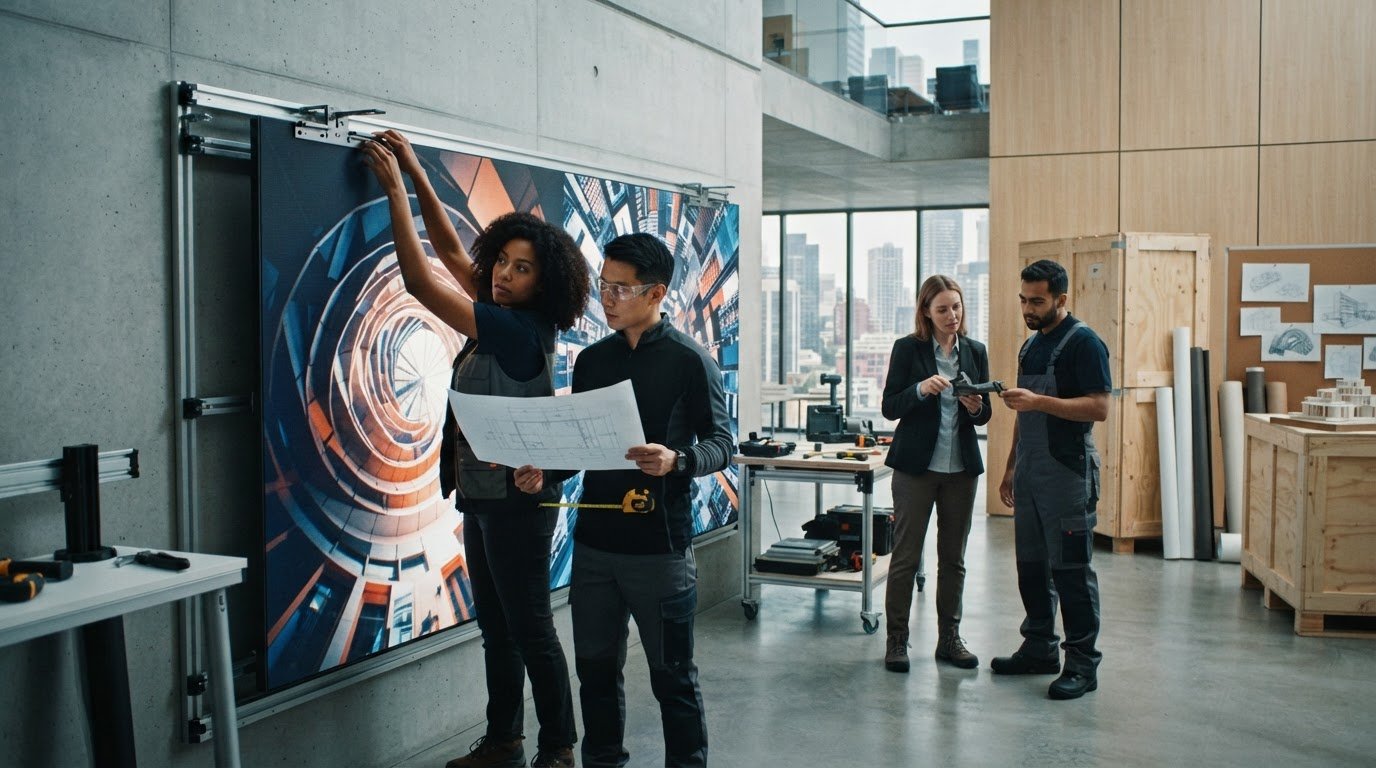
What does it take for a lenticular display to feel seamless in every location, not just look striking in a concept deck? It takes more than a compelling image. Global lenticular display fabrication connects creative direction, production decisions, and site installation, helping move a project from an early idea to a finished display with a clear plan.
If you’re weighing visual effects, technical requirements, production, and installation across locations, each decision can affect the next. This guide offers a practical framework for defining your brief, preparing artwork, assessing samples, and coordinating production and installation. You’ll also find criteria for comparing project scope and evaluating a partner. Since 1997, Softmotion has delivered more than 1,000 projects worldwide for architects, advertisers, artists, and Fortune-500 corporations, with services spanning sampling, custom production, and full-scale installations. Use the guidance here to turn an ambitious visual concept into a well-planned project, wherever it will appear.
Key Takeaways
- Define the visual effect and audience experience before developing artwork, so creative choices serve the project’s purpose.
- Plan global lenticular display fabrication as a connected sequence, from brief and design through sampling, production, and installation.
- Compare project support across design, sampling, coordination, fabrication, and installation, giving the most weight to your site needs.
- Build a practical brief with locations, dimensions, audience paths, artwork, site contacts, and approval steps to reduce avoidable friction.
- Use photographs, drawings, access details, and installation constraints to create a clearer plan for each location.
Global lenticular display fabrication: what a buyer is really commissioning
Global lenticular display fabrication coordinates the design, production, and installation of lenticular displays for projects spanning one or more locations. The buyer is commissioning more than an image: the visual concept needs to be prepared for a physical display and considered in relation to where and how people will see it. Depending on the project, the work can include concept development, artwork preparation, samples, custom fabrication, and installation planning.
A lenticular image changes as the viewer moves. The shift can suggest motion, reveal different images, or create a sense of depth, turning a static surface into an experience that responds to the viewer’s position. Unlike a conventional graphic, it can present different views from different angles. The Lenticular printing overview explains the technique and its range of effects. For a buyer, the practical question is which effect suits the display’s setting and the way people will encounter it.
What makes a lenticular display a fabrication project?
The visual effect is only one part of the result. Creative intent guides the artwork; artwork preparation adapts that idea for lenticular production; and material and display choices help present it in the intended environment. These decisions are connected. A display designed to draw attention as people pass through a corporate lobby, for example, should account for how visitors approach it, the angles from which they will see it, and how the finished piece will be presented in the space.
That’s why the fabrication conversation starts with purpose and context, not simply a file to print. A sample helps stakeholders assess the visual experience before full-scale production, while installation planning addresses how the finished work will be presented at the site. The image creates the transformation. Fabrication makes it tangible.
When does a project need global coordination?
Coordination is especially valuable when a display is planned for multiple sites or when the installation location is far from the team developing the design. The goal is to preserve the creative intent while accounting for each site’s conditions. Consistent artwork and a shared understanding of the desired effect help keep a project coherent; accurate location information helps teams plan for differences between sites.
Those differences matter. A corporate environment and a public-facing advertising installation may have distinct layouts, audiences, and viewing paths. Sites may also differ in dimensions or installation constraints. Global lenticular display fabrication doesn’t mean every display needs an identical arrangement. It means coordinating creative direction and production decisions while tailoring the finished work and installation plan to each site.
How global lenticular display fabrication moves from concept to finished work
A clear sequence helps turn a creative idea into a display suited to its setting. In global lenticular display fabrication, decisions about audience, viewing distance, movement, and site conditions shape the design before production begins. Sampling gives stakeholders a chance to review the visual direction and provide feedback before full-scale fabrication.
From creative brief to fabrication-ready design
Start by describing what the display should communicate and where people will encounter it. Note the audience, location, likely viewing paths, approximate viewing distance, and desired effect, such as motion, depth, or an image change. Separate confirmed requirements, such as a known location or display dimensions, from creative decisions that still need development. This gives the design team a useful foundation without closing off possibilities too early.
Next, develop the concept into artwork suited to the display. A design for viewers approaching from one direction may need different choices from one seen by people moving past from several angles. Share site information early and discuss how the visual effect should read from the expected viewing distance. For architectural projects, the architect’s guide to large format lenticular printing offers useful context for connecting design ambitions with display planning.
Why sampling and prototyping matter before production
A sample makes the effect easier to evaluate than a concept image alone. Review how the visual transition feels, whether the creative direction communicates the intended idea, and whether the image suits the viewing conditions. Gather feedback from creative approvers and site stakeholders, then resolve outstanding decisions before full-scale fabrication. For more on planning prototypes, explore custom lenticular prototypes at scale.
The project sequence
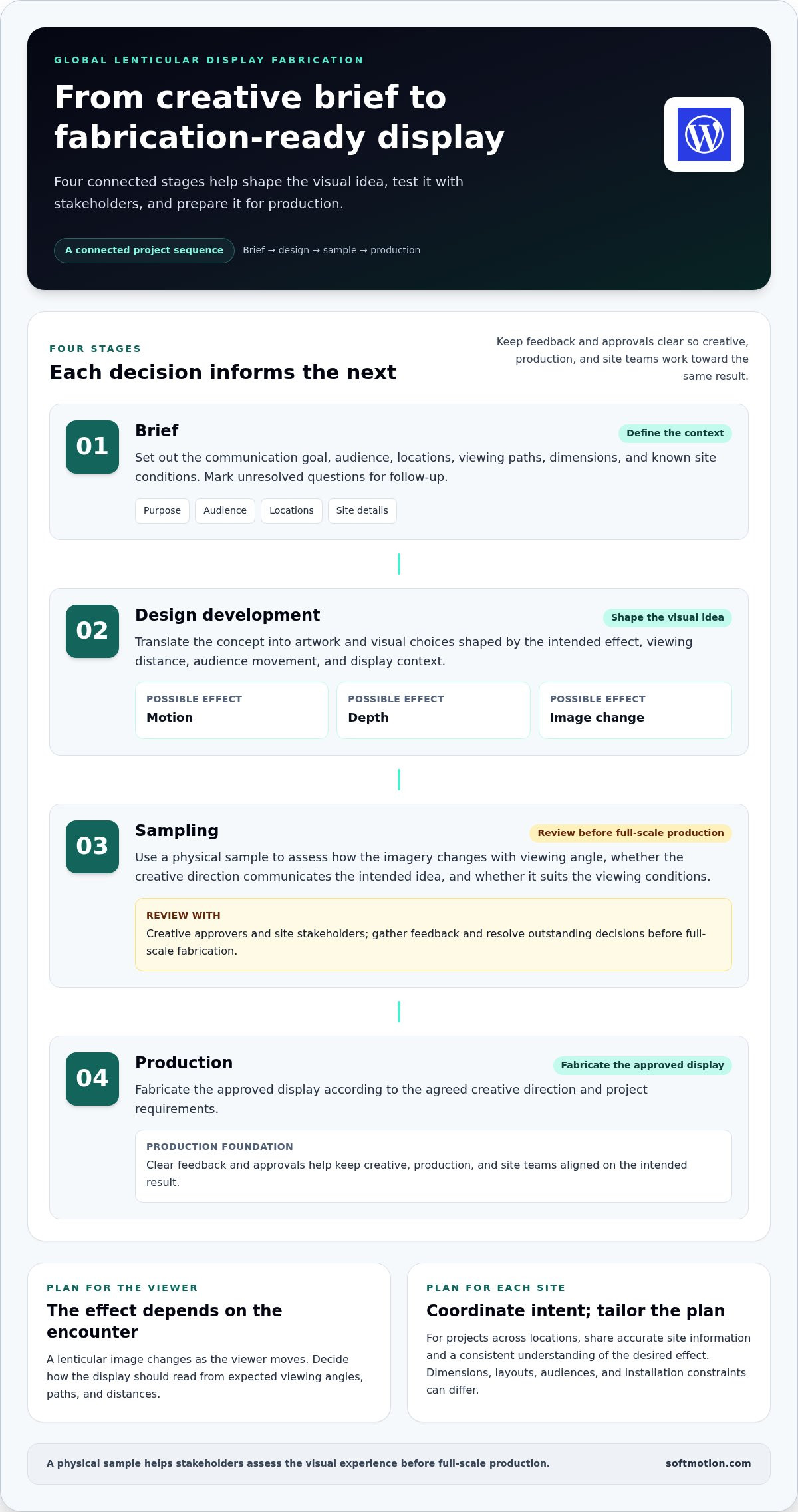
Each stage informs the next. Keep feedback and approvals clear so creative, production, and site teams work toward the same result.
- Brief: Set out the communication goal, audience, locations, viewing paths, dimensions, and known site conditions. Mark unresolved questions for follow-up.
- Design development: Translate the concept into artwork and visual choices shaped by the intended effect, viewing distance, audience movement, and display context.
- Sampling: Review a physical sample to see how the imagery changes with viewing angle and gather feedback before full-scale production.
- Production: Fabricate the approved display according to the agreed creative direction and project requirements.
- Installation: Plan the final placement using the information available for each site, coordinating the work so the display can be presented as intended.
Installation details may vary by location; the aim is a coherent visual result, not necessarily identical arrangements everywhere. A thoughtful sequence keeps the creative idea connected to practical decisions. Plan your lenticular project with the brief, site context, and desired viewer experience in view from the start.
How to evaluate global lenticular display fabrication for your project
A useful comparison looks beyond the finished image. Global lenticular display fabrication can involve creative development, samples, production, and site installation, so assess how well the process fits the work your project requires. The right fit comes from alignment between the creative goal, production scope, and conditions at each site, not broad claims.
Which fabrication capabilities should the brief cover?
Begin with the application: advertising, architecture, fine art, corporate environments, or tradeshow graphics. Then define the intended scale, display context, audience movement, and project stages. These details help distinguish a project that mainly needs artwork and fabrication from one that also calls for samples and installation planning. Softmotion works across these settings and shapes project scope around the application and site requirements.
Use the comparison below to organize discussions around evidence and fit. Give each criterion more or less weight according to your brief and site needs.
| Criterion | What to assess | Why it matters |
|---|---|---|
| Design support | How creative intent is connected to display context and artwork preparation. | Helps preserve the intended visual experience through production. |
| Sampling | Whether a physical sample can be reviewed as part of the project process. | Lets stakeholders assess the effect before full-scale fabrication. |
| Fabrication scope | How production is planned around the application, scale, and display requirements. | Keeps the proposed work aligned with the actual project. |
| Project coordination | How design, production, approvals, and site information connect. | Clarifies responsibilities and decision points across locations. |
| Installation | How the installation stage is considered in relation to site needs. | Brings the finished display into its intended setting. |
How should buyers assess project evidence and collaboration?
Look for experience relevant to your application, a clearly explained process, and a considered approach to sampling and production coordination. Softmotion specializes in large-format lenticular printing and immersive visual installations. Since 1997, the company has delivered more than 1,000 projects worldwide for architects, advertisers, artists, and Fortune-500 corporations. For advertising-led work, the guide to kinetic advertising displays explores how motion can support a campaign’s visual impact.
Project fit depends on aligning creative intent, production scope, and site requirements. Weigh each criterion against your needs: a multi-site architectural installation may call for greater emphasis on site coordination, while a campaign display may prioritize the visual effect and sample review. Compare the process and relevant project experience rather than unsupported superlatives. A clear explanation of how decisions move from brief to delivery is more useful than a promise that every project is effortless.
As you refine the scope, connect the desired effect to the locations, display context, and stages your team needs. Discuss your lenticular project scope as a coordinated path from creative direction through fabrication and installation planning.
Prepare a global lenticular display brief that reduces project friction
A well-organized brief gives creative and production teams a shared starting point. For global lenticular display fabrication, it should explain what the display needs to achieve, where it will appear, and which decisions are settled. Gather site information early; the visual treatment can develop through design and sample review.
What information should a global project brief include?
Capture the essentials for every location, even if some details are still being confirmed. A checklist helps reveal gaps early and makes site conditions easier to compare across the project.
- Objectives and audience: State the display’s purpose, who it should reach, and what you want viewers to notice or experience.
- Locations and context: List each site and describe where the display will sit, such as a lobby, public-facing space, or tradeshow environment.
- Dimensions and drawings: Provide known measurements, plans, elevations, or other drawings that show the display area and its surroundings.
- Artwork and visual intent: Share available imagery or design files, along with the intended effect, such as motion, depth, or an image change. Mark concepts that are still open.
- Audience paths: Describe how people approach, pass, or gather near the display. Note likely viewing directions and distance where known.
- Site contacts and constraints: Identify a contact for each location and record access details, installation limitations, and relevant site conditions.
- Approvals: Name the creative decision-maker, identify other reviewers, and outline how design and sample feedback will be approved.
Photographs show the real environment; drawings provide dimensions and spatial relationships. Access details and installation constraints help teams plan the work for each site. If some information isn’t available yet, label it as pending rather than treating an assumption as a confirmed requirement.
How can teams coordinate locations and approvals?
Keep a shared project record for location details, artwork versions, sample feedback, and approvals. Give each site a clear identifier so comments and files stay connected to the right display. Assign decision-makers for creative direction and local requirements, then record approval status and outstanding questions in one place. This creates a traceable path from concept review to the version approved for production.
Separate what’s known now from what will be refined later. At the outset, prioritize the project’s objectives, locations, available measurements, audience paths, contacts, and approval structure. Creative details can evolve during design and sampling. Shipping, customs, access, and installation conditions are also project-specific planning items. Capture them early and verify the relevant details for each destination rather than assuming one arrangement fits all.
Bring these details together to give the project team a clearer basis for planning. Discuss your lenticular display project with Softmotion and shape a scope around your creative goals and site requirements.
Why Softmotion is a partner for global lenticular display fabrication
A compelling lenticular concept needs creative vision and production discipline in equal measure. Softmotion connects those needs, working from early samples through custom production and full-scale installation. For global lenticular display fabrication, this end-to-end approach keeps the visual idea in view as project requirements, locations, and delivery needs take shape.
A coordinated approach from samples to installation
Each stage informs the next. Early samples let stakeholders explore the visual direction, while design development translates the approved creative intent into artwork for the project. Custom production brings that work into physical form, and installation planning considers how the finished display will be presented in its intended setting. The process is collaborative: project decisions are shaped around the goals and conditions at hand, rather than assuming every display follows the same path.
That connection matters across locations. Teams need a shared understanding of what the lenticular experience should communicate, while each site may bring its own context and delivery requirements. A coordinated engagement keeps creative direction, production, and installation planning connected without assuming that every location needs identical arrangements. The project scope can reflect what the work is meant to do and where it will appear.
Experience across industries and visual environments
Founded in 1997, Softmotion has delivered more than 1,000 projects worldwide. Its work spans architects, advertisers, artists, and Fortune-500 corporations, in project contexts that call for different approaches to audience, space, and visual impact. An architectural installation, for example, relates to its environment differently from advertising designed to catch attention in a public-facing setting. Fine art and corporate projects bring their own creative priorities.
This range provides useful context, but applications are not interchangeable. The creative goal, locations, and delivery requirements guide how each project is approached. Sharing these details early establishes a practical foundation for collaboration, whether the project begins with a defined concept or an idea still taking shape.
To begin, bring together what you know about the visual concept, intended audience, locations, and desired effect. Any open details can become part of the design conversation. A clear first discussion connects the creative ambition to the sampling, production, and installation planning the project calls for.
Start a conversation about your global display project and explore the next steps from initial concept to finished installation.
Give your display vision a clear next step
A global display project is easier to advance when its creative ambition has a practical starting point. Consider what you want people to experience, what your team knows about the locations, and which decisions still need shaping. Those points create a foundation for discussing global lenticular display fabrication, from visual direction to the project’s specific requirements.
You don’t need every detail resolved before the conversation begins. A concept, an idea of where the display will appear, and the effect you hope to create are valuable first steps. From there, the project can take shape through a collaborative process informed by your goals and site context.
Discuss your global lenticular display project with Softmotion and start shaping an experience for the spaces where people will encounter it.
Frequently Asked Questions
What is global lenticular display fabrication?
Global lenticular display fabrication is the planning and creation of lenticular displays for projects involving multiple locations. It brings the visual concept and physical display into one project, with decisions shaped by the intended effect and where the work will be seen. For example, a brand may want a related visual experience in offices in different regions while adapting each display to its space.
How does a lenticular display create the appearance of motion?
A lenticular display uses a specially structured surface to show different parts of an image as the viewer changes position. The shift between image views can create an impression of movement, depth, or a changing scene, even though the display itself is static. In a campaign, one image might transition into another as someone walks by. The intended effect depends on how viewers encounter the work.
Can one lenticular display design be produced for multiple locations?
Yes, a shared creative direction can inform displays for multiple locations, but each site may call for adjustments. A design might retain the same imagery and message while adapting to different display dimensions, surroundings, or audience paths. For instance, a graphic in a wide lobby may be viewed differently from one in a narrow passage. Site information helps determine what should remain consistent and what needs tailoring.
What information should I provide for a global lenticular fabrication project?
Start with the project’s purpose, audience, intended visual effect, and a list of locations. Include known display dimensions, site photographs or drawings, and notes about how people approach or pass the display. Identify site contacts and the people who will review creative work and approve samples. Label details still being gathered as pending. Clear file names and location labels also help teams keep materials organized.
How do samples help before full-scale lenticular production?
A sample lets stakeholders experience the visual shift in physical form rather than judging the idea only on a screen. Review it from the directions viewers are likely to approach, and consider whether the transition supports the intended message. Gather feedback in one place, separating essential changes from preferences. This gives decision-makers a concrete reference for refining the creative direction before full-scale production proceeds.
What affects the scope of an international lenticular display project?
Project scope depends on the intended application, display scale, number and character of locations, creative development needs, and stages involved. A fine art piece, an architectural installation, and advertising displays may call for different planning priorities. Sampling, custom production, coordination, and installation planning can also shape the work. A clear brief distinguishes essential requirements from options still being explored, helping shape a scope around the project’s actual goals.
How are shipping and installation planned for a global lenticular display?
Shipping and installation planning depend on the destination and display. Teams need to organize details such as the receiving location, site contact, access conditions, and installation constraints. For international delivery, customs and shipping requirements are destination-specific planning items. Keeping these details with the relevant site information helps align delivery planning with the conditions for presenting the finished display.