
Getting stakeholder buy-in for innovative design and technology adoption
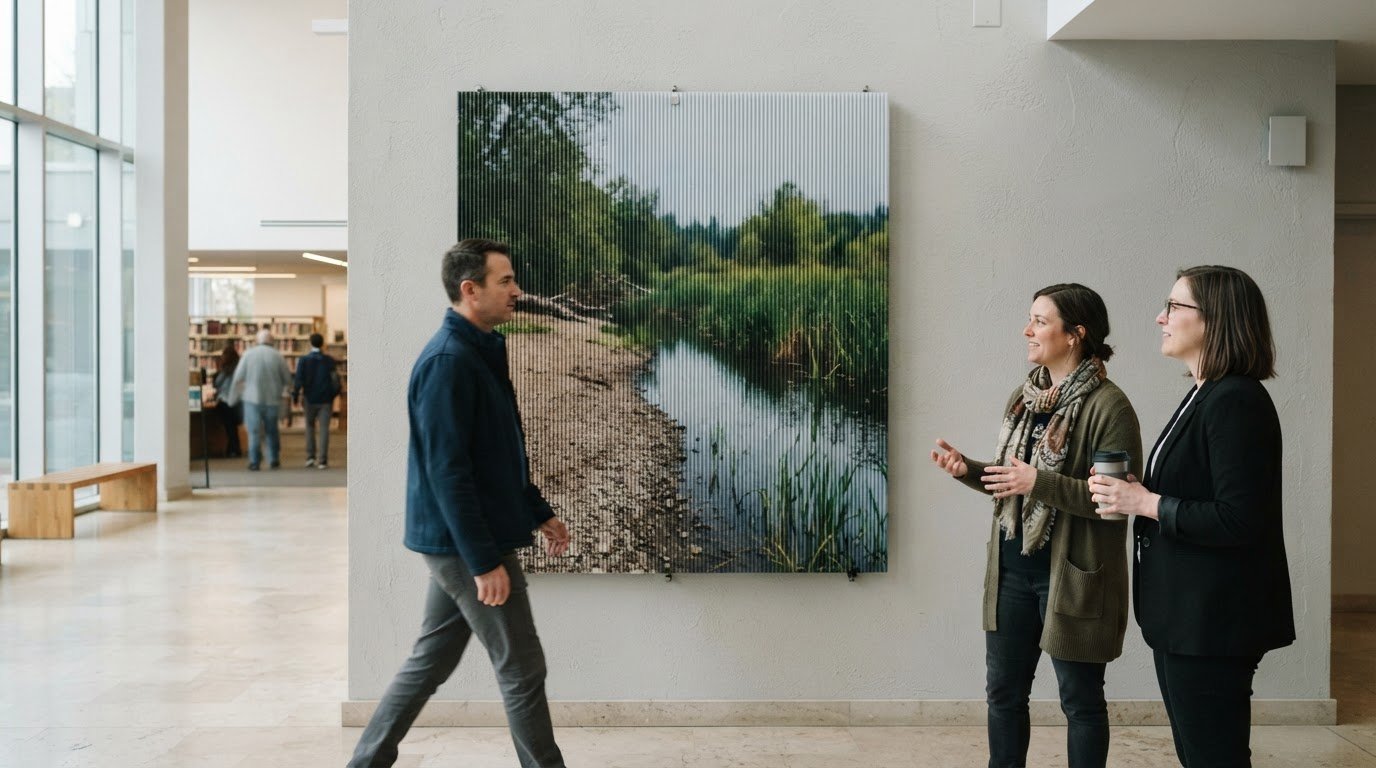
Innovative design earns a place in practice when the people affected can see its value and help shape how it works. Getting stakeholder buy-in for innovative design supports technology adoption by connecting a new idea to real needs, while pilots or sandboxes let teams test a solution before making a larger commitment.
It’s understandable to focus first on the technology. Yet even a compelling solution can struggle to gain traction if stakeholders don’t trust it, understand its purpose, or see how it fits their work. A considered process brings those concerns into the open early.
This article explains how stakeholder support influences adoption, whose perspectives to include, and how to make a pilot or sandbox a meaningful test rather than a formality. You’ll also see how evidence from a contained trial can clarify what works, what needs refinement, and whether a design is ready to move forward.
Key Takeaways
- Connect a design proposal to the problem it solves and the needs of the people who will use or approve it.
- Use a pilot or sandbox to observe a solution in a contained setting and identify what needs refinement before wider adoption.
- Prioritize stakeholders by their influence, expertise, and connection to the design’s effects, then involve them at relevant decision points.
- Communicate value through clear examples of how the design works, who benefits, and what evidence can guide the next step.
Stakeholder buy-in and technology adoption
Stakeholder buy-in is informed support from people affected by a design decision. In the United States, federal agencies should define the problem an SI tool is meant to solve and focus on mission requirements, not a particular technology or vendor.
Stakeholder Identification and Prioritization
Stakeholder identification means naming the people who influence, use, approve, or support a design. Start by tracing the idea from its origin through implementation: who experiences the problem, controls the relevant process, and maintains the eventual solution?
For a government agency, relevant stakeholders may include people responsible for technology, data, security, and privacy. Prioritize people with decision authority, direct user knowledge, or responsibility for operational risk. Track alignment by documenting concerns, decisions, and owners for unresolved issues. These records show whether agreement is moving beyond initial interest.
Communicating Design Value
Design communication translates a proposal into benefits and trade-offs stakeholders can assess. Use a concise demonstration, annotated materials, and a clear explanation of how the design addresses the stated need.
For example, show how a redesigned public-service form guides a resident from the first instruction through to completing the task. Connect each design choice to a user need, agency objective, or technical constraint. In a solicitation or contract discussion, distinguish the desired outcome from a preferred solution. This keeps official requirements visible without making the case depend on one vendor or technology.
Business Case for Innovative Design
A business case explains why a design merits resources and how its value will be judged. Build it around the problem, affected users, expected benefits, implementation needs, and trade-offs.
How do you build a business case for innovative design? State the current problem, describe the intended outcome, then connect the proposed work to measurable indicators such as task completion, error patterns, or support requests. Identify technical dependencies and the people needed to deliver the change. A credible case makes assumptions visible and explains how evidence will guide the next decision.
Addressing Resistance to Design Change
Resistance is a stakeholder’s concern about the effect, risk, or practicality of a proposed change. Address it by clarifying the objection, identifying the underlying need, and responding with relevant evidence or a revised design.
How do you balance user needs, business goals, and technical constraints? Treat each as a design requirement, then make trade-offs explicit when they conflict. A successful example of buy-in is a team revising a service interface in response to user feedback while preserving the agency’s essential process and technical limits. Measure alignment through recorded decisions, resolved objections, and stakeholder feedback at each review, not attendance alone.
Testing solutions with pilots or sandboxes
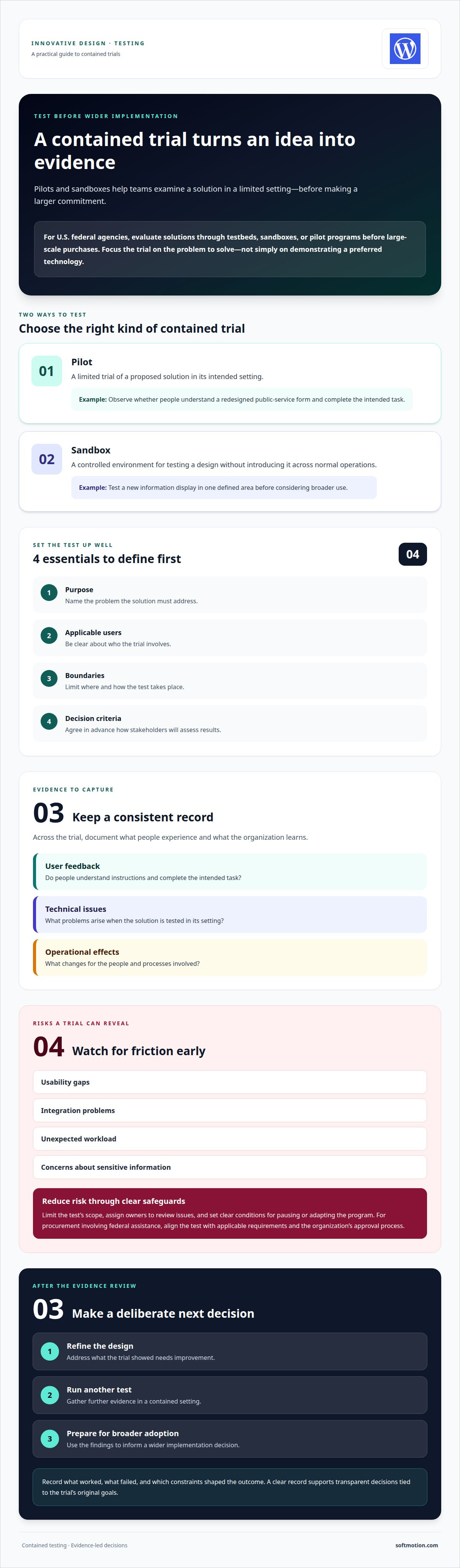
A pilot is a limited trial of a proposed solution in its intended setting. A sandbox is a controlled environment where an organization can test a design without introducing it across normal operations. Both provide a practical way to examine performance before wider implementation.
U.S. federal agencies should evaluate SI solutions through testbeds, sandboxes, or pilot programs before large-scale purchases. The trial should focus on the problem the solution must address, not simply demonstrate a preferred technology. Set the purpose, applicable users, boundaries, and decision criteria before testing begins. This gives stakeholders a shared basis for assessing results.
Choose a setting that reveals meaningful conditions. For example, a department testing a redesigned public-facing service could observe whether people understand the instructions and complete the intended task. A construction organization might test a new information display in one defined area before considering broader use. In either case, consistently record user feedback, technical issues, and operational effects.
What are common risks of introducing innovative design, and how can they be reduced? A trial may reveal usability gaps, integration problems, unexpected workload, or concerns about sensitive information. Reduce these risks by limiting the test’s scope, assigning owners to review issues, and setting clear conditions for pausing or adapting the program. For procurement involving federal assistance, align the test with applicable requirements and the organization’s approval process.
Use the findings to make a deliberate decision: refine the design, run another test, or prepare for broader adoption. Document what worked, what failed, and which constraints shaped the outcome. A clear record supports transparent decisions in accordance with the trial’s original goals. For visual concepts, explore how a design transforms a physical setting as one way to consider audience experience.
How do you identify and prioritize stakeholders for a design project?
Stakeholder mapping identifies the people affected by, responsible for, or able to shape a design. Trace the experience from first use through ongoing maintenance. List who performs each task, receives the outcome, approves changes, and supports the systems involved. Include people affected indirectly, such as visitors who rely on clear signs but don’t manage the building.
An influence-impact matrix compares each stakeholder’s decision-making influence with the effect the design may have on them. Involve people with substantial influence and direct impact early and in detail. Consult people with high impact but limited formal authority about practical needs. Seniority alone is a poor guide: someone handling daily operations may identify obstacles that a decision-maker rarely sees.
A stakeholder register is a working record of each person’s role, interests, concerns, and involvement in decisions. For each entry, note what the person knows, how the design affects them, and when their input matters. This turns a broad contact list into a practical engagement plan. It also helps the project team spot whose perspective is missing before a design direction becomes difficult to change.
Consider a library wayfinding redesign. Visitors can describe where signs become confusing, librarians can point to frequent requests for directions, facilities staff can explain installation constraints, and accessibility advisors can identify navigation needs. Connect each perspective to a design decision, such as sign placement, wording, or contrast. Ask stakeholders to review the area they know best rather than asking everyone to assess every detail.
Keep the map active as the project develops. A prototype may reveal new effects on staff workflows or visitor movement, bringing additional stakeholders into scope. Record who raised each issue, which design choice it affects, and who can resolve it. Revisit priorities when the project’s audience, setting, or implementation approach changes. This focused process directs attention where it can shape the design and its adoption.
How can you communicate the value of an innovative design to stakeholders?
A value proposition is a concise explanation of who benefits from a design and how. Start with the audience’s current experience, then show what the proposal changes. For example, a museum considering a new visitor wayfinding concept needs to understand how it could make routes easier to follow. Connect the visual idea to a specific visitor need, not just its novelty. Getting stakeholder buy-in for innovative design starts with making that value visible.
A design narrative clearly explains the problem, proposed response, and expected effect. Build it in three steps: describe the present challenge, demonstrate the new experience, and explain how you’ll assess its usefulness. A storyboard can show a visitor arriving, locating an exhibit, and finding the next destination. That sequence makes an abstract concept tangible for operations, leadership, and design teams.
A prototype is a representation of a design that people can examine before full implementation. Choose a format that communicates the idea: a sketch for layout, a mock-up for scale, or a sample for material and visual effects. Invite stakeholders to respond to a focused prompt, such as whether the intended message is clear from the viewing position. Record feedback alongside the design element it concerns.
Evidence is information that helps stakeholders judge whether the proposed design meets its goals. Pair user observations with practical considerations, including maintenance, installation, accessibility, and fit with the setting. Separate observed findings from assumptions. If visitors overlook a sign during a walkthrough, show where they pause or turn, then explain how a revised placement addresses that moment. Clear evidence supports getting stakeholder buy-in for innovative design without treating an attractive rendering as proof of performance.
Close each presentation with a decision tied to the evidence: refine the concept, test a specific feature, or proceed to the next project stage. A concise summary of benefits, trade-offs, and open questions gives stakeholders a shared reference. To make a visual proposal easier to discuss, explore ways to present dynamic visual design.
Softmotion
Softmotion helps bring innovative visual concepts into physical spaces through large-format lenticular work. When stakeholders need to understand how a design may engage an audience, a tangible visual piece can make the proposal easier to experience and discuss. Advertising Lenticular Displays, Architectural Lenticular Installations, Fine Art Lenticular Prints, and Tradeshow Lenticular Graphics provide distinct formats for public-facing visual ideas.
Consider this approach when a project calls for a striking shift from a static image to a view that changes with movement. The right format depends on the setting, audience, and design intent. Softmotion can translate a visual concept into a lenticular piece suited to its context. Contact Softmotion to discuss your project.
Turn a shared vision into a tangible next step
Getting stakeholder buy-in for innovative design becomes more purposeful when people can respond to a clear, physical expression of the idea. A visual concept can move beyond a presentation and become part of the environment, giving teams a shared reference for future decisions.
Softmotion’s Advertising Lenticular Displays, Architectural Lenticular Installations, and Fine Art Lenticular Prints offer different ways to bring visual concepts into public or built spaces. The right direction depends on the audience, setting, and experience the design should create. A considered conversation can connect those aims to a suitable lenticular approach.
Bring the project’s intention, audience, and setting into focus, then explore how a dynamic visual might support that experience. Discuss your project with Softmotion and take the next step toward making the idea visible.
Frequently Asked Questions
What evidence and metrics help prove an innovative design will work?
Use evidence that connects the design to its intended outcome, combining observed behavior with operational measures. For a redesigned exhibition label, assess whether visitors find key information, recall its main message, and move through the display without staff assistance. Pair these findings with considerations such as upkeep and fit with existing workflows. A baseline gives decision-makers a meaningful point of comparison.
How can prototypes and user testing gain stakeholder support?
Prototypes help stakeholders experience a proposed solution before approving broader application. A paper mock-up of a visitor map, for example, can reveal whether users interpret its symbols as intended; a full-scale sample can show how placement affects visibility. Invite users to complete a realistic task, record where they hesitate, and share the resulting design changes with stakeholders. This makes feedback visible in the next iteration.
How do you get executive approval and budget for a design initiative?
Executive approval is easier to assess when the request links a defined outcome to a bounded decision. Explain the initiative’s strategic relevance, who will own delivery, which resources and dependencies it requires, and what evidence would support continuation. Offer decision gates, such as approving an initial discovery phase before broader implementation. Separate essential scope from optional enhancements so leaders can see what each commitment enables.