
2026 Guide to Architectural Lenticular Installations
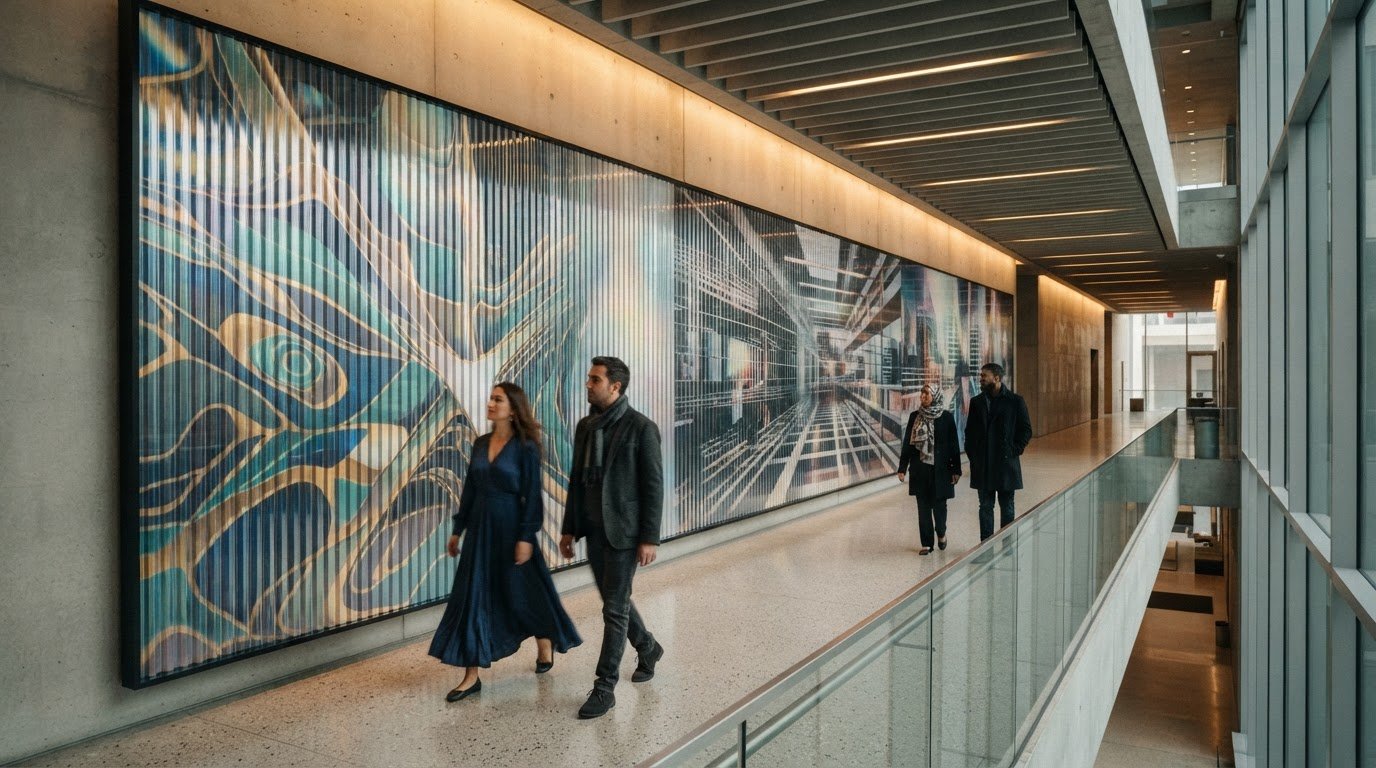
What if artwork changed as people moved through a building, rather than asking them to stop and look? Architectural Lenticular Installations can turn a corridor, entrance, or other transitional space into a shifting visual experience. Whether the effect works depends on more than the image: viewing distance, audience movement, light, scale, and installation conditions all shape the result.
To decide whether lenticular imagery suits your site, connect the creative idea to the building’s practical constraints. This guide explains what the medium can contribute, which site and design factors to consider, and what information to gather before defining a production scope. Start with the space and the experience you want people to have, then shape the image around them.
Key Takeaways
- See how lenticular imagery can bring movement, transitions, or depth to a built environment.
- Match the creative purpose to how people approach, move through, and experience the space.
- Compare visual effects by considering the intended experience, viewer movement, and image content.
- Plan the project in stages, from defining intent and reviewing site information to sampling and installation planning.
- Prepare key details before approaching a specialist to explore what Architectural Lenticular Installations could achieve at your site.
What Architectural Lenticular Installations Add to a Built Environment
Architectural Lenticular Installations create a changing visual experience on a surface inside a building or public interior. As someone moves past, an image may appear to shift, reveal a sequence, or take on a sense of depth. The artwork stays still. The perceived change comes from the relationship between the image, the lenticular lens, and the viewer’s position.
This makes the medium different from both a small-format lenticular print and digital signage. A small print is designed for close viewing; an architectural installation is planned around a specific space and audience. Digital signage changes content on a screen, while lenticular imagery creates its visual change through physical movement and viewpoint, without relying on a display to play the image.
How viewpoint turns a surface into a changing visual experience
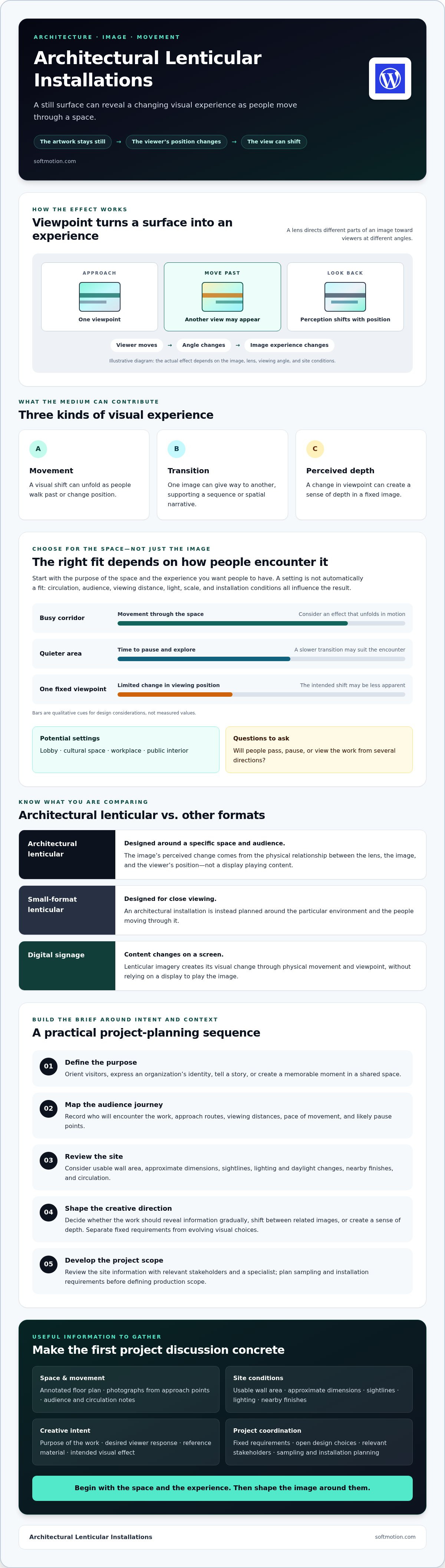
Lenticular imagery uses a lens surface to direct different parts of an image toward the viewer from different angles. As someone walks by or changes position, one view can give way to another. The image remains fixed, but the viewer’s experience changes.
That shift can suggest movement, transition between images, or create a sense of depth. As Lenticular printing illustrates, the medium can produce several kinds of visual effects. In an architectural setting, those effects can also support a spatial narrative. A sequence might unfold along a passage, or a change in viewpoint might reveal another aspect of a story or identity. The intended journey matters as much as the image itself.
Where architectural lenticular work can make sense
A lobby can make a first impression; a cultural space might use a visual shift to invite attention; a workplace could use an installation to express an organization’s identity. Public interiors may also give a work the chance to meet people as they pass through. None of these settings is an automatic fit. Let the space, audience, circulation, and purpose guide the decision.
Consider whether viewers will pass the work, pause in front of it, or encounter it from several directions. A busy corridor may suit an effect that unfolds during movement, while a quieter area may give visitors more time to explore a slower transition. If most people see the surface from one fixed point, the intended change may be less apparent. Start by matching the viewing experience to how people actually use the space.
Design the Lenticular Experience Around the Site and Its Viewers
Begin with the architectural purpose, not the image. The installation might help orient visitors, express an organization’s identity, tell a story, or create a memorable moment in a shared space. Defining that purpose gives the creative work direction and helps separate fixed requirements from preferences that can evolve during design.
For Architectural Lenticular Installations, audience movement is part of the brief. Consider who will encounter the work, where they will approach from, how quickly they will pass, and whether they are likely to stop. Someone moving along a corridor may experience the image differently from someone entering a lobby or waiting in a cultural space. Map likely paths, viewing distances, and pause points before settling on imagery or an effect.
Build a brief from movement and design intent
Describe the intended response in practical terms. Should the work reveal information gradually, shift between related images, or create a sense of depth as people move? Then record the conditions the concept must respect. Separate fixed requirements, such as location and approximate dimensions, from visual choices that may change as the design develops.
An annotated floor plan, photographs from likely approach points, and a short description of the audience can make the brief more useful. For ideas about connecting movement with place, explore this architectural visual storytelling guide.
Coordinate the artwork with the architectural setting
Record the usable wall area, sightlines, lighting conditions, and nearby finishes. Note whether daylight changes across the space, whether surrounding surfaces are visually busy, and which routes bring people close to the work. These details help the creative concept respond to the interior rather than compete with it.
Bring the architect and relevant project stakeholders into the conversation early. They can identify site constraints and clarify how the installation relates to the surrounding design. For production fundamentals, see the large-format lenticular printing guide. As the concept takes shape, sharing the purpose, site information, and reference material with a specialist can focus the next discussion. Learn more about Softmotion’s lenticular work.
Compare Lenticular Effects and Project Approaches Before Committing
Choose an effect for what it needs to communicate, not just because it looks striking on its own. A gradual image transition may suit a story that unfolds as people pass. Apparent motion can give a still subject a sense of action, while depth can make an image feel more dimensional. No effect is automatically the right one. The choice depends on the content, intended viewing experience, site conditions, and project-specific creative and production review.
Choose an effect that serves the story
Start by asking what the audience should notice or understand. A single shift between two related images can make a clear, focused statement. A more layered sequence may be worth exploring if the concept calls for a richer reveal. An agamograph, which presents different images as the viewer changes position, is another approach to consider alongside lenticular imagery. Compare the creative options against the site and audience before choosing a direction.
| Project goal | Viewer movement | Content approach | Key design question |
|---|---|---|---|
| Reveal a change or contrast | People pass from one viewing angle to another | Two related images or states | What should the shift communicate? |
| Suggest action | Viewers move alongside or past the work | A sequence that implies motion | Can the content read clearly in the available viewing path? |
| Create a sense of depth | Viewers encounter the work from a considered viewpoint | Layered visual elements | Does dimensionality support the story, or distract from it? |
| Present contrasting perspectives | Viewers shift position to see different images | Distinct views arranged as an agamograph concept | Are the images meaningful both separately and together? |
Assess samples and prototypes as decision tools
A sample or prototype lets stakeholders experience how the image behaves before committing to a larger work. Review it from the approach points and distances that matter to the project. Check whether the transition is understandable, whether important details remain legible, and whether the finish and visual character suit the design intent. Include creative, architectural, and installation stakeholders so approval reflects more than one person’s preferred viewpoint.
For more guidance on planning this step, see the custom lenticular prototypes guide. Discuss technical choices, such as lens and fabrication approach, with a specialist after clarifying the intended experience. Those choices do not replace testing the concept in context. This comparison helps shape Architectural Lenticular Installations around both the story and the realities of the site.
Address the Main Concern: Can a Large-Scale Installation Be Delivered Reliably?
A large-scale installation can be planned with clarity, but custom work needs coordination. A convincing visual concept is only one part of an architectural project. The scope must also account for the site, approvals, production, and installation logistics. Because spaces differ, do not assume that a solution or installation approach will transfer unchanged from one project to another.
A practical sequence helps the team move from creative intent toward a workable plan:
- Define the intent: Agree on the purpose, audience, location, and desired visual experience.
- Review site information: Share available drawings, dimensions, photographs, finishes, and known restrictions.
- Develop samples: Use samples or prototypes to assess the visual direction before full-scale production.
- Approve the direction: Record decisions on the concept, content, and scope, and identify who signs off.
- Plan production and installation: Confirm responsibilities, access considerations, and dependencies with the project team.
Keep confirmed requirements separate from open questions. For example, the wall area may be measured while the attachment approach or a site condition still needs review by qualified project professionals. Identifying that distinction early helps make the scope more credible and prevents assumptions from becoming commitments.
What project teams should confirm early
Gather the information already available: drawings, dimensions, photographs, finish references, and relevant site restrictions. Identify decision-makers, approval stages, access arrangements, and dependencies with other project work. Flag unknown structural, material, or environmental requirements for review by the appropriate qualified team. The goal is not to resolve every technical question at the outset. Make clear what is known, what needs verification, and who will help confirm it.
How sampling and coordination reduce uncertainty
Samples and prototypes create a review point before the project advances to full-scale production. Stakeholders can assess the visual behavior, content, and finish together, then provide consolidated feedback. Record approvals and outstanding questions so the creative and project teams are working from the same decisions. This supports clearer collaboration without implying that every installation will be simple or free of site-specific challenges.
Softmotion’s process spans samples and prototyping through full-scale production and on-site installation. For a project-specific discussion, share your site information and installation goals with Softmotion.
Plan Your Architectural Lenticular Installation with a Specialist Partner
A focused first brief helps a specialist assess whether your creative direction, site, and project scope align. You do not need every technical answer before starting the conversation. Bring what is known, identify what remains open, and use the discussion to clarify the next decisions.
Prepare a useful first project brief
Summarize the space, intended audience, design objective, and approximate scale. Include available drawings or dimensions, photographs, finish references, and known site constraints. If your team has a target timeline or approval requirements, share those too, distinguishing confirmed milestones from working assumptions.
A useful inquiry checklist includes:
- Purpose: What should the installation communicate or contribute to the space?
- Site context: Where will it be located, and what information is available about the surroundings?
- Approximate scope: What area or surface are you considering?
- Audience: Who will encounter it, and how might they move through the space?
- References: What images, concepts, or visual directions help explain your intent?
List open questions as well. Note which site or installation requirements still need review rather than treating them as settled. This gives the first conversation a useful focus.
Move from creative direction to production planning
With a brief in hand, a specialist can assess the concept and discuss how sampling, review, production, and installation needs may fit together. Samples or prototypes can help stakeholders evaluate the visual direction before deciding whether to advance toward full-scale production. Confirm the project scope and technical requirements collaboratively, and have the appropriate project professionals review site-specific questions.
Softmotion creates large-format lenticular and agamograph installations, with a process spanning sampling and prototyping through full-scale production and on-site installation. Founded in 1997, the company reports more than 1,000 completed projects for architects, artists, advertisers, and Fortune 500 corporations worldwide. That history offers context for a conversation, not a guarantee that every project will be the right fit.
If you’re preparing a project brief, discuss an architectural lenticular project with Softmotion. Sharing your goals and available site information is a considered first step toward defining a workable direction.
Shape the Next Step for Your Space
Architectural Lenticular Installations are most compelling when the visual idea grows from the site. Begin with the experience you want to create, then consider how people move through the space, what they will see from different viewpoints, and which project requirements still need review. Comparing effects and evaluating samples with the project team can help turn creative intent into a clearer production plan.
A specialist partner can help assess the concept, sampling, production, and installation needs in context. Softmotion, founded in 1997, reports more than 1,000 projects and supports work from sampling and prototyping through full-scale installation. That experience can inform a project conversation, while the right scope and technical approach remain specific to each site.
Have a space or early concept in mind? Discuss an architectural lenticular project with Softmotion and start exploring what may suit your goals. A thoughtful first brief is enough to begin shaping the possibilities.
Frequently Asked Questions
What is an architectural lenticular installation?
An architectural lenticular installation is a large-format visual work designed for a building or interior space, where its appearance changes with the viewer’s position. A lenticular lens directs different parts of an image toward viewers at different angles, creating effects such as image transitions, apparent motion, or depth. Unlike a small handheld print, it is planned around the site, viewing paths, and how people will encounter the work.
How does a lenticular installation change as people move through a space?
The image appears to change because the viewer sees it from a new angle, not because the artwork or building moves. As someone walks past, one image or part of a sequence may give way to another. The result depends on how the visual content and viewing experience are designed. A site review helps determine whether people will approach from suitable directions and distances to perceive the intended change.
Can lenticular installations be designed for existing buildings?
Yes. Architectural Lenticular Installations can be considered for existing buildings, provided the project team evaluates the site before confirming the design and scope. Useful information includes available wall area, sightlines, lighting, surrounding finishes, access, and known restrictions. Existing conditions may shape the concept or require further review by qualified project professionals. Sharing photographs and drawings with a specialist can help identify what needs closer assessment.
What should an architect include in a lenticular installation brief?
Include the project purpose, intended audience, proposed location, approximate dimensions, and how people are expected to approach or move past the work. Add available drawings, site photographs, finish references, relevant restrictions, approval stages, and timeline information if known. Separate confirmed requirements from assumptions, and list questions that need technical or on-site review. This gives the specialist a useful foundation for discussing creative direction, sampling, production, and installation needs.
How do teams evaluate a lenticular sample or prototype?
Review the sample together from the viewpoints and distances relevant to the space. Assess whether the transition or motion is clear, whether key image details remain easy to read, and whether the overall finish supports the design intent. Include the creative team, architect, and other relevant decision-makers in the review. Record feedback and approvals, along with any open questions, before using the prototype to guide the next project decisions.
What is the difference between lenticular and agamograph architectural art?
Both approaches can present different images or visual states as viewers change position, but they use different image structures. Lenticular imagery uses a lens surface to direct different image elements toward the viewer from different angles. An agamograph typically arranges alternating image sections so that different views emerge as someone moves. Which approach suits a project depends on the creative intent, site, audience movement, and specialist review.
How do you plan installation requirements for large-scale lenticular work?
Start by gathering site drawings, dimensions, photographs, finish details, access information, and known restrictions. Identify project decision-makers, approval steps, and dependencies with other work. Confirm what is documented and flag unknown structural, material, or environmental requirements for review by qualified professionals. Sampling and prototype reviews can help align the creative direction before full-scale production. Confirm installation responsibilities and project-specific technical requirements collaboratively rather than assuming one approach fits every site.